
What Are the Best Liquor Bottle Sizes for Labor Day 2026
July 27, 2026
You need to buy liquor for a party, but you are not sure which bottle size actually makes sense. That uncertainty is real, especially when the guest list keeps changing and the grill is already glowing. The wrong choice can leave you short, overstocked, or stuck opening bottles all night. Shop Liquor Bottle Sizes helps you sort that out with practical bottle guidance, whether you buy online or shop from a Commack liquor store serving Long Island and all 50 states.
Why the wrong bottle size makes Labor Day feel bigger than it needs to be
A Labor Day gathering should feel easy. Bottle size can make it feel chaotic instead. If you choose too small, you keep running back to the bar cart. If you choose too large, you end up with leftovers that take over the fridge and the shelf. That tension is especially annoying when you are juggling food, music, guests, and a warm Suffolk County afternoon.
The backyard crowd that needs a fifth and the one that quietly needs a handle
Some crowds drink casually. They want a cocktail or two, then switch to beer or sparkling water. For them, a fifth of liquor, which is the familiar 750ml liquor bottle, usually covers the need without wasting much. Other crowds lean hard into mixed drinks. They burn through vodka, whiskey, or rum fast, and a 1.75 liter liquor bottle, also called a handle of liquor, saves repeated refills.
Here is the part most people miss: the right bottle is not just about volume. It is about pace. A slow-drinking backyard brunch needs a different plan than a late-afternoon cookout with cousins, neighbors, and a cooler full of ice. On the projects we help with around Long Island, the best answer is usually a mixed order, not one giant bottle of everything. That gives you flexibility without clutter.
When mini liquor bottles beat one large bottle for guests, favors, and easy pouring
Mini liquor bottles, airplane bottles, and nip bottles earn their place at parties more often than people expect. They are excellent for favors, tasting flights, and guests who want their own spirit without opening a full bottle. They also help when you are serving a group with different preferences. One person wants vodka soda. Another wants tequila. A third wants no cocktail at all.
A customer from Smithtown once told us she was tired of half-open bottles lining her counter after summer parties. She switched to a mix of minis for custom drinks and one larger bottle for her main cocktail. The bar stayed neater. The cleanup got easier. The guests still had options. That is often the smarter Labor Day move.
How the Long Island heat changes your bar plan for beer, wine, and spirits
Heat changes drinking behavior. People usually want lighter pours, more ice, and colder bottles. That means beer, wine, sparkling wine, hard seltzer, and even canned cocktails often move faster than heavy spirits on a hot Long Island afternoon. A chilled rosé or crisp white wine may outpace a full round of bourbon drinks. Meanwhile, vodka, gin, and tequila stay useful because they mix cleanly with citrus and soda.
You should also think about storage. In hot weather, bottles left near the grill, in direct sun, or on a patio table warm fast. That can dull flavor and make cocktails less refreshing. For local shoppers in Commack and Smithtown, that detail matters more than it sounds. The backyard is not a climate-controlled tasting room.
The local Commack and Smithtown party mistake that shows up right after the grill gets hot
The biggest mistake we see is buying one spirit in one size and hoping it covers every drink. It rarely does. Someone in Commack grabs a handle of vodka, then realizes they also need something for bourbon lovers, wine drinkers, and the friend who only wants a spritz. Then the party starts, and the store run happens after everyone is already hungry.
That is why planning by drink style works better than planning by ego. Ask who drinks what. Then buy bottle sizes accordingly. If you need help narrowing it down, our best liquor bottle size for Labor Day parties guide is a smart place to compare options before you buy.
What the standard bottle ladder really tells you about value, shots, and stocking a bar
Bottle sizes are not random. The industry follows a ladder of standard bottle sizes, and that ladder helps you compare value, servings, and bar inventory. Once you understand the structure, you stop guessing. You start buying with a purpose.
The liquor size chart behind the fifth of liquor, 750ml liquor, 1 liter liquor, and 1.75 liter liquor
In the U.S., common standard liquor bottle sizes include 50ml, 100ml, 200ml, 375ml, 750ml, 1 liter, and 1.75 liter. The old fifth of liquor came from one-fifth of a gallon and became the familiar 750ml bottle. That history still matters because people use the nickname every day. The size chart is simple once you get used to it.
Common nameMetric sizeCommon useNip / mini50mlTastings, favors, travelHalf pint200mlSmall household usePint375mlCompact home bar bottleFifth / standard750mlMost common retail sizeLiter1,000mlBetter value for many mixersHandle1.75LHigh-volume partiesIf you want a deeper breakdown of the bottle ladder, our standard liquor bottle sizes chart helps turn the numbers into real shopping decisions.
How many shots in a bottle changes once you move from pint liquor to handle of liquor
Shot counts depend on pour size, but the standard bartender pour is usually 1.5 ounces. That matters because a bottle’s serving count changes quickly as you move up the ladder. A pint liquor bottle runs out much sooner than a handle of liquor. A 750ml liquor bottle usually gives you enough for a small gathering, while a 1.75 liter bottle supports a much larger crowd.
If you are serving cocktails, the real question is not “How many shots are in a bottle?” It is “How many drinks will each recipe use?” A rum punch may use one and a half ounces per serving. A Negroni may use even less. A margarita or whiskey sour may use more. For a full explanation, our how many shots in a bottle of liquor guide is useful.
ml to oz conversion for real shopping decisions, not math homework
You do not need to love math to shop well. You just need a few useful conversions. 750ml is about 25.4 ounces. 1 liter is about 33.8 ounces. 1.75 liters is about 59.2 ounces. Those numbers let you compare bottles without guessing.
Here is the practical version:
- 50ml is about 1.7 ounces
- 375ml is about 12.7 ounces
- 750ml is about 25.4 ounces
- 1 liter is about 33.8 ounces
- 1.75 liters is about 59.2 ounces
If you want an easy reference, our ml to oz conversion for liquor shopping page keeps the numbers simple.
Why price per ounce usually matters more than the sticker on the front
Sticker shock misleads people. A smaller bottle may look cheaper, but it can cost more per ounce. That is why pricing per ounce is the real measure of value. If you are comparing bulk liquor for a party, you should always look at how much liquid you get, not just the shelf appearance.
A 1.75 liter bottle often wins on value for high-use spirits. A 750ml bottle can be the smarter choice for a spirit you only need in one or two cocktails. This is exactly how bar managers think, and it works at home too. If you want a cleaner comparison, check our pricing per ounce for liquor bottle sizes guide before you buy.
The bottle names people still use like nip bottles, airplane bottles, half pint liquor, and double magnum
Liquor shoppers use old names constantly. Nip bottles and airplane bottles usually mean 50ml minis. Half pint liquor typically means 200ml. Pint liquor usually means 375ml. People also still talk about rare giant formats like double magnum, jeroboam, rehoboam, methuselah, salmanazar, balthazar, and nebuchadnezzar when they want to sound like they have seen every bottle in the room.
Those historical bottle names are fun, but they also signal scale. If you are planning a serious party, size vocabulary helps. It keeps the conversation specific. It also helps you avoid ordering the wrong format when you buy liquor online.
Which spirits and mixers deserve the biggest bottle on your holiday table
Not every spirit deserves the same bottle size. Some disappear quickly. Some barely move. Your goal is to match bottle size to demand, not to tradition. That keeps your bar efficient and your budget under control.
Vodka, whiskey, bourbon, and rum for the cocktails that disappear first
Vodka, whiskey, bourbon, and rum are the workhorses of holiday entertaining. They cover the widest range of cocktails, from simple mixers to more layered drinks. If you are serving a crowd with mixed tastes, these are often the first bottles to size up. A larger bottle makes sense when the base spirit appears in multiple recipes.
On Long Island cookouts, vodka usually leads because it works in almost anything. Whiskey and bourbon follow closely because guests still ask for old fashioneds, whiskey gingers, and bourbon lemon drinks. Rum matters when punch bowls show up. A bottle size guide that ignores these patterns misses the actual party.
Gin, tequila, mezcal, brandy, cognac, and vermouth when the menu gets more specific
Once your menu gets more focused, smaller or mid-size bottles often make more sense. Gin works beautifully in martinis and citrus cocktails. Tequila and mezcal suit margaritas, palomas, and smoky riffs. Brandy, cognac, and armagnac tend to serve more specific drinkers or digestif moments. Vermouth, including sweet vermouth and dry vermouth, usually shines in cocktails where freshness matters.
A customer in Commack once planned a backyard dinner with three cocktails and realized the menu used different bases. That is common. Instead of buying one giant bottle of everything, she chose a larger tequila and smaller bottles of vermouth and cognac. The result was cleaner and cheaper. For spirit-specific shopping, our vodka, whiskey, bourbon, and rum bottle sizes resource helps you match bottle to recipe.
Wine, champagne, sparkling wine, beer, and hard seltzer when the guest list is mixed
Mixed guest lists need more than spirits. They need choice. That usually means wine, red wine, white wine, rosé wine, champagne, sparkling wine, beer, craft beer, imported beer, domestic beer, hard seltzer, and even canned cocktails. These drinks keep non-cocktail drinkers happy and reduce pressure on the spirit station.
If your party leans toward toasts, bubbles matter. If it leans casual, beer and hard seltzer can carry a lot of the load. Some hosts forget this and buy only spirits. Then they discover half the room wants something lighter. That mistake is easy to avoid. If you are balancing a mixed menu, a look at our sparkling wine selection can help shape the order.
Mini bottles for favors versus bulk liquor for batching cocktails and punch
Use mini liquor bottles for favors when guests should leave with something fun, portable, and personal. Use bulk liquor when you are batching cocktails, punch, or spritzes. Those are different jobs. Trying to make one bottle do both jobs usually creates waste. 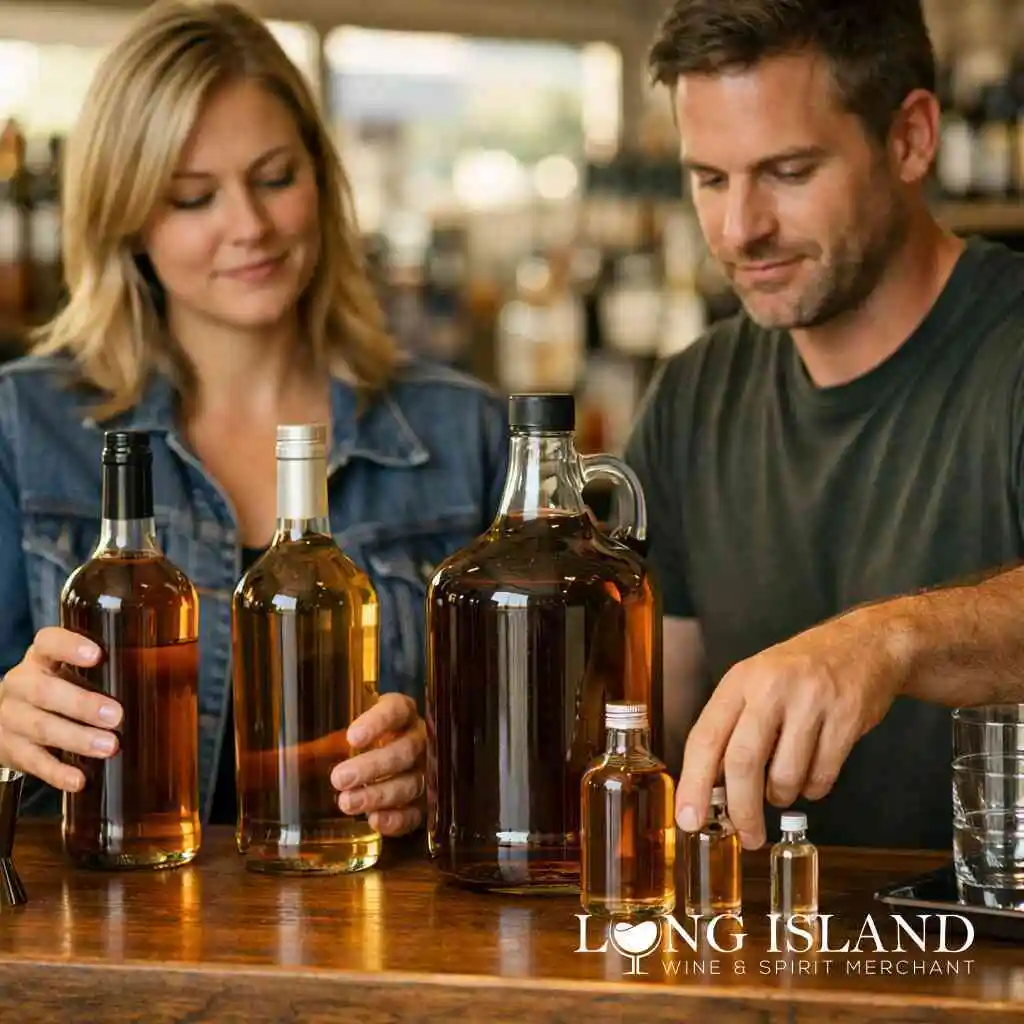
Mini bottles are great for:
- party favors
- tasting tables
- self-serve cocktail stations
- travel-friendly giveaways
Bulk bottles are better for:
- pitcher cocktails
- punch bowls
- large guest lists
- repeat pour drinks
If you want to compare party-ready minis, our mini liquor bottles for parties and favors guide is built for that exact decision.
How to think about essential spirits, cocktail ingredients, and home bartending without overbuying
Start with the drinks you know people will actually order. That is how you build a useful home bar. Essential spirits usually include vodka, whiskey, rum, gin, tequila, and one or two liqueurs. Add cocktail ingredients like citrus, simple syrup, soda, tonic, and bitters. Then buy bottle sizes that match expected demand.
Home bartending gets easier when you think in recipes, not labels. A bottle of amaro or triple sec may last a long time. A bottle of tequila may not. That is why thoughtful stock matters more than impulse buying. For a fuller planning model, our how to stock a bar for holiday entertaining guide gives a more complete approach.
The size decision that turns Labor Day shopping into a smarter next move
The best bottle size is the one that fits your guest count, your menu, and your storage space. That sounds simple, but the details matter. A smart order keeps the party smooth and the leftovers manageable.
When to buy liquor online, when to choose local Long Island liquor store pickup, and when liquor delivery makes sense
If you know what you need, buy liquor online can save time. If you want quick access and local guidance, a Long Island liquor store or Commack liquor store pickup can be the better call. If you are managing a busy week, liquor delivery may be the most practical option, depending on what shipping rules allow in your area. We recommend checking alcohol shipping laws before you place a nationwide order.
For shoppers near Commack, Suffolk County, and the wider New York metro, local pickup can simplify last-minute planning. For people farther away, shipping liquor to all states depends on the destination and product rules. If you want to compare options, our Commack, Long Island liquor store pickup and delivery page is a helpful starting point.
How to stock a bar for a cookout, a house party, or a long weekend without wasting bottles
The easiest way to avoid waste is to build around usage. For a cookout, stock one or two high-volume spirits and several non-spirit options. For a house party, add a backup bottle of the fastest-moving base spirit. For a long weekend, think about what carries across multiple meals. That is bar inventory thinking, and it works.
A simple approach:
- Choose one main cocktail.
- Add one backup spirit.
- Stock beer or seltzer.
- Include wine or sparkling wine.
- Keep mixers cold and ready.
That framework keeps you from overbuying and still covers surprises. It also fits the reality of Long Island entertaining, where guests arrive at different times and drink at different speeds. For more structure, our best liquor bottle size for parties page can help you size things correctly.
Eco-friendly bottle sizes, liquor bottle reuse, and gift liquor ideas that carry into the fall
Smarter sizing can also be more sustainable. Fewer emergency runs mean less fuel and less waste. Eco-friendly bottle sizes often come down to buying the right amount the first time. Liquor bottle reuse also matters if you enjoy using bottles for infused spirits, olive oil, or home decor after the party.
Gift liquor is another smart carryover. A well-chosen bottle can become a thank-you gift, a host gift, or a fall birthday bottle. That makes size more useful than flashy packaging alone. If you want ideas that extend beyond the holiday table, our eco-friendly bottle sizes and liquor bottle reuse article is worth a look.
What Commack, Suffolk County, and the wider New York metro shopper should check before placing an order
If you are shopping from Commack, Suffolk County, or anywhere in the New York metro area, check three things before you order. First, confirm the spirit category and size. Second, review shipping or pickup rules. Third, make sure your menu matches your guest count. That is basic, but it prevents most mistakes.
Also, remember that not every bottle size is equally useful for every event. A 750ml bottle may be perfect for a couple of cocktails. A handle may be smarter for a crowd. A handful of minis may be better for favors. If you want local planning support, the article on Commack and Suffolk County party planning for Labor Day speaks directly to that decision.
Why the best liquor bottle size for parties depends on guest count, drink style, and how much you want left over
There is no single perfect bottle size. There is only the best match for your plan. If you want a small, tidy bar, choose 750ml bottles and a few minis. If you want the lowest cost per ounce, move into liter or handle territory. If you want flexibility, mix sizes. That is the real answer to best liquor bottle size for parties.
The smartest hosts think like operators. They estimate demand. They keep options visible. They avoid overbuying what nobody drinks. That approach saves money and keeps the party moving. If you want help choosing the right bottle size, browse Shop Liquor Bottle Sizes, compare the options, and pick the mix that fits your guest list today.
Frequently Asked Questions
What are the standard liquor bottle sizes in the US?
The most common standard liquor bottle sizes are 50ml, 100ml, 200ml, 375ml, 750ml, 1 liter, and 1.75 liter. People also still use names like nip, airplane bottle, half pint, pint, fifth, and handle. The exact nickname depends on the size and region. For party planning, the 750ml bottle and 1.75 liter bottle matter most.
Is a half gallon the same as a handle?
Yes, in common U.S. liquor talk, a handle usually means 1.75 liters, which is close to a half gallon. The bottle has a handle-shaped neck area, so the nickname stuck. That size is popular for busy parties because it offers strong value per ounce. It also reduces the number of bottles you need on the table.
How many 1.5 oz shots are in a 750ml bottle?
A 750ml bottle holds about 25.4 ounces. With a standard 1.5-ounce shot, that gives you roughly 16 shots. If your pour is larger, the count drops. If you are batching cocktails, the number also changes. That is why recipe planning matters more than guessing.
Does Shop Liquor Bottle Sizes ship mini bottles?
Shipping depends on product and destination rules, so it is best to check the current shipping details before ordering. Shop Liquor Bottle Sizes serves Commack, Long Island, and ships in all 50 states where allowed. Some liquor shipping laws are state-specific. If you need minis for favors or parties, confirm availability before you buy.
Which size is best for a wedding toast?
For a toast, smaller bottles can be perfect if you only need a few pours. For a larger reception, a 750ml bottle or a 1.75 liter bottle may be more efficient. Champagne and sparkling wine often make the most sense for toasts, depending on the guest count. The best choice depends on how many glasses you plan to fill.
What is the most cost-effective bottle size for home bartending?
The most cost-effective size is usually the one with the best price per ounce for the spirit you use most. For high-volume base spirits, a 1 liter or 1.75 liter bottle often offers better value. For less common bottles, a 750ml may be smarter because it reduces waste. The right answer depends on how often you mix that spirit.
Can I use liquor bottle sizes to plan a full bar?
Yes, and you should. Bottle sizes help you estimate how much vodka, whiskey, rum, gin, tequila, wine, beer, and mixers you need. Start with guest count, then identify the most likely drinks. From there, match size to expected demand. That is the simplest way to stock a bar without overbuying.


