
What Is the Difference Between Handle and Half Gallon Sizes
November 11, 2026
A handle is 1.75 liters, while a half gallon is 1.89 liters, so a half gallon is slightly larger. That small gap is exactly why people confuse them, especially when comparing liquor bottle sizes for party planning, bar inventory, or buying liquor online.
Key Takeaways
- A handle of liquor usually means 1.75 liters, which is 59.2 oz or about 39 shots at a 1.5 oz pour.
- Half gallon liquor is 64 oz, or about 1.89 liters, so it holds a little more than a handle.
- The two sizes are close enough to cause confusion, but they are not the same bottle in standard bottle sizes or standard liquor measurements.
- For most home bar and party planning needs, a handle offers strong value per ounce, while a half gallon is a bit larger but less common in retail liquor bottle sizes.
- If you are comparing bottle capacity before you buy liquor online, a clear liquor size chart is the easiest way to avoid overbuying or underbuying.
If you are standing in your kitchen with a guest list in one hand and a bottle size question in the other, that confusion is normal. We hear it all the time from people shopping a Commack liquor store or browsing an online liquor store for liquor delivery across Long Island and New York.
Why a handle and a half gallon are close but not the same bottle in real life
A handle and a half gallon are close in everyday conversation, but they differ in both measurement and retail use. A handle is the modern standard for 1.75 liter liquor, while half gallon liquor is a true half gallon in imperial volume, which is slightly larger. That difference matters when you compare alcohol volume, pricing per ounce, and how much space the bottle takes on your shelf.
What a handle means at the bar and why 1.75 liters became the modern standard
A handle of liquor is the large bottle people picture when they think about stocking a home bar. In the U.S., it usually means 1.75 liters, which is one of the key TTB standard sizes. At 59.2 ounces, it sits above the fifth, the liter, and smaller standard bottle sizes like mini bottles, airplane bottles, and pint liquor.
The nickname comes from the old glass bottle shape with a side grip. Today, the shape may vary, but the name stuck. If you want a clean way to compare spirits, the What Is A Handle Of Liquor guide breaks down how that size fits into a real home bar.
A customer from Smithtown once asked for “the normal big one” for a backyard cookout. That usually means a handle of vodka, whiskey, rum, or tequila. The exact spirit does not change the size math, but it does change how fast the bottle disappears once pouring starts.
Where half gallon liquor fits in the old bottle language and why the numbers feel almost identical
Half gallon liquor is 64 ounces, which is about 1.89 liters. That makes it slightly larger than a 1.75 liter handle, but not by much. The difference is only a few ounces, so people often use the names loosely, especially in casual conversation.
Here is the part most people miss: the “handle versus half gallon” comparison is often less about volume and more about bottle category. A handle is the standard retail size you will most often see for vodka, whiskey, bourbon, gin, rum, and tequila. A half gallon is a measurement people remember from older bottle language, but it is not the most common modern shelf size.
SizeOuncesApprox. litersCommon useFifth25.4 oz750 mlStandard bottle for most spiritsLiter33.8 oz1.0 LSlightly larger everyday sizeHandle59.2 oz1.75 LLarge value bottleHalf gallon64 oz1.89 LSlightly larger than a handleIf you are comparing the difference between handle and half gallon liquor with a standard liquor size chart, the key point is simple: the half gallon is bigger, but the handle is the more common bottle in liquor bottle sizes and bar inventory.
The size math that clears up the confusion before you buy liquor online
The easiest way to avoid mistakes is to convert the bottle into ounces and shots before you order. 1.75 liters equals about 59.2 ounces, and 64 ounces equals about 1.89 liters. Once you see those numbers, the difference becomes practical instead of abstract, especially for party planning and home bartending.
ml to oz conversion and standard bottle sizes from mini bottles to 1.75 liter liquor
When you buy liquor online, the bottle label may list milliliters, ounces, or both. The most useful conversion points are simple:
- 50 ml = 1.7 oz
- 100 ml = 3.4 oz
- 200 ml = 6.8 oz
- 375 ml = 12.7 oz
- 750 ml = 25.4 oz
- 1 liter = 33.8 oz
- 1.75 liter = 59.2 oz
Those are the standard bottle sizes most shoppers compare when building a bar or choosing gift liquor. Mini liquor bottles, nip bottles, and airplane bottles are better for favors or sampling. A fifth of liquor, also called 750 ml liquor, is still the most familiar everyday size for many spirits.
If you want a broader look at bottle formats across spirits, the Category Liquor Bottle Sizes Explained page is a useful reference. For official measurement standards, the Alcohol and Tobacco Tax and Trade Bureau is the federal source that sets labeling and container rules in the U.S.
How many shots in a bottle and when a handle beats a fifth for party planning
If you pour a standard 1.5 oz shot, a handle gives you about 39 shots. A 750 ml bottle gives you about 16 to 17 shots. That is why handles often make sense for larger gatherings, while fifths work better for smaller dinners or one or two cocktail recipes. A simple rule helps: 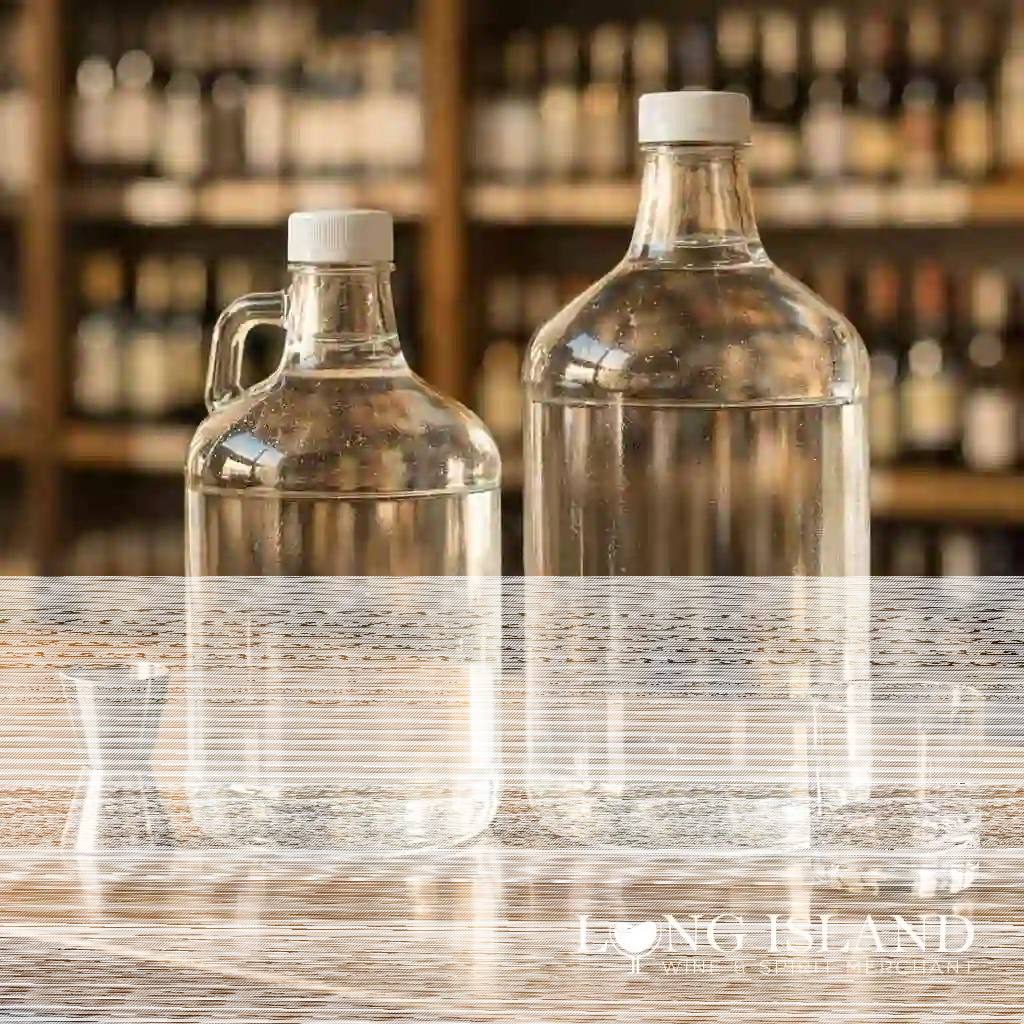
- Choose a fifth for tasting, gifting, or one cocktail night.
- Choose a liter if you want a middle ground for home bartending.
- Choose a handle when you need strong value per ounce and expect a crowd.
- Choose mini bottles for favors, travel-friendly service, or portion control.
The difference shows up fast in pricing per ounce, too. A larger bottle often lowers the cost per pour, which is why handles are popular for vodka, whiskey, bourbon, rum, gin, and tequila. For a more detailed breakdown, see Why Does A Handle Of Liquor Save Money Per Ounce.
We recently helped a Long Island host stocking a basement bar in Commack who wanted enough bourbon and gin for a mixed crowd. The bottle math mattered more than brand names. Once they saw how many drinks each size produced, the decision became easy.
A note on responsible serving: the National Institute on Alcohol Abuse and Alcoholism explains standard drink guidance and why pour size matters. That is useful whether you are mixing cocktails at home or planning a holiday spread.
Frequently Asked Questions
What are the standard liquor bottle sizes in the US?
The most common U.S. liquor bottle sizes are 50 ml, 100 ml, 200 ml, 375 ml, 750 ml, 1 liter, and 1.75 liters. You will also hear informal names like mini bottles, nip bottles, airplane bottles, pint liquor, fifth of liquor, and handle of liquor. These are the sizes most shoppers use to compare value, shelf space, and how much a bottle will serve.
Is a half gallon the same as a handle?
No. A handle is 1.75 liters, while a half gallon is 64 ounces, which is about 1.89 liters. The half gallon is slightly larger. People often mix them up because the difference is small in everyday use, but the measurements are not identical.
How many 1.5 oz shots are in a handle?
A 1.75 liter handle holds about 59.2 ounces, so it gives you roughly 39 shots at 1.5 ounces per shot. If you pour heavier cocktails, you will get fewer servings. If you are making mixed drinks for a crowd, that number helps with party planning and bar inventory.
What is the best size for a party?
For most parties, the handle of liquor is the best value if you need a large quantity of one spirit. A fifth works for smaller groups, and a liter is a good middle option. The right choice depends on the guest count, the cocktails you plan to serve, and how much storage space you have.
Does Shop Liquor Bottle Sizes ship liquor to all states?
Shop Liquor Bottle Sizes offers shipping in all 50 states, subject to alcohol shipping laws and destination rules. If you are looking for an online liquor store with a focused range of liquor bottle sizes, it is a practical place to compare bottle capacity and shop for the size that fits your needs.
Can I use liquor bottle sizes for home bar planning?
Yes. Bottle size is one of the easiest ways to stock a home bar without overspending. A clear liquor size chart helps you compare vodka, whiskey, bourbon, rum, gin, tequila, brandy, cognac, wine, and beer more accurately. If you want to browse by size before you order, start with the Comparison Of Liquor Bottle Sizes For guide and then choose the bottle that matches your event.
If you want help narrowing it down, browse the size-focused selection at Shop Liquor Bottle Sizes and order the bottle that fits your bar, your party, or your gift list without guessing.


