
Ultimate Guide To Liquor Bottle Size Pricing Strategies
April 17, 2026
Pricing liquor across different bottle sizes is fundamental for any successful retailer or informed consumer. The strategy goes beyond simple arithmetic, weaving together cost analysis, consumer psychology, and market dynamics. For a store like ours, offering everything from miniature samplers to majestic magnums, a nuanced approach is essential. This guide decodes the core principles that dictate how prices are set from the standard fifth to the rarest large-format bottles. Mastering these liquor bottle pricing strategies ensures value for customers and sustainable profit for merchants.
Decoding the Economics of Scale in Spirit Sizing
The relationship between bottle size and price is not linear, creating opportunities and challenges. This dynamic is governed by the economics of production, packaging, and perceived value. A savvy retailer must analyze the price per ounce across their entire portfolio to identify value propositions and premium opportunities. This analysis forms the bedrock of a coherent pricing strategy for large format bottles and smaller sizes alike. By decoding these economics, businesses can strategically position each SKU to meet diverse customer needs and maximize overall basket value.
The Fundamental Price Per Ounce Analysis
Every pricing strategy must begin with a rigorous price-per-ounce analysis. This calculation serves as the universal translator for comparing value across liquor bottle sizes. Typically, the cost per ounce decreases as bottle size increases, reflecting the economy of scale inherent in production and packaging. However, this rule has notable exceptions, especially with miniature bottles or limited editions. Conducting this analysis allows retailers to spot anomalies and justify pricing to customers seeking the best deal. It also provides a clear framework for wholesale liquor bottle pricing negotiations with suppliers. This fundamental metric is the first step in building a transparent and defensible pricing model for your entire inventory.
Economy of Scale in Large Format Bottle Pricing
Large format bottles, such as 1.75-liter handles or magnums, often showcase the most dramatic economies of scale. Pricing models for different liquor sizes must account for the reduced packaging and labor cost per unit volume for these bigger containers. Consequently, customers frequently find a lower price per ounce on a handle compared to a standard 750ml bottle. This value pricing for liquor bottles in larger sizes appeals to high-volume users, entertainers, and commercial clients. Retailers can use these large formats as anchor products that demonstrate clear customer savings and drive bulk purchases. Strategically promoting these sizes can significantly increase average order value and inventory turnover.
The Psychology Behind Miniature and Half Bottle Premiums
Conversely, miniature and half bottles often carry a premium price per ounce, defying simple economies of scale. This premium is driven by convenience, sampling, and gifting. Consumers pay for the privilege of trial without commitment, making miniatures perfect for exploring new craft spirits or luxury spirits. This premium pricing for small sizes also applies to half bottles, which cater to smaller households or solo connoisseurs. The packaging and handling costs per ounce are higher, justifying a portion of the markup. Savvy retailers leverage these sizes not just for profit, but as a low-risk entry point to cultivate future loyal customers for full-size purchases.
Magnum and Beyond Pricing Strategy for Luxury Spirits
When entering the realm of magnums, double magnums, and beyond, pricing transcends simple cost-plus models. The pricing strategy for luxury spirits in these sizes is an exercise in perceived value and exclusivity. These large formats are statement pieces, often associated with celebration, collectibility, and prestige. Therefore, their pricing incorporates a significant premium for rarity and spectacle, far beyond the cost of the liquid inside. This luxury liquor bottle pricing strategy targets collectors, investors, and clients seeking the ultimate gift. For a retailer, stocking these items elevates brand perception and creates dazzling display opportunities. Successfully pricing these giants requires deep market knowledge and an understanding of the clientele for rare and craft spirits.
Strategic Pricing Models for Diverse Liquor Portfolios
A one-size-fits-all approach to pricing will inevitably leave money on the table or alienate customers. A sophisticated retailer employs a portfolio of strategic pricing models to address different product categories and consumer segments. This involves shifting methodologies based on whether a spirit is a high-volume staple, a competitive premium brand, or an exclusive craft offering. The goal is to align price with perceived value, competitive positioning, and business objectives for each unique bottle. By mastering multiple models, a store can optimize margins across thousands of SKUs while maintaining customer trust and loyalty in a competitive market.
Cost Plus Pricing for Core Spirits and Wine
Cost-plus pricing forms the reliable backbone for a store’s core inventory of high-turnover items. This straightforward model applies a standard markup percentage to the wholesale cost of a bottle to ensure a consistent gross margin. It is most effective for well-known vodka, rum, gin, and popular wine brands where competition is fierce and prices are transparent. This method guarantees a baseline profit on every sale, providing financial predictability. However, relying solely on cost-plus can be limiting for premium brands or unique items where the market will bear a higher price. Therefore, it is best used as a foundational model, supplemented by more nuanced strategies for other portfolio segments.
Market Based and Competitive Pricing for Premium Brands
For sought-after bourbon, limited scotch, and cult-favorite tequila, market-based and competitive pricing is essential. This strategy requires constant vigilance, monitoring what competitors-both local and online-are charging for identical or comparable bottles. The price is set primarily by what the market will bear, often with only a loose connection to the wholesale cost. This approach maximizes revenue on high-demand items that customers actively seek out. It requires sophisticated tools and industry knowledge to track trends and adjust prices dynamically. Implementing this model effectively protects your store from being undercut while ensuring you capture the full value of trending spirits.
Value Pricing for Craft Spirits and Exclusive Bottles
Value pricing for craft spirits and exclusive bottles is a more nuanced art, focused on the story and uniqueness of the product. For a small-batch amaro, a local cachaca, or an exclusive cognac, the price is justified by its rarity, production method, and brand narrative. This strategy involves educating the customer on the value proposition beyond the liquid itself. The markup may be higher than on a mass-market bottle, but it reflects the specialized selection and curation effort of the retailer. Successful value pricing builds an aura of exclusivity and expertise around your store. It turns a simple transaction into an endorsement of quality and discovery, perfect for the Long Island Wine & Spirit Merchant experience.
Dynamic and Seasonal Pricing for Inventory Management
Agility is key in the modern spirits market, making dynamic and seasonal pricing a powerful tool for inventory management. This model allows prices to fluctuate based on real-time supply, demand, and seasonality. For instance, vermouth and light gin may be promoted in warmer months, while robust whiskey and brandy see emphasis as the weather cools. Flash sales can quickly move slow-moving inventory or capitalize on sudden trends. Dynamic pricing uses data to optimize for both profit and turnover, keeping your offerings fresh and competitive. This approach requires a responsive system but pays dividends in reduced carrying costs and increased customer engagement with ever-changing deals.
Tiered Pricing Structures for Custom Cases and Gift Boxes
Tiered pricing structures for custom cases and gift boxes create compelling incentives for larger purchases. When customers build a custom case of liquor or select a pre-designed liquor bottle gift box, they expect a reward for their higher commitment. Offering a discount at 6-bottle, 12-bottle, or case-level increments encourages customers to consolidate their spending. This strategy increases average order value and simplifies the shipping and handling process. It also makes your custom cases of liquor service more attractive for gifts, events, or personal collections. Clearly communicating these tiers motivates customers to reach the next threshold, directly boosting your sales volume and customer loyalty.
Maximizing Margin with Value Added Services and Products
Beyond the liquid in the bottle, significant profit potential lies in the services and presentation that surround it. Maximizing margin with value-added services and products involves creating unique offerings that command a premium due to enhanced convenience, personalization, or experience. Customers are often willing to pay more for a product that saves them time, feels specially made for them, or solves a gifting dilemma. This approach transforms a standard bottle of spirits into a memorable event or a cherished keepsake. For a retailer, these value-added options differentiate your store in a crowded market and build deeper emotional connections with your clientele.
Premium Pricing for Engraved Bottles and Personalized Liquor
Premium pricing for engraved bottles and personalized liquor is a classic example of adding value through customization. A bottle of Baileys, Campari, or fine wine becomes a one-of-a-kind gift when adorned with a name, date, or special message. The liquor bottle engraving service we offer justifies a higher price point due to the specialized labor, equipment, and unique result. Customers perceive tremendous value in this personal touch, making it a high-margin service perfect for weddings, anniversaries, and corporate awards. This strategy turns ordinary inventory into extraordinary liquor gifts, creating memorable moments that customers associate directly with your brand.
Bundle Pricing Strategies for Gift Boxes and Themed Collections
Bundle pricing strategies for gift boxes and themed collections increase the perceived value while moving multiple products simultaneously. By curating a set of complementary items-like a gin with tonic and glasses, or a selection of craft spirits for mixology-you create a convenient solution for the customer. The bundled price is often less than the sum of individual items, providing a perceived discount that encourages the purchase. This approach is highly effective for liquor bottle gift boxes, holiday promotions, and cocktail ingredients packs. It also introduces customers to new products they might not have purchased alone, driving discovery and future sales.
Strategic Discounting for Bulk Purchases and Wine Cases
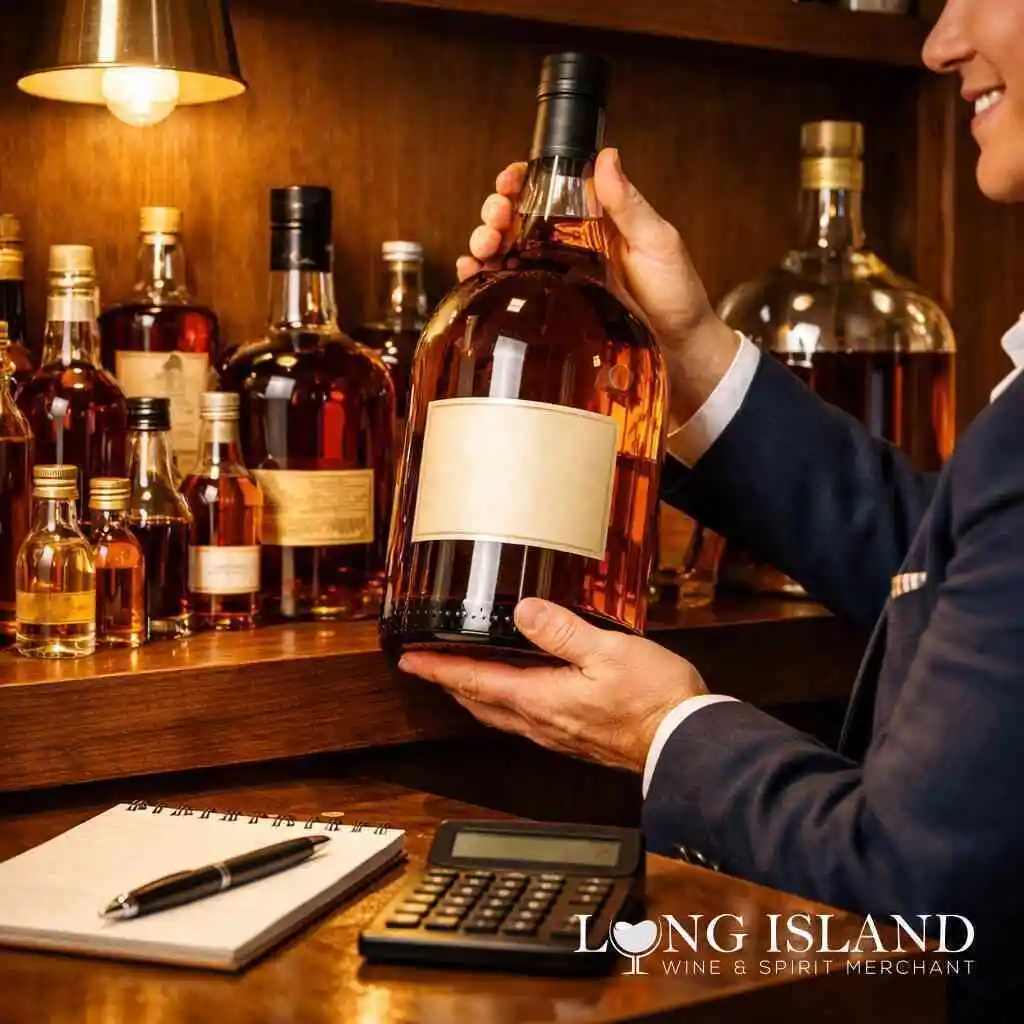
Strategic discounting for bulk purchases and wine cases is a powerful lever to accelerate volume and manage inventory. Offering a percentage off or a flat-rate discount when customers buy by the case (12 bottles) or in large formats incentivizes larger orders. This is particularly effective for wine enthusiasts building a cellar or restaurants securing their house pour. The discount is justified by the reduced per-unit handling cost and the guaranteed larger sale. This bulk liquor purchase pricing strategy must be carefully calibrated to protect overall margin while providing a compelling incentive. It reinforces your store as the go-to source for serious buyers and entertainment needs.
Pricing for Delivery Services and Convenience Premiums
In today’s market, convenience is a commodity, and pricing for delivery services and convenience premiums captures that value. An alcohol delivery service on Long Island provides immediate value by saving customers a trip to the store. This service can be monetized through a delivery fee, a higher minimum order requirement, or a slight markup on delivered goods. The key is to balance the operational cost of delivery with what the local market will bear for the convenience. For time-pressed professionals or those hosting last-minute gatherings, this premium is often gladly paid. It expands your store’s reach beyond its physical location in Commack, New York, making your fine wine and good spirits accessible across Suffolk County.
Psychological and Perceptual Pricing in the Liquor Aisle
The numerical price on a shelf tag is only part of the story; how that price is perceived dictates whether a bottle is added to a cart. Psychological and perceptual pricing in the liquor aisle leverages cognitive biases to make prices feel more attractive or to enhance the perceived quality of a product. These techniques are subtle yet powerful, influencing decisions on everything from a budget vodka to an investment-grade scotch. By understanding the mental shortcuts customers use, retailers can present prices in a way that feels fair, enticing, or even prestigious. This layer of strategy is what separates a transactional store from one that masters the art of selling.
Charm Pricing and Consumer Perception for Different Sizes
Charm pricing is a ubiquitous tactic that remains remarkably effective. Ending a price with .99 or .97-such as $29.99 instead of $30-creates a subconscious impression of a deal or a lower price point. This strategy can be applied differently across sizes; a miniature might be charm-priced to impulse buy level, while a large format bottle’s price may be rounded to convey quality. The psychology works because consumers tend to focus on the first digits they see. Implementing charm pricing requires testing and consistency across your online liquor store and physical shelves. It’s a simple tool that, when used strategically, can lift sales without deep discounting.
Luxury Pricing for Rare and Limited Edition Bottles
For rare and limited edition bottles, the rules of charm pricing are abandoned in favor of luxury pricing. Round numbers, often very high ones, convey quality, exclusivity, and confidence. A bottle priced at $1,000 feels more deliberate and premium than one priced at $999.99. This strategy aligns with the buyer’s mindset for collectible whiskey, vintage cognac, or allocated bourbon, where the purchase is an investment or a trophy. The price itself becomes part of the product’s story and allure. This approach demands a curated selection and an environment that supports such high-value transactions, reinforcing your authority in the world of luxury spirits.
Anchor Pricing with High End Spirits to Drive Value Perception
Anchor pricing with high-end spirits is a clever way to make other bottles seem more reasonably priced. By displaying an extremely expensive bottle-the anchor-near more moderately priced ones, you shift the customer’s frame of reference. Suddenly, a $150 single malt scotch appears accessible next to a $1,500 bottle. This technique works because people make relative judgments, not absolute ones. The anchor product may rarely sell, but its presence elevates the perceived value of everything around it. It’s a strategic display and pricing tactic that can boost sales of your mid-range premium brands and craft spirits.
Promotional Pricing and Flash Sales for Inventory Turnover
Promotional pricing and flash sales create urgency and excitement to clear specific inventory. A well-timed sale on a particular gin or rum brand can drive traffic, both online and in-store. These promotions are crucial for moving seasonal products, older vintages, or excess stock before new allocations arrive. The key is to promote these sales aggressively through email and social media to your loyal customers. This promotional pricing for liquor should feel like an exclusive opportunity, rewarding your community with first access. When executed well, flash sales improve cash flow and make room for new and exciting products your customers crave.
Implementing a Holistic Pricing Strategy for Long Term Profit
A successful pricing strategy is not a set-it-and-forget-it operation; it is a dynamic, integrated system. Implementing a holistic pricing strategy for long-term profit requires synthesizing all the previous models and techniques into a coherent, adaptable plan. This plan must account for different sales channels, cost structures, and long-term brand positioning goals. It involves continuous analysis, customer feedback, and market trend observation. The ultimate objective is to build a profitable, resilient business that customers trust for fair value, whether they’re buying a simple beer or a complex amaro. This holistic view turns pricing from a tactical concern into a strategic cornerstone.
Integrating On Premise vs Off Premise Pricing Considerations
A critical distinction in the industry is integrating on-premise vs off-premise pricing considerations. On-premise refers to sales in bars and restaurants, while off-premise is retail, like our Long Island liquor store. The pricing strategies differ dramatically due to service, ambiance, and portioning. A retail bottle price is often far lower per ounce than a single pour at a bar. Understanding this dichotomy helps retailers position their off-premise value proposition effectively. It also informs decisions on product selection, as some spirits are marketed primarily for on-premise cocktail use. A holistic strategy acknowledges these parallel markets and prices your retail bottles competitively to attract the home entertainer and the aspiring mixologist.
Balancing Wholesale Cost with Retail Markup Across Sizes
The core mechanics of profit lie in balancing wholesale cost with retail markup across sizes. This balance is not uniform; it varies by bottle size, brand category, and velocity. High-turnover standard sizes might have a lower markup percentage but contribute reliable volume. Slow-moving, large-format or rare liquors may carry a higher markup to justify the shelf space and capital tied up. The retail markup on liquor sizes must also factor in operational costs like shipping, storage, and staffing. Regularly reviewing this balance ensures each product category contributes positively to overall profitability. This disciplined approach prevents margin erosion and supports a sustainable business model capable of offering a vast selection.
Leveraging Data from Tools Like the Wine Taste Quiz for Personalized Offers
Modern pricing can be personalized by leveraging data from tools like the Wine Taste Quiz for personalized offers. Our interactive Wine Taste Quiz helps us understand individual preferences for wine and spirits. The data gathered allows for targeted communications and personalized pricing promotions, such as offering a discount on a recommended bourbon or vermouth. This moves pricing from a broad-stroke tool to a relationship-building instrument. Customers feel understood and valued, increasing their lifetime value. This data-driven approach represents the future of liquor recommendations and personalized liquor sales, creating a tailored shopping experience that generic pricing cannot match.
Future Proofing Your Pricing with Adaptable Models for Craft and Rare Spirits
The market is constantly evolving, especially with the explosion of craft spirits and the hunt for rare liquors. Therefore, future-proofing your pricing with adaptable models for craft and rare spirits is essential. This means maintaining pricing strategies that are flexible enough to accommodate new categories, production methods, and consumer trends. It involves staying educated on global supply chains and regulatory changes that affect cost. An adaptable model allows a retailer to quickly capitalize on the next trend in tequila or Japanese whisky with confidence. By building agility into your pricing framework, you ensure your store remains relevant, competitive, and profitable for years to come, no matter what the future of spirits holds.
Mastering liquor bottle size pricing strategies is a complex but rewarding endeavor that blends analytics with human psychology. From the fundamental price-per-ounce analysis to the sophisticated use of data for personalization, each strategy plays a role in building a successful, customer-centric business. Whether you are a consumer seeking to understand the value behind the price tag or a retailer refining your approach, these principles offer a comprehensive roadmap. At Shop Liquor Bottle Sizes, we employ these very strategies to bring you a thoughtfully curated selection at fair prices, from everyday gin and vodka to the finest cognac and scotch. We invite you to explore our complete liquor bottle sizes and pricing guide and discover the perfect bottle for every occasion and budget.
Frequently Asked Questions
Question: How does Shop Liquor Bottle Sizes determine the price for different liquor bottle sizes, like miniatures versus magnums?
Answer: At Shop Liquor Bottle Sizes, our liquor bottle pricing strategies are built on a detailed liquor bottle size cost analysis. For smaller sizes like miniatures, we account for the higher packaging cost per ounce and the convenience premium, which aligns with miniature liquor bottle pricing principles. For larger formats like magnums, we leverage economy of scale liquor pricing, where the cost per ounce decreases, allowing us to offer significant value. Our pricing models for different liquor sizes also consider factors like rarity and demand, especially for luxury liquor bottle pricing on limited editions. We constantly conduct a price per ounce comparison across our entire inventory-from gin and vodka to rare liquors-to ensure our customers in Commack, NY, and across the U.S. receive transparent and fair value, whether they’re buying a single bottle or exploring our custom cases of liquor.
Question: I’m looking for the best deal on bulk purchases. What bulk liquor purchase pricing or discount strategies for liquor sizes do you offer?
Answer: We specialize in providing exceptional value for bulk purchases through structured tiered pricing for liquor products. When you build a custom case of liquor or purchase a full case of wine or spirits, you unlock automatic discounts that increase with volume. This is a core part of our strategic discounting for liquor, designed to reward our customers while helping us manage inventory efficiently. We also apply value pricing for liquor bottles on our large-format 1.75L handles, offering a lower price per ounce. For our local customers in Suffolk County, we can even combine these bulk liquor purchase pricing benefits with our liquor delivery service. Check out our online liquor bottle gift boxes or contact us directly to create a personalized bulk order-it’s the smart way to stock up for parties or build your home bar with mixology essentials.
Question: Can you explain the premium liquor bottle pricing for engraved bottles or limited editions mentioned in the Ultimate Guide To Liquor Bottle Size Pricing Strategies?
Answer: Absolutely. The Ultimate Guide To Liquor Bottle Size Pricing Strategies highlights how pricing transcends the liquid for special items. Our engraved bottle premium pricing reflects the personalized service, specialized equipment, and unique result, transforming a bottle of Baileys, Campari, or fine cognac into a one-of-a-kind liquor gift. For limited edition liquor bottles and rare and craft spirits, we employ market-based liquor pricing and luxury liquor bottle pricing. This considers factors like scarcity, brand story, and collector demand, ensuring we fairly price these exclusive finds. As your trusted Long Island Wine & Spirit Merchant, we take pride in curating these special offerings and providing the expertise to help you understand their value, whether for a grand celebration or a prized addition to your collection.
Question: How do you handle dynamic pricing for liquor and seasonal liquor pricing to ensure customers get good deals?
Answer: Our dynamic pricing for liquor is a responsive strategy that allows us to adjust prices based on real-time supply, demand, and inventory levels. This is closely tied to seasonal liquor pricing-for example, promoting refreshing gin and vermouth in summer and robust whiskey and scotch in winter. We use these models to run promotional pricing for liquor and flash sales, which are fantastic opportunities for our customers to discover new craft spirits or stock up on favorites at a great price. These strategies are key for inventory-based liquor pricing, helping us keep our selection fresh and competitive. The best way to stay informed about these deals is to sign up for our updates or follow us, ensuring you never miss a chance to save on the best liquor from our online liquor store.
Question: As a Long Island liquor store, how do you compete with big-box retailers on competitive pricing for liquor sizes?
Answer: We compete by combining sharp competitive pricing for liquor sizes with unparalleled service and curation that big-box stores can’t match. We continuously monitor the market to ensure our retail markup on liquor sizes offers fair value, especially on high-demand premium brands like bourbon and tequila. Beyond price, we add immense value through services like our Wine Taste Quiz for personalized liquor recommendations, liquor bottle engraving, and expertly curated liquor bottle gift boxes. Our deep knowledge of spirits and focus on rare liquors and craft spirits means we offer unique products you won’t find everywhere. For our local community, our alcohol delivery service on Long Island provides unmatched convenience. We believe in maximizing profit with liquor sizes through customer loyalty and exceptional experience, not just the lowest sticker price.


