
How Shop Liquor Bottle Sizes Helps Commack Bars Stock 2026
August 10, 2026
When a Commack bar runs out of the right bottle size, what it really loses
You need the right liquor bottle sizes before the rush starts, not after. In a Commack liquor store context, that difference can decide whether service feels smooth or scrambled. If you are reading this because stock is tight and the weekend looks busy, that pressure is real. The hard part is not just buying liquor; it is buying the right liquor bottles in the right sizes.
Why bottle size matters more than brand names when the rush starts
A bottle size mistake can slow the whole bar. A bartender reaching for the wrong format wastes seconds, and seconds pile up fast. During a packed Friday, that can mean longer waits, sloppy pours, and unhappy guests. Brand names matter, of course, but flow matters more when tickets stack up. That is why bar inventory planning should start with size, not hype.
One operator in Suffolk County told us the same thing after a holiday private event. They had enough vodka, but not enough 750ml liquor for service wells, and the backup bottles were awkward to open during a rush. The fix was simple once they saw the pattern. They rebuilt the shelf around standard bottle sizes and kept fewer surprises on hand. That change made the line move faster, and the room felt calmer.
How mini liquor bottles, 750ml liquor, and 1.75 liter liquor change bar flow
Mini liquor bottles help with speed, sampling, and controlled portions. They are also useful for favors, flights, and high-volume events where waste hurts. A 750ml bottle, often called a fifth, remains the workhorse size for many spirits. A 1.75 liter liquor bottle, or handle of liquor, does the opposite job well. It reduces restocking trips and supports bulk service when the bar knows demand will stay high.
Here is the part most owners miss: different sizes do different jobs. A mini bottle is not a miniature version of the same decision. It is a tool for precision. A handle is not just more liquor. It is a planning decision about labor, storage, and pour control. On busy nights in Commack, that distinction matters.
The local stocking problem Commack liquor store buyers face before busy weekends
Commack bars often sit between neighborhood regulars and destination traffic from across Long Island. That creates a real inventory squeeze. You may need enough product for a modest weeknight, then enough depth for a sudden Saturday crowd. The hardest part is predicting where the pressure lands. If you stock only around bestsellers, you can still get stuck when one spirit category spikes.
We see this in New York metro planning all the time. A bar may carry enough whiskey, but not enough gin for martinis. Or enough beer, but not enough tequila for house margaritas. In Commack, NY, that becomes even trickier when weather shifts and reservations change late. The smart move is to keep a tighter core and reorder before the shelf gets thin. That is where a How Shop Liquor Bottle Sizes Helps Commack Buy Liquor Online model becomes useful.
Why liquor delivery and buy liquor online options can save a bar night without overbuying
Buying early is safer than buying panic stock. Online liquor store ordering helps you match the order to the actual need. That matters when you are trying to avoid dead money sitting on a shelf. It also helps when you need a quick shift between bottle sizes without committing to too much bulk liquor. For many operators, liquor delivery is the difference between a smooth service window and a costly scramble.
If you need a deeper view of size planning, the Liquor Bottle Sizes approach keeps the focus where it should be: on practical inventory, not guesswork. Shop Liquor Bottle Sizes serves Commack, New York, and ships to all 50 states where laws allow it, so the model works for local pickup thinking and broader planning. That combination matters when you are comparing Long Island liquor store options with nationwide flexibility. It gives you room to stock smarter without overbuying.
The bottle size map that makes bar inventory stop guessing and start paying off
A good bottle map takes the mystery out of ordering. It gives your team a common language. It also makes margin easier to understand. Once you know the bottle structure, you can compare value size comparison data without getting lost in sticker shock. That is what turns bar inventory into a system instead of a guess.
Standard bottle sizes and the liquor size chart every bar should keep nearby
Every bar should keep a simple liquor size chart near the ordering station. Standard bottle sizes usually include 50 ml, 100 ml, 200 ml, 375 ml, 750 ml, 1 liter, and 1.75 liter under TTB standard sizes. Some operators still use older names, like half pint liquor, pint liquor, and fifth of liquor. Those nicknames help staff move quickly, but the labeled size should guide the order. Metric bottle sizes make planning easier, especially when comparing EU bottle sizes with imperial habits.
A useful chart does not need to be fancy. It just needs to be clear. Put the size, the approximate ounces, and the usual use case side by side. That makes it easier to see where mini liquor bottles fit, where 750ml liquor belongs, and where a handle of liquor makes sense. For a more detailed breakdown, the standard bottle sizes for bar inventory planning guide can help organize the shelf. If your team works fast, clarity is money.
ML to oz conversion and shot sizes that help staff pour with confidence
ML to oz conversion sounds technical, but it is really about confidence. A 750 ml bottle equals about 25.4 ounces. A 1 liter bottle is about 33.8 ounces. A 1.75 liter bottle is about 59.2 ounces. Once staff know those numbers, pour decisions feel less vague. That reduces overpouring and keeps ABV and proof discussions practical, not abstract.
Shot sizes matter too. In the U.S., a standard shot is usually 1.5 ounces. Some bars use smaller pours for certain drinks, but the standard helps with consistency. If you want a quick reference for pours and conversions, the shot count and ml to oz conversion guide is a useful companion. It keeps the math from slowing service. That matters more than people realize during peak hours.
How many shots in a bottle when you are balancing speed, waste, and margin
This is the question managers ask most. How many shots in a bottle depends on the bottle size and the pour size. A 750ml bottle gives roughly 16 standard 1.5-ounce shots. A 1 liter bottle gives about 22. A 1.75 liter bottle gives about 39. Those numbers shift if your house pour differs, so always confirm your own specs. But the framework stays the same.
A Smithtown caterer once told us their biggest surprise was not demand. It was waste. They had enough product, but the team poured by feel. That added cost every night. When they standardized shot sizes and tracked bottle counts, their ordering got cleaner fast. For a deeper shot-count breakdown, see how many shots are in a bottle of liquor. The math is simple. The discipline is what saves money.
Why pricing per ounce tells a better story than sticker shock for bulk liquor
Sticker shock can mislead you. A bigger bottle looks expensive until you divide it by ounces. Pricing per ounce usually tells the real story. That is especially true for bulk liquor and wholesale liquor style planning. If you compare a 750ml bottle with a 1.75 liter bottle, the larger format often wins on value. The only question is whether the shelf and sales pattern justify it.
Here is a practical way to compare. Look at bottle size, ounces, and expected usage rate. Then ask how fast the product turns. If it moves slowly, a cheaper per-ounce price may still be a bad choice. If it sells quickly, the savings can be meaningful. A value comparison for bulk liquor purchases approach keeps the decision grounded in turnover, not vanity.
Which spirits deserve the shelf space when the goal is a tighter smarter bar
Shelf space is limited. That means every bottle has to earn its place. The goal is not to carry everything. The goal is to carry the right essential spirits for bars and the mixers that support them. A tighter shelf often performs better than a crowded one. That is true in Commack, and it is true anywhere service speed matters. 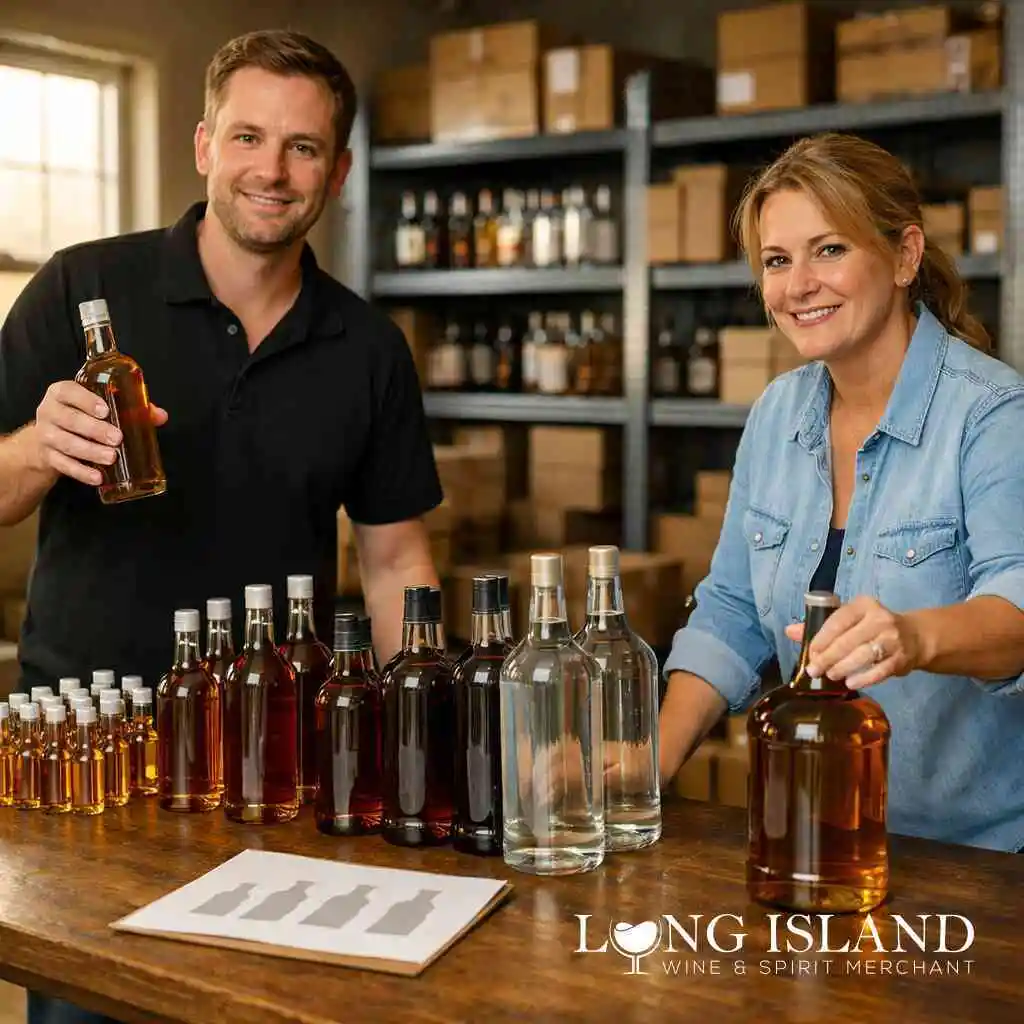
The essential spirits that most Commack bars should prioritize first
Start with the core. Vodka, whiskey, bourbon, gin, rum, tequila, and a reliable vermouth are the usual anchors. Then add one or two specialty lanes that fit your crowd. In many bars, that means scotch, rye whiskey, brandy, and cognac in smaller quantities. This gives you coverage without drowning in slow movers. It also makes ordering easier from a Long Island liquor store with broad selection. If your crowd leans toward cocktails, you need enough support products to keep drinks moving. That includes amaro, liqueur, and basic modifiers. A bar that forgets those bottles often feels short on options even when the shelf looks full. The best inventory is balanced, not bloated. That balance starts with the essentials. ### Vodka whiskey bourbon scotch rum gin tequila and mezcal in a real bar rotation
These categories do not perform the same job. Vodka is a neutral base for high-volume mixed drinks. Whiskey and bourbon carry more flavor and often more brand loyalty. Scotch and rye whiskey serve different palates and cocktail styles. Rum, including spiced rum, supports tropical and classic drinks. Gin, tequila, and mezcal each bring their own house specialties.
A practical shelf plan usually includes one or two choices per category. For example, a bar may carry vodka, whiskey, and tequila at broader volume, then keep smaller back-up lines for rye, scotch, and mezcal. That kind of planning fits many Commack, New York bars and local inventory needs. It also keeps the shelf readable for staff. A vodka, whiskey, and tequila for bar shelves link is useful when you need to compare core categories quickly. What we see most often is this: too many labels, not enough structure.
Where vermouth amaro liqueur and cocktail ingredients quietly save a service window
Modifiers are the hidden heroes. Vermouth, sweet vermouth, dry vermouth, amaro, triple sec, blue curaçao, coffee liqueur, Baileys, and St-Germain all make the menu work. Without them, your staff improvises. That slows service and hurts consistency. With them, cocktails move in a predictable rhythm.
Here is what almost no online guide mentions. A strong back-bar modifier program can shorten ticket times more than adding another vodka facing. That is because the bottleneck is often prep, not just spirit selection. A vermouth and cocktail ingredients for service prep setup helps here. The same logic applies to amaro and liqueur categories. They are small bottles with outsized operational value.
Wine beer craft beer canned cocktails and seasonal liquor for mixed crowd nights
Not every crowd wants the same thing. Some nights lean toward red wine and white wine. Others need sparkling wine, champagne, craft beer, imported beer, domestic beer, hard seltzer, or canned cocktails. Seasonal liquor also matters, especially when the room shifts toward holiday liquor gifts or warm-weather drinks. A smart bar reads the room before it orders the room.
If your venue hosts private events, this mix matters even more. One week you need Pinot-adjacent wine service. The next, you need a beer-and-shot crowd. Flexible inventory keeps you from overcommitting to one style. It also helps when a venue wants gift liquor sets or mini bottles for favors. The goal is not perfect prediction. The goal is resilient stock.
What a local stock plan looks like when Commack bars want fewer surprises and better margins
A strong stock plan blends math, timing, and restraint. It does not chase every trend. It keeps the bar ready for parties, private events, and ordinary nights that become busy without warning. That is the real challenge in Suffolk County. You need enough depth to respond, but not so much that cash gets trapped in the back room.
How to stock a bar for parties private events and holiday liquor gifts without overbuying
Start with the guest mix. Then match the bottle sizes to the event type. For larger parties, handles and liter bottles can reduce labor. For smaller tastings or favors, mini liquor bottles make more sense. For holiday liquor gifts, a few distinctive bottles may outperform a deep wall of slow movers. The question is always the same: what will move, and how fast?
If you want a planning shortcut, think in layers. Keep a core list for everyday service. Add a secondary list for event volume. Then reserve a small flexible shelf for seasonal liquor and allocated items. This structure keeps ordering calm. It also makes buy liquor online decisions more deliberate. You can order what you need without overbuying what looks appealing.
Why mini liquor bottles handle bottle reuse and eco-friendly bottle sizes matter to modern operators
Mini bottles are not just cute. They are functional. They support controlled pours, tastings, and portion planning. They can also reduce waste when a concept uses sampled drinks or prebuilt kits. Bottle reuse matters too, especially for operators thinking about eco-friendly bottle sizes and cleaner back-of-house habits. Smaller bottles can sometimes reduce spoilage when a spirit or modifier does not move quickly.
A hotel bar in the New York metro area once switched part of its service to minis for welcome trays and specialty stations. The team cut waste and simplified setup. They also found bottle reuse easier because empty formats were easier to sort and manage. That is the kind of operational detail most guests never see, but staff feel it every shift. For mini bottle planning, best mini liquor bottles for catering in Commack can be a smart reference point.
When rare spirits allocated bourbon and gift liquor sets make sense for bar programs
Rare spirits can strengthen a program, but only if they fit the story. Allocated bourbon, Pappy Van Winkle, Buffalo Trace, Blanton’s, Johnnie Walker, Macallan, Don Julio, Patrón, Grey Goose, Tito’s, Captain Morgan, Jack Daniel’s, Jim Beam, Hennessy, Courvoisier, Martini & Rossi, Campari, Aperol, Chambord, and similar names can create excitement. They can also distract from the basics if the core shelf is weak. That is why timing matters.
Use rare bottles as part of a planned offer, not as a panic buy. Gift liquor sets can work for holidays, special menus, or limited releases. They are especially effective when paired with tasting notes or a featured cocktail. The key is placement. Put the right bottle in the right moment. Do not let prestige crowd out practicality. When you need a broader look at this balance, Long Island bar inventory planning can help connect the dots.
The next move for Suffolk County bars that want a better bottle plan through Long Island liquor store support and shipping liquor to all states
If you run a bar in Commack or elsewhere in Suffolk County, your next move should be simple. Review your last few busy shifts. Count what actually sold. Compare that with what sat untouched. Then rebuild the bottle plan around standard sizes, faster-moving spirits, and the formats that fit your service style. That is where a knowledgeable Long Island liquor store partner makes the difference.
Shop Liquor Bottle Sizes is built for that kind of decision-making. We help with liquor bottle sizes, liquor delivery, and online ordering, and we ship to all 50 states where laws allow it. That gives you flexibility without forcing excess. If you want a more precise look at bottling, stocking, and service planning, start with one clean order and one honest count. You do not have to solve everything today. You just need a better bottle plan before the next rush.
People Also Ask
What are the standard liquor bottle sizes in the US?
The most common standard bottle sizes are 50 ml, 100 ml, 200 ml, 375 ml, 750 ml, 1 liter, and 1.75 liter. Bartenders also use nicknames like mini, nip, half pint, pint, fifth, liter, and handle. Those terms help in conversation, but the label should guide ordering. For bar inventory, standard sizes make counting easier and reduce confusion during a busy shift.
Is a half gallon the same as a handle?
Yes, in bar language, a handle usually means 1.75 liter, which is close to a half gallon. The names are often used interchangeably in casual conversation. Still, it helps to check the actual label because bottle styles can vary. For ordering and storage, the metric size is the safest reference.
How many 1.5 oz shots are in a 750ml bottle?
A 750ml bottle holds about 25.4 ounces. Divide that by a 1.5-ounce shot, and you get about 16 shots. If your pour is larger or smaller, the count changes. That is why staff training and pour control matter so much.
Do mini liquor bottles help with party planning?
Yes, minis can be very useful for favors, welcome bags, tasting flights, and controlled portions. They help when you want variety without opening full-size bottles. They also work well for events where guests may want a small, simple pour. For planning, minis reduce waste and make counts easier.
What is the best bottle size for a busy bar?
It depends on the spirit and sales volume. A 750ml bottle works well for many core items, while a 1.75 liter bottle can be better for high-volume well spirits. Minis help with specialty or low-volume needs. The best choice is the one that matches your pour rate and storage space.
Does Shop Liquor Bottle Sizes ship outside New York?
Yes, shipping is available to all 50 states where alcohol shipping laws allow it. That makes it useful for local Commack planning and broader ordering needs. If you are comparing sizes, inventory, or event stock, a nationwide option can help you stay flexible. Always check local rules before ordering.
What does pricing per ounce tell you?
Pricing per ounce shows the real value of a bottle after you remove the sticker shock. A larger bottle often costs more up front, but less per ounce. That can improve margins if the bottle moves quickly. It is one of the simplest ways to compare value across different sizes.
Frequently Asked Questions
Question: How does How Shop Liquor Bottle Sizes Helps Commack Bars Stock 2026 guide Commack liquor store buyers toward better bar inventory planning?
Answer: It focuses on the practical side of liquor bottle sizes: choosing the right standard bottle sizes for the way a bar actually serves guests. That means looking at mini liquor bottles, 750ml liquor, 1 liter liquor, and 1.75 liter liquor as different tools instead of interchangeable options. For a Commack liquor store buyer, that approach helps reduce guesswork, improve bar inventory planning, and keep essential spirits for bars moving smoothly during busy shifts. It is especially helpful when you want to buy liquor online or arrange liquor delivery without overbuying bottles that will sit too long on the shelf.
Question: What liquor bottle sizes work best for a busy bar looking to balance speed, waste, and margin?
Answer: There is no single best bottle size for every bar, but most busy operations benefit from a mix. Mini liquor bottles can help with favors, sampling, and controlled portions. 750ml liquor is often a strong everyday choice for core spirits. 1.75 liter liquor, also called a handle of liquor or half gallon liquor in casual conversation, can work well for high-volume items when the pour rate justifies it. The best setup comes from comparing pricing per ounce, expected turnover, and storage space instead of focusing only on sticker price. That is why a clear liquor size chart and regular count checks make such a difference.
Question: How many shots in a bottle should a Commack bar expect when ordering whiskey, vodka, bourbon, or tequila?
Answer: The answer depends on the bottle size and the house pour. Using a standard 1.5 ounce shot size, a 750ml bottle usually yields about 16 shots, a 1 liter bottle about 22, and a 1.75 liter bottle about 39. That is why ml to oz conversion matters so much in bar inventory planning. When staff know how many shots in a bottle they should expect, they can order with more confidence, reduce waste, and keep service predictable. This is especially important for high-demand types of spirits like vodka, whiskey, bourbon, gin, rum, and tequila.
Question: Which types of spirits and cocktail ingredients should a Long Island liquor store buyer keep on hand for a tighter smarter shelf?
Answer: A strong shelf usually starts with the core essentials: vodka, whiskey, bourbon, scotch, rye whiskey, rum, spiced rum, gin, tequila, and mezcal. Then it should be supported by cocktail ingredients like vermouth, sweet vermouth, dry vermouth, amaro, liqueur, Baileys, Kahlúa, triple sec, blue curaçao, coffee liqueur, and other modifiers that help drinks move quickly. Wine, beer, craft beer, champagne, hard seltzer, and canned cocktails can also matter depending on the crowd. The goal is not to carry everything. It is to carry the right mix of essential spirits for bars so the back bar stays efficient and easy to work with.
Question: Why should Commack bars buy liquor online instead of waiting until the weekend rush?
Answer: Buying early through an online liquor store can help a bar stay ahead of demand and avoid panic ordering when the shelf gets thin. It also makes it easier to compare liquor bottles by size, evaluate value size comparison, and choose the formats that fit the service style. For many operators, liquor delivery and online ordering are useful because they create more flexibility around restocking, event prep, and seasonal liquor needs. That matters whether you are planning holiday liquor gifts, mini bottles for favors, or bulk liquor for a high-volume night. In a place like Commack, that kind of planning can make service calmer and more profitable.
Question: Does Shop Liquor Bottle Sizes support bar inventory planning for Suffolk County bars beyond just standard bottle sizes?
Answer: Yes, the broader value is in helping buyers think through the whole shelf, not just the bottle. That includes standard bottle sizes, historical bottle names like fifth of liquor and pint liquor, and the practical use of formats like airplane bottles, nip bottles, half pint liquor, and handle of liquor. It also includes planning for party planning, home bar needs, gift liquor, liquor gift sets, and rare spirits such as allocated bourbon. Shop Liquor Bottle Sizes is based in Commack, New York on Long Island and serves customers who want a more thoughtful way to stock a bar. For buyers comparing Long Island liquor store options, that combination of local expertise and online ordering support can make the process much easier.


