
Compare Shop Liquor Bottle Sizes for Bar Inventory and Value
August 2, 2026
You need to buy liquor for a party, a home bar, or a busy weekend, and the bottle size feels confusing. That confusion is normal. Most people guess, then pay for it later in wasted space, wasted pours, or the wrong mix of sizes. If you are reading this because the numbers feel slippery, take a breath. The fix is simpler than it looks.
Why the wrong bottle size quietly wrecks bar inventory and wipes out value
The hidden cost of buying by guesswork instead of price per ounce
The biggest mistake in liquor bottle sizes is not buying the wrong brand. It is buying the wrong size without checking value per ounce. A bottle can look cheaper on the shelf and still cost more in practice. That is why bar inventory works best when you think in ounces, not just labels. A smart buyer compares liquor bottles the same way every time.
For an online liquor store shopper, the math matters even more because you cannot touch the bottle first. You need a clear liquor size chart, a few standard bottle sizes, and a calm way to compare options. A 750ml liquor bottle, for example, is not automatically better than a 1 liter liquor bottle. Sometimes the larger bottle wins. Sometimes it does not. The answer depends on price per ounce, usage speed, and storage.
Here is the part most people miss. A bottle that sits too long becomes expensive in a different way. You may tie up cash, crowd a shelf, or forget what you already own. In projects we’ve finished this year, that mistake shows up most in home bars that slowly become cluttered. A quick ml to oz conversion and a simple pricing per ounce check usually solves it.
Why a Commack liquor store buyer thinks in shots, not just bottles
In Commack, New York, buyers often think about real use, not just display. That makes sense. If you run a home bar, stock for a backyard party, or buy for guests, you want to know how many shots in a bottle. That question is more useful than the bottle’s nickname. It tells you what the bottle can actually do.
A Commack liquor store shopper also thinks about the event itself. A few friends over for cocktails is not the same as a family gathering with rum, vodka, whiskey, and gin drinks moving all night. A handle of liquor may look oversized at first. Then you realize the crowd will empty it faster than expected. That is why local buyers often plan around shot sizes and pour patterns instead of guessing.
One client from Smithtown needed a simple setup for a backyard dinner near the end of summer. He wanted whiskey, tequila, and vermouth for mixed drinks, but he kept underestimating the pours. We walked through the numbers bottle by bottle. He left with fewer bottles, but better sizes, and his bar stayed organized all night.
When mini liquor bottles make sense and when they create more waste than value
Mini liquor bottles, airplane bottles, and nip bottles have a place. They work well for favors, sample flights, travel-friendly portions, or an event where variety matters more than volume. They also help when you want guests to try several spirits without opening full-size bottles. That can be very smart for a wedding table, a tasting gift, or a themed party.
Still, mini bottles create more packaging waste and usually cost more per ounce. If you need volume, they are rarely the best value. A half pint liquor size or pint liquor size may still be better than tiny bottles if you want to stretch the budget. In many cases, mini bottles for favors feel intentional, while minis for regular bar inventory feel inefficient.
The best rule is simple. Use mini liquor bottles when presentation matters. Use larger standard bottle sizes when value matters. If you want a neat, eco-friendly bottle plan, fewer bottles usually means less waste and less clutter. That tradeoff becomes obvious once you compare a few sizes side by side.
The bottle size map that actually matters for home bars and parties
Standard bottle sizes that bartenders rely on from 50 ml to 1.75 liter liquor
The bottle size map starts with the standards bartenders know. Under TTB standard sizes, common liquor bottle sizes include 50 ml, 100 ml, 200 ml, 375 ml, 750 ml, 1 liter, and 1.75 liter. Those are the sizes that matter most for home bartending, bar inventory, and party planning. Anything beyond that becomes special occasion territory. These are the anchors.
SizeCommon NameRough OuncesTypical Use50 mlmini bottle / nip1.7 oztastings, favors, travel100 mlmini / airplane bottle3.4 ozsampling, small gifts200 mlhalf pint liquor6.8 ozcompact bar stock375 mlpint liquor12.7 ozsmaller household use750 mlfifth of liquor25.4 ozstandard home and bar use1 literliter bottle33.8 ozfrequent use, better value1.75 literhandle of liquor59.2 ozparties, busy barsA good liquor size chart helps you compare those numbers fast. It also helps you avoid overbuying the wrong format. If you are stocking vodka, whiskey, rum, tequila, or gin, the same size logic usually applies across categories. The bottle shape changes. The value math stays familiar.
Fifth of liquor, handle of liquor, half pint liquor, and the names people still use
People still use the old names because they are easy to remember. A fifth of liquor is the classic term for 750ml liquor. It came from one-fifth of a gallon, which is why the name stuck. A handle of liquor usually means 1.75 liter liquor. A half pint liquor is 200 ml, and a pint liquor is 375 ml in common retail language.
These old names are useful, but they can also confuse people. A “fifth” sounds like a fraction, yet the modern standard is 750 ml. A “handle” sounds informal, but it points to a real size that fits party planning. Historical bottle names still matter because customers use them every day. If you shop at a Long Island liquor store, you will hear all of them.
Here is a simple way to keep them straight:
- Mickey: often used for a 375 ml bottle in some markets
- Nip or airplane bottle: usually 50 ml
- Fifth: 750 ml
- Handle or Texas mickey: 1.75 liter
- Half gallon: about 1.75 liter in everyday talk, though the standard bottle is a handle
That last detail matters. People often say half gallon liquor when they mean a handle. The bottle is close enough for conversation, but the actual standard size is 1.75 liter.
How many shots in a bottle when pour size and ABV change the math
The answer depends on pour size and proof. In the U.S., a standard shot is usually 1.5 oz. That means a 750ml bottle gives you about 17 shots, while a 1 liter bottle gives you about 22. A 1.75 liter bottle gives you about 39 shots. If you pour heavier, the count drops fast. If you pour lighter, it climbs.
ABV, or alcohol by volume, changes the strength, not the bottle count. Proof is double the ABV, so 40% ABV equals 80 proof. Stronger spirits may change drink planning because guests often sip them more slowly. That matters for whiskey, bourbon, scotch, rum, gin, tequila, mezcal, brandy, and cognac. It also matters when mixing with vermouth, amaro, liqueur, or Baileys.
If you want a deeper breakdown, how many shots in a bottle and ml to oz conversion is the fastest way to see the math. A clear count helps you avoid the classic party mistake: buying enough bottles, but not enough usable pours. That mistake feels small until the second round starts.
Which liquor bottle sizes win on value, and which ones only look smart
Pricing per ounce in real bar inventory decisions without getting fooled by label size
The smartest value comparison starts with price per ounce. That is the only fair way to compare liquor bottle sizes across brands and formats. A smaller bottle can look affordable because the total price is lower. A larger bottle can look expensive because the sticker is bigger. The truth lives in the ounces.
This is why wholesale liquor buyers, home bartenders, and anyone buying bulk liquor think the same way. They compare the bottle, then divide by volume. They also consider how quickly the bottle will move. If you are opening a bottle every week, a larger size may save money. If you only need one drink recipe, a smaller bottle may protect freshness and reduce waste.
The mistake we see most often is people choosing by shelf presence. Big labels feel premium. Small bottles feel safe. Neither tells you the real cost. A simple value size comparison cuts through that noise.
Why 750ml liquor is the workhorse and when 1 liter liquor beats it
The 750ml liquor bottle is the workhorse for a reason. It fits most shelves, most recipes, and most home bars. It also matches the way many people buy wine, spirits, and gift liquor. For a lot of shoppers, it is the best balance of storage, value, and familiarity. That is why it remains the default in many carts.
Still, 1 liter liquor can beat 750 ml when you use the bottle often. If you make cocktails on weekends, pour neat drinks for guests, or stock essential spirits, the extra volume can pay off. This is especially true for vodka, gin, whiskey, and tequila. The size difference is meaningful. The cost difference per ounce often favors the liter.
A practical comparison helps. A 750 ml bottle gives you fewer pours and less shelf footprint. A 1 liter bottle gives you more flexibility and usually better efficiency. If you are ordering through an online liquor store and want to compare liquor bottle sizes for bar inventory and value, this is the split to study first. It is the cleanest middle ground for most shoppers.
When a handle of liquor or half gallon liquor makes sense for house parties and busy bars
A handle of liquor makes sense when volume is the goal. House parties, holiday gatherings, and busy bars can move through a 1.75 liter liquor bottle quickly. That size reduces restocking and cuts down on repeated opening. It also works well when you know a spirit will be used in many drinks. Vodka and rum often fit this pattern.
Still, bigger is not always better. A handle only helps if you finish it in a reasonable window. If a bottle sits too long, value slips away. A half gallon liquor bottle, in common language, usually points to the same 1.75 liter format. That makes it a practical option for frequent use, but not for casual sipping.
For parties, I usually suggest thinking in guest count, drink style, and backup bottles. One handle may be perfect for a crowded backyard event. Two 750 ml bottles may be better for a smaller dinner with mixed cocktails. If you want a focused guide, 1.75 liter liquor bottle planning for parties can help you size up the occasion without overbuying.
How different spirits and wine formats change the size decision
Vodka, whiskey, bourbon, scotch, rum, gin, tequila and mezcal do not all sell the same way
Different types of spirits move differently, so the right bottle size changes with the category. Vodka often makes sense in larger sizes because it works in so many cocktails. Whiskey, bourbon, and scotch may sell well in 750 ml because many buyers want a familiar standard bottle. Rum and gin often split the difference, especially if the bar uses them seasonally. Tequila and mezcal can justify larger bottles when margaritas and mixed drinks are in rotation.
That is why category knowledge matters. A spirits store cannot treat every bottle the same way. Brandy, cognac, armagnac, vermouth, sweet vermouth, dry vermouth, amaro, and liqueur each follow different usage patterns. Baileys, Kahlúa, triple sec, blue curaçao, and coffee liqueur tend to move by recipe demand. You do not stock them the way you stock a base spirit.
If you are comparing a vodka bottle sizes for value shopping or a whiskey setup, think about drink frequency first. A high-use spirit deserves a bigger bottle. A specialty bottle deserves a size that matches how fast you will actually open it.
Mini bottles for favors versus gift liquor and liquor gift sets that feel intentional
Mini bottles work beautifully when the goal is presentation. They are excellent for wedding favors, tasting trays, and holiday place settings. They can also be useful in gift liquor packs when you want variety without a full-size commitment. A thoughtful set of mini liquor bottles looks deliberate. It feels curated.
Liquor gift sets, on the other hand, work best when the bottle size supports the occasion. A 750 ml bottle can feel generous for a host gift. A larger bottle can feel substantial for a family celebration. The key is matching the format to the gesture. That makes the gift feel intentional instead of random.
One customer in Suffolk County asked for favors that felt elegant without going overboard. We talked through mini bottles, label style, and how many guests would actually keep the gift. The final choice was simple and neat. The whole table looked finished because the bottle size matched the purpose.
Wine cases, champagne, canned cocktails and beer when the category matters as much as the bottle
Wine and beer follow their own logic. A wine bottle is usually 750 ml, but cases change the planning. Red wine, white wine, and rosé all need different storage and serving rhythms. Champagne and sparkling wine demand more care because the celebratory timing matters. A full case may make more sense for a wedding or holiday than a single bottle. Beer also shifts the calculation. Craft beer, imported beer, domestic beer, hard seltzer, and canned cocktails are often bought by count, not just by ounce. That means the category matters as much as the bottle. A party with mixed drinkers may need a balance of spirits and ready-to-drink options. That balance often saves money and reduces leftovers. If you are planning around wine store categories for parties and home inventory, think beyond the bottle shape. Think about pace, guest preference, and what will actually be consumed. The smartest size is the one that fits the real event. 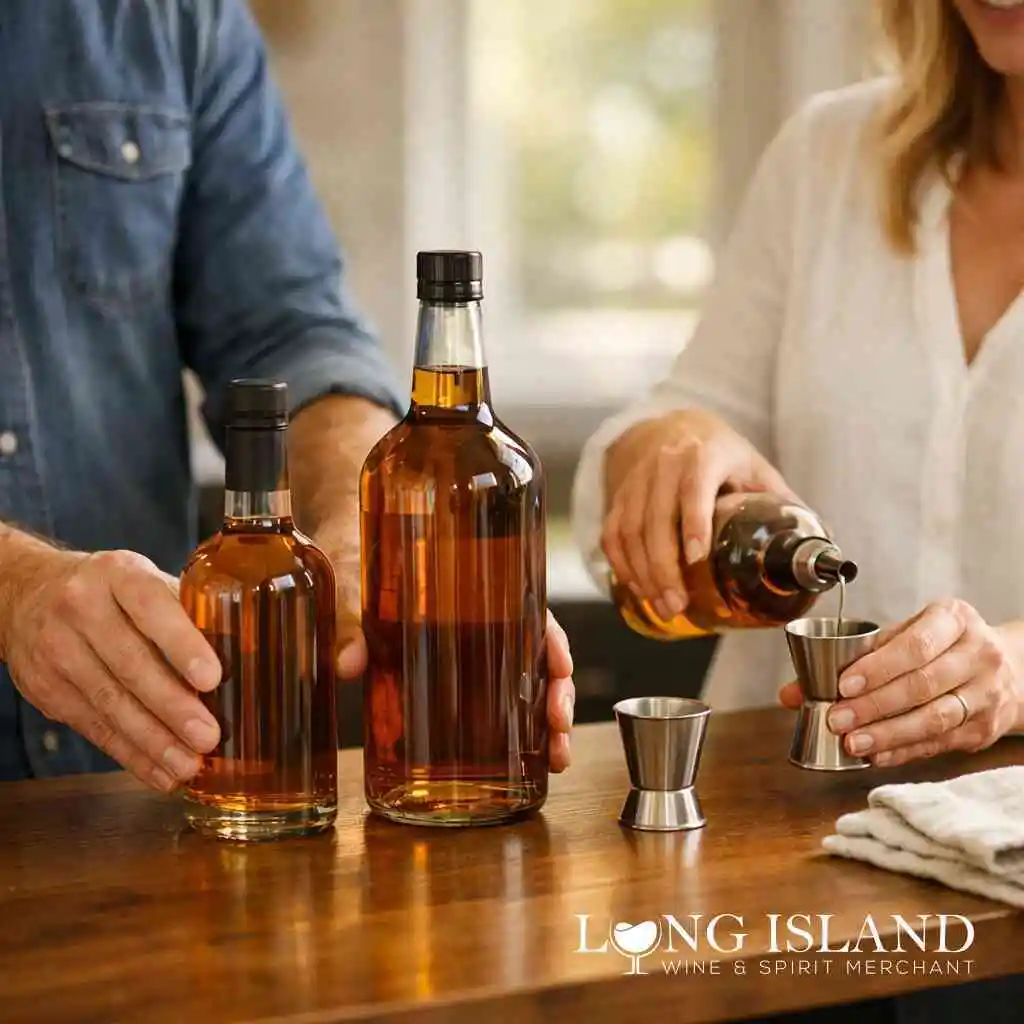
The smarter move for Commack and Long Island shoppers who want value without waste
What to stock for home bartending, seasonal liquor and holiday liquor gifts
For home bartending, start with the essentials. Most bars do well with vodka, whiskey, rum, gin, tequila, and one or two mixers like vermouth or amaro. From there, you can add seasonal liquor for summer spritzes or holiday liquor gifts for colder months. That keeps your shelf useful without becoming crowded. It also makes gifting easier.
A simple stock list helps:
- 1 standard vodka
- 1 whiskey or bourbon
- 1 gin or tequila
- 1 rum
- 1 vermouth or liqueur
- 1 wine or sparkling option
- Optional mini bottles for favors or tastings
That list works in Commack, across Long Island, and for many NYC liquor delivery customers as well. It keeps the shelf flexible. It also makes bulk planning more sensible. If you want a refined approach, liquor store spirit categories for stocking a bar is a good place to narrow the choices.
How Shop Liquor Bottle Sizes helps with buy liquor online, liquor delivery and bar inventory planning
The reason many shoppers use Shop Liquor Bottle Sizes is simple. The site helps you compare liquor bottles without wasting time. That matters when you want to buy liquor online and avoid guesswork. It matters even more when you need liquor delivery and do not want to overorder. It also matters when you are building a home bar from scratch.
If you are in Commack, NY, or anywhere in Suffolk County or Nassau County, local planning still matters. Long Island weather, party season, and the holiday rush can all change what you need on hand. A helpful size guide can prevent duplicate purchases and unnecessary clutter. If you want the clearest overview, liquor bottle size charts for home bars and parties are the right tools to keep nearby.
What almost no online guide mentions is this: the best bottle size is often the one that matches your refill rhythm. If you restock often, smaller bottles can be fine. If you host often, larger bottles usually win. If you only want a few bottles that do everything well, 750 ml and 1 liter are the safest bets.
A practical sizing plan for Suffolk County, Nassau County and NYC liquor delivery customers
If you want a simple plan, keep it practical. Start with 750 ml bottles for core spirits. Add 1 liter bottles for your most-used items. Use 1.75 liter bottles for large parties or repeated entertaining. Keep mini bottles for favors, sampling, and gifts. That structure works across Suffolk County, Nassau County, and NYC liquor delivery orders.
Here is a straightforward decision map:
- Need flexibility? Choose 750 ml liquor.
- Need better value per ounce? Compare against 1 liter liquor.
- Need party volume? Consider a handle of liquor.
- Need presentation or favors? Use mini liquor bottles.
- Need a gift? Match the bottle size to the gesture.
That approach keeps you from overspending and under-serving at the same time. If you are ready to compare bottle formats with less stress, about Long Island Wine & Spirit Merchant on Long Island gives you a sense of the local shop behind the site. You do not have to figure every bottle out today. Start with one category, one event, and one size that actually fits the way you drink.
Frequently Asked Questions
Question: How do I compare liquor bottle sizes for bar inventory and value when shopping at Shop Liquor Bottle Sizes?
Answer: The best way is to compare liquor bottle sizes by price per ounce, expected usage, and storage space rather than by sticker price alone. A 750ml liquor bottle is a solid starting point for most home bars, while a 1 liter liquor bottle can offer better value for spirits you use often. If you are stocking for parties or busy weekends, a 1.75 liter liquor bottle, also called a handle of liquor, may be the smarter choice. Shop Liquor Bottle Sizes makes it easier to compare standard bottle sizes, liquor size chart options, and bar inventory needs in one place so you can buy liquor online with more confidence.
Question: What are the most common standard bottle sizes, and when should I use mini liquor bottles or airplane bottles?
Answer: The most common standard bottle sizes are 50 ml, 100 ml, 200 ml, 375 ml, 750 ml, 1 liter, and 1.75 liter. Mini liquor bottles, airplane bottles, and nip bottles are best when presentation matters more than volume, such as for favors, tastings, travel, or gift liquor. A half pint liquor or pint liquor size can be more practical than tiny bottles if you want a small format with better value. For regular home bar use, larger bottles usually create less waste and better pricing per ounce, while minis are ideal for mini bottles for favors and sample-style occasions.
Question: How many shots in a bottle should I expect from a fifth of liquor, 750ml liquor, or 1.75 liter liquor?
Answer: The answer depends on your shot sizes and pour style, but a standard 1.5 oz shot is the usual benchmark. A fifth of liquor or 750ml liquor typically gives about 17 shots, a 1 liter liquor bottle gives about 22 shots, and a 1.75 liter liquor bottle, or handle of liquor, gives about 39 shots. If you pour heavier cocktails or tasting pours, the number drops. A quick ml to oz conversion helps you plan more accurately for party planning, home bar stocking, and liquor delivery orders.
Question: Why is Compare Shop Liquor Bottle Sizes for Bar Inventory and Value helpful for home bartending and party planning in Commack?
Answer: This guide is helpful because it gives Commack liquor store shoppers a practical way to match bottle size to real use. For home bartending, it helps you decide whether to stock 750ml liquor for flexibility, 1 liter liquor for better value, or 1.75 liter liquor for parties and frequent entertaining. It also helps with liquor delivery and buy liquor online planning because you can compare types of spirits, from vodka, whiskey, bourbon, scotch, rum, gin, tequila, and mezcal to vermouth, amaro, liqueur, and wine. For shoppers in Commack, New York, and across Long Island, that means less waste, better bar inventory control, and a more efficient way to build a useful home bar.
Question: Does Shop Liquor Bottle Sizes help with gift liquor, liquor gift sets, and seasonal liquor choices?
Answer: Yes, Shop Liquor Bottle Sizes is a strong option when you want gift liquor or liquor gift sets that feel intentional. Mini liquor bottles can work well for favors or tasting-style gifts, while 750ml liquor often works best for a host gift or seasonal liquor present. If you want something bigger for holiday liquor gifts or a celebration, a larger bottle may be more appropriate depending on the occasion. The right choice depends on whether you want presentation, convenience, or value size comparison. Matching the bottle size to the event helps your gift feel thoughtful instead of random.


