
Why Does a Handle of Liquor Save Money Per Ounce
October 29, 2026
A handle of liquor usually saves money per ounce because the packaging, bottling, and distribution costs are spread across more liquid. That lower pricing per ounce is why bigger standard bottle sizes often beat smaller ones on value, even though the sticker price looks higher at first.
If you are staring at bottle choices and feeling a little stuck, that reaction is normal. This topic is genuinely confusing for most people, especially when liquor bottle sizes mix metric labels with old names like fifths and handles.
Key Takeaways
- A handle of liquor is the 1.75 liter size, and it usually has a lower value per ounce than smaller bottles.
- The historical fifth of liquor became the modern 750ml liquor bottle, which is still the most common full-size option.
- Bigger bottles often cost more upfront, but their pricing per ounce usually drops because fixed packaging costs are spread out.
- Smaller options like mini liquor bottles, airplane bottles, nip bottles, pint liquor, and half pint liquor make sense for convenience, travel, or favors, not for the best savings.
- For home bars, parties, and bulk buying, comparing ml to oz conversion and how many shots in a bottle gives you a clearer picture than just looking at the shelf price.
Why a handle looks expensive until you do the ounce math
A handle looks expensive because the total price is higher, but the real question is how much liquid you get for each dollar. Once you compare ounces, a 1.75 liter bottle often comes out ahead of smaller standard bottle sizes. That is the basic reason the handle usually wins on value per ounce.
What a handle of liquor really means in standard bottle sizes
A handle of liquor is the 1.75 liter bottle, which is also called a half gallon liquor in everyday conversation. It sits above the fifth of liquor, the 750ml liquor bottle, and the 1 liter size in the usual size ladder. Under common U.S. bottle standards, that means you are getting roughly 59.2 fluid ounces before any pour is made.
Here is the part most shoppers miss: the old “fifth” name came from one-fifth of a gallon, which was close to 757 ml before bottles were standardized at 750 ml. The label changed, but the habit stuck. That is why metric vs imperial bottle talk still shows up everywhere, from bar backrooms to Long Island liquor store shelves in Commack, New York.
A quick mental liquor size chart helps:
Bottle sizeCommon nameApprox. ouncesTypical use50 mlmini / nip1.7 oztasting, favors200 mlsmall bottle6.8 oztravel, sampling375 mlhalf pint liquor12.7 ozshort-term convenience750 mlfifth25.4 ozstandard home use1 literliter bottle33.8 ozvalue-minded buying1.75 literhandle59.2 ozparties, home bar stockThat sizing language matters when you buy liquor online or compare bottles in a New York liquor store. If you know the ounces, you can compare rum, gin, vodka, whiskey, tequila, and wine without guessing.
Why price per ounce usually drops as the bottle gets bigger
The bigger bottle usually costs less per ounce because the fixed costs do not double when the liquid amount doubles. The glass, closure, label, shipping box, and handling are spread over more ounces. That is why a handle often beats two fifths on pricing per ounce. For home use, that difference adds up fast. A customer from Smithtown once asked us why the handle looked “too big” for a backyard gathering near a patio and fire table. Once we compared the ounces, the larger bottle made more sense for vodka, mixers, and a few simple cocktails than buying several smaller bottles.
A useful way to think about it:
- Smaller bottles cost more per ounce.
- Medium bottles are a middle ground.
- A handle usually gives the best value per ounce for the same spirit.
If you want the cleanest comparison, divide price by ounces and ignore the shelf label for a moment. That is also why bar buyers and home bartenders use pricing per ounce instead of total price when planning bar inventory or stocking home bar essentials.
The bottle size ladder that changes the value equation
The value equation shifts as bottle size changes. A fifth, a 1 liter bottle, and a handle all carry different cost structures, and small bottles trade savings for convenience. Once you see the ladder clearly, it becomes easier to choose the right bottle for party planning, gifting, or daily pours. 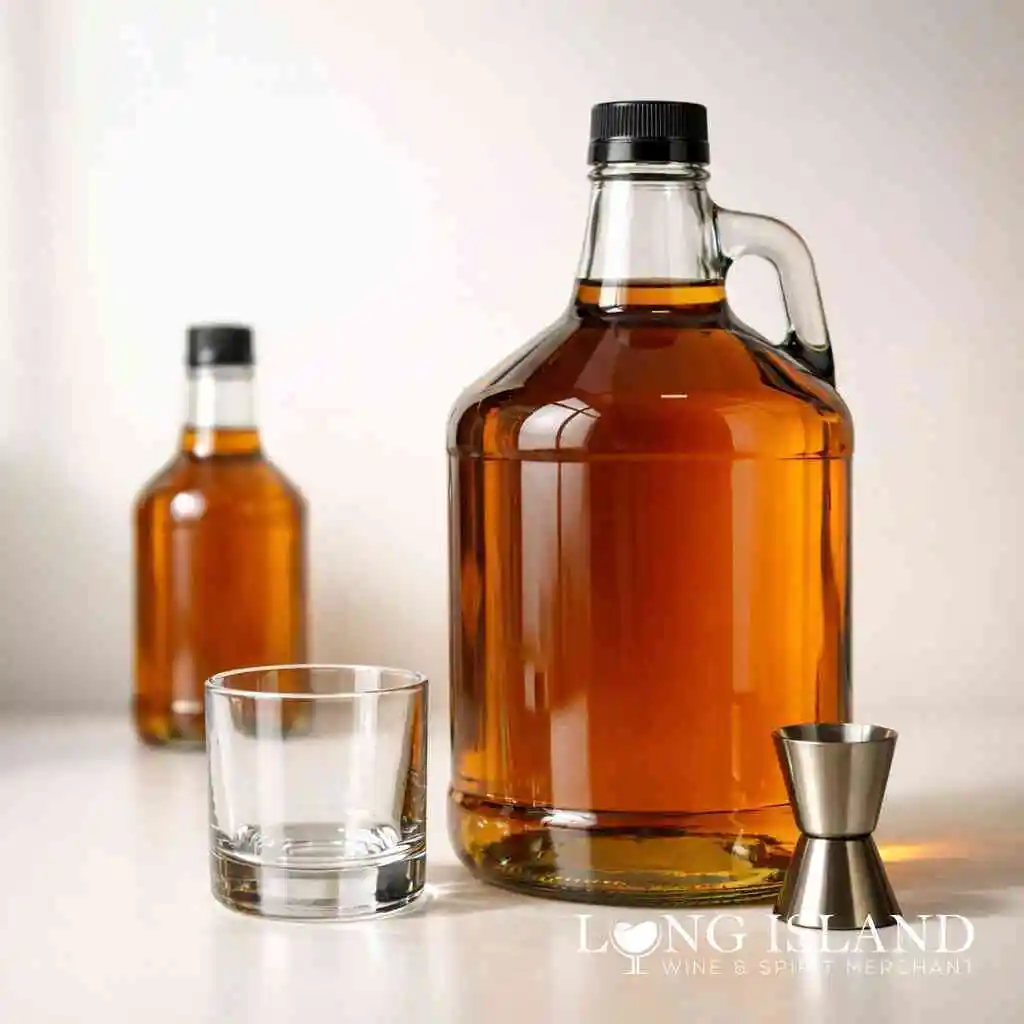
Fifth of liquor 750ml liquor 1 liter liquor and 1.75 liter liquor side by side
The simplest comparison is between the fifth, the 1 liter bottle, and the handle. The 750 ml bottle remains the everyday default, but the 1 liter and 1.75 liter sizes usually improve the ounce value. That is true across many types of spirits, including vodka, whiskey, bourbon, scotch, rye whiskey, rum, spiced rum, gin, tequila, mezcal, brandy, cognac, vermouth, amaro, and liqueur.
SizeApprox. ouncesRelative value750 ml liquor25.4 ozBaseline1 liter liquor33.8 ozBetter value1.75 liter liquor59.2 ozUsually best valueThe math gets even more useful when you think in pours. A 1.5 ounce shot size gives you about 16 shots from a fifth, about 22 shots from a liter, and about 39 shots from a handle. If your plan is cocktails for a dinner party, a handle often keeps you from running short halfway through the evening. That is why it is so common in bulk liquor buying and best liquor bottle size for parties searches.
One couple planning a family reunion on Long Island came in looking for a few fifths of gin and rum. After they mapped out the cocktail list, one handle and one smaller bottle made more sense than four separate smaller bottles. It was cleaner for the bar cart, simpler for mixing, and easier to manage during service.
Mini liquor bottles airplane bottles pint liquor and half pint liquor when convenience beats savings
Mini liquor bottles, airplane bottles, nip bottles, half pint liquor, and pint liquor are about convenience, not savings. They are useful for favors, sampling, travel, minibar setups, and recipe testing. If you need variety more than volume, they can be the right move.
That said, they almost never win on value size comparison. A 50 ml mini bottle and a 375 ml half pint both cost more per ounce than a fifth or handle because you are paying for small packaging and more handling per unit. That is why they make sense for weddings, tastings, or mini bottles for favors, but not for stocking a serious home bar.
FormatBest forValue per ounceMini liquor bottles / airplane bottles / nip bottlessampling, favors, travelLowestHalf pint liquorsmall households, quick useLowPint liquormoderate convenienceBetter, but still below larger sizesFifth / 750 ml liquorstandard home useStrong1 liter liquorhome bar planningStronger1.75 liter liquorparties, staples, bulk buyingUsually strongestHere is the practical rule: choose small bottles when flexibility matters more than cost, and choose a handle when you want the best ounce value on a spirit you know you will actually use. If you are stocking home bar essentials for vodka, whiskey, bourbon, rum, gin, tequila, or even wine and sparkling wine for mixed drink service, bigger bottles usually work harder for you.
For readers comparing sizes online, our liquor bottle size guide is a useful place to start, and the handle versus half gallon breakdown goes deeper on the largest common format. If you are checking broader buying options, the bar inventory comparison can help you match size to use.
For bottle standards and alcohol guidance, it also helps to rely on the Alcohol and Tobacco Tax and Trade Bureau and the NIAAA alcohol facts. Those sources are useful when you want the factual framework behind bottle sizes, ABV, and responsible serving.
If you need a handle for a party, gift liquor, or a home bar restock, Shop Liquor Bottle Sizes makes it easier to compare bottle sizes without guessing. You can browse online, choose the format that fits your needs, and arrange liquor delivery or shipping to all 50 states when that is the more practical option.
Frequently Asked Questions
Question: Why Does a Handle of Liquor Save Money Per Ounce, and how can I compare it with a fifth of liquor or 750ml liquor bottle?
Answer: A handle of liquor usually saves money per ounce because the fixed costs of bottling, packaging, and distribution are spread across more liquid. When you compare a 1.75 liter liquor bottle with a fifth of liquor or a standard 750ml liquor bottle, the larger size often gives better value per ounce even though the shelf price is higher. The easiest way to compare standard bottle sizes is to look at pricing per ounce instead of total price and use a simple ml to oz conversion or liquor size chart. That approach is especially helpful when shopping at an online liquor store like Shop Liquor Bottle Sizes, where you can compare liquor bottle sizes for home bar essentials, party planning, or bulk liquor needs without guessing.
Question: What is the best liquor bottle size for parties if I want the most value per ounce?
Answer: For most parties, a 1.75 liter liquor bottle or handle of liquor is often the best liquor bottle size for parties because it usually offers the strongest value size comparison. If you are hosting cocktails with vodka, whiskey, rum, gin, tequila, or other types of spirits, the larger bottle helps you stock your bar inventory more efficiently and reduces the number of bottles you need to open. Smaller options like mini liquor bottles, airplane bottles, nip bottles, half pint liquor, and pint liquor are useful for favors, sampling, or travel, but they usually are not the best choice if your goal is savings. If you are planning a gathering in Commack, New York or anywhere on Long Island, Shop Liquor Bottle Sizes can help you buy liquor online and choose the right bottle size for your event.
Question: How many shots in a bottle can I expect from a handle, and how does that compare to a 1 liter liquor bottle?
Answer: The number of shots in a bottle depends on your shot sizes, but a standard 1.5 ounce pour gives you about 39 shots from a handle of liquor and about 22 shots from a 1 liter liquor bottle. A fifth of liquor gives you around 16 shots at that same pour size. That is why larger standard bottle sizes can be better for home bartending, bar inventory planning, and bulk liquor buying. If you are stocking up on cocktail ingredients for whiskey, bourbon, scotch, rye whiskey, rum, spiced rum, gin, tequila, mezcal, brandy, cognac, vermouth, amaro, or liqueur, the handle often gives you the most efficient ounce value.
Question: Does Shop Liquor Bottle Sizes offer liquor delivery or shipping liquor to all states for handles and other standard bottle sizes?
Answer: Shop Liquor Bottle Sizes is an online liquor store based in Commack, New York on Long Island, and it offers a convenient way to buy liquor online with liquor delivery and shipping liquor to all states where permitted by alcohol shipping laws. If you are comparing liquor bottle sizes, looking for a handle of liquor, or searching for a Long Island liquor store or New York liquor store you can trust, our site makes it easier to shop by size and category. We also carry a wide range of options across wine, beer, hard seltzer, canned cocktails, and different types of spirits, so you can compare what fits your needs without having to visit multiple stores. Availability can vary, so it is always best to check the site directly for current selection.
Question: What should I know about metric vs imperial sizing, historical bottle names, and eco-friendly bottle reuse before I choose a handle of liquor?
Answer: Understanding metric vs imperial sizing makes bottle shopping much easier because names like fifth of liquor, 750ml liquor, 1 liter liquor, and 1.75 liter liquor can sound confusing at first. Historical bottle names such as jeroboam, rehoboam, methuselah, salmanazar, balthazar, and nebuchadnezzar are also useful to know if you shop for larger formats or rare spirits. For most everyday buyers, though, the handle remains the most practical larger bottle because it balances value per ounce with convenience. Many customers also like thinking about liquor bottle reuse and eco-friendly bottle sizes, since fewer bottles can mean less packaging waste over time. If you are building a home bar or planning a gift liquor purchase, Shop Liquor Bottle Sizes can help you choose the right format for both practicality and presentation.


