
What Are the Best Bottle Sizes for Gluten Free Cocktails
July 18, 2026
You need the right bottle size for gluten free cocktails, not just the right spirit. That sounds simple, but it gets confusing fast. A guest asks for a clean margarita, another wants a vodka soda, and suddenly you are staring at liquor bottle sizes like they are puzzle pieces. If you are feeling that late-night party-planning pressure, that is normal. The good news is that the right size usually becomes obvious once you match the bottle to the drink count.
Why the wrong bottle size can wreck a gluten free cocktail night
What gluten free actually means for cocktails and where hidden ingredients usually sneak in
Gluten free cocktails start with gluten free spirits, but that is not the whole story. The base spirit matters, yet mixers, flavored liqueurs, and even some syrups can add hidden ingredients. Bartenders also have to watch cross-contact on shared tools, especially when flour-rimmed drinks or bread-based garnishes appear nearby. Here is the part most people miss: a cocktail can be built from a safe spirit and still fail the test because of a mixer. That is why bottle choice and ingredient choice belong in the same conversation.
We hear this from customers all the time in Commack, NY, and across Long Island. They want a clean bar for a dinner party, but they do not want a cabinet full of leftovers after one weekend. That tension is real. If you are shopping at an online liquor store or planning gluten free cocktail bottle sizes, think beyond brand names and look at how the bottles will actually get used. The best bottle size is the one that matches your recipe list, not your wish list.
Why small-batch mixers and specialty liqueurs change the bottle size equation
Specialty mixers change everything because they are rarely used ounce for ounce like vodka or gin. A bottle of amaro, vermouth, or triple sec can sit in the fridge or bar for weeks between pours. That means a huge bottle may look efficient, but it can become stale before you finish it. For fresh cocktails, smaller bottles often protect flavor better. They also reduce waste when you only need a few measured pours.
One client in Suffolk County was hosting a gluten free brunch with grapefruit spritzes and herbal martinis. She wanted full-size bottles of everything. After a quick count of servings, we shifted her to smaller spirit bottles and one backup larger bottle for the most-used base. She avoided a cluttered counter and still had enough for a second round. That is the kind of practical planning that keeps party stress low.
The Long Island party-planning mistake that turns one round of drinks into too many leftovers
The biggest mistake we see in Long Island party planning is buying for the fantasy instead of the guest list. A bottle that looks perfect for a big crowd can leave you with half-used mixers and flat sparkling wine. That is even more frustrating with gluten free cocktails, because many people want a narrower set of safe ingredients. If the party is small, oversizing the bar creates waste and weakens freshness. If the party is large, undersizing the base spirits creates a scramble.
A smarter approach starts with the drink menu. Count each cocktail type, then match the bottle format to that count. For a small gathering, mini liquor bottles or a 750ml bottle may be enough. For a bigger celebration, a 1 liter or 1.75 liter bottle may be better for the main spirit. If you want help sorting that out, a Long Island liquor store pickup near Commack can make the comparison easier before the event gets close.
Which liquor bottle sizes actually make sense once you start mixing
The standard bottle sizes that matter most from mini liquor bottles to a handle of liquor
Once you start mixing cocktails, liquor bottle sizes stop being abstract. The standard bottle sizes that matter most are the ones bartenders actually pour from: mini liquor bottles, airplane bottles, nip bottles, half pint liquor, pint liquor, fifth of liquor, 750ml liquor, 1 liter liquor, 1.75 liter liquor, and the handle of liquor. Small bottles help with tasting flights, favors, and recipe testing. Mid-size bottles fit home bars. Large bottles help when you know the pour count will be high.
The old names still show up because people use them daily. A fifth is still a fifth, even though the modern standard is 750ml. A handle is still a handle, even though many labels show liters first. If you are comparing bottle formats side by side, a liquor size chart and metric to oz conversion gives you the clearest view. That kind of chart saves money because it shows value, not just volume.
Here is a quick reference many home bartenders use:
Bottle sizeCommon useBest fitMini liquor bottlestastings, favors, travel-friendly portionsparties, gifts, sampling750ml liquorstandard home usemost cocktail recipes1 liter liquormixed home bar usemoderate entertaining1.75 liter liquor / handleheavy use, large eventslarge parties### How many shots in a bottle when you are building cocktails by the ounce
If you build cocktails by the ounce, shot counts matter. A standard shot is usually 1.5 ounces in the U.S., though some recipes use 1 ounce or 2 ounces. That means bottle math changes with the pour. A 750ml bottle holds about 25.4 ounces. At 1.5 ounces per shot, that is roughly 16 shots. A 1 liter bottle gives you about 33.8 ounces, or about 22 shots at the same pour.
That arithmetic matters because cocktails use more than a neat pour. A margarita may use 2 ounces of tequila. A martini may use 2.5 ounces of gin or vodka, plus vermouth. A punch recipe can move through a bottle faster than expected. If you want a deeper breakdown, how many shots in a bottle for cocktails is the simplest way to estimate your shopping list without guessing.
A practical rule helps. Count the total ounces needed for the recipe, then divide by the bottle size in ounces. That tells you whether you need one bottle, two bottles, or a backup. It also helps with bar inventory. The less you guess, the fewer surprises you get when guests arrive hungry and thirsty at the same time.
Why a fifth of liquor and 750ml liquor still matter even though the names sound old school
The fifth of liquor has a history that still helps people shop. It originally meant one-fifth of a gallon, which came out near 757ml. Today, the standard settled at 750ml, so the old nickname stayed while the measurement shifted slightly. That is why the fifth and 750ml liquor bottle are still treated as the same practical size in most bars. In the real world, they are close enough for cocktail planning.
This size matters because it sits in the sweet spot between compact and useful. It is large enough for several rounds, but not so large that your bar feels overloaded. For gluten free cocktail nights, that balance is useful when you need one safe base spirit and one or two supporting bottles. A 750ml liquor bottle pick for cocktail recipes often works well when you are testing a menu before a bigger event. The bottle feels manageable, and the recipe math stays straightforward.
When a 1 liter liquor bottle beats a 1.75 liter liquor bottle for home bar balance
A 1 liter liquor bottle often beats a 1.75 liter bottle when you want balance. The bigger bottle can seem like better value, but it may not fit your actual pace of use. If you rotate among vodka, tequila, gin, and rum, a 1 liter bottle keeps the bar flexible. It is easier to store, easier to pour, and less risky if the spirit is part of a niche gluten free menu. The result is less waste and less clutter.
A 1.75 liter bottle earns its place when one spirit will carry the night. Think backyard parties, holiday crowds, or one signature cocktail that everyone will order. Still, the handle is not always the best answer. Sometimes it is too much for a home bar and not enough for a full crowd with mixed preferences. If you are weighing those tradeoffs, 1 liter liquor bottle value for home bars usually deserves a look before you commit.
The bottle size strategy behind the spirits most often used in gluten free cocktails
Vodka, gin, tequila, and rum choices when you want a clean base for gluten free spirits
Vodka, gin, tequila, and rum are the core gluten free spirits for many cocktail programs. Most distilled spirits are naturally gluten free, though you should still check labeling and additives. Vodka and tequila are especially popular because they work in clean, bright drinks with simple builds. Gin brings herbal complexity. Rum adds warmth and sweetness, especially in daiquiris, mojitos, and tropical spritzes.
Bottle size should match the base spirit’s role in the menu. If vodka will anchor three cocktails, go bigger. If gin appears in one signature drink, a smaller bottle may be smarter. For shoppers comparing gluten free vodka and tequila options, the goal is not just safety. It is fit. A bottle that matches the recipe count keeps the bar efficient and the drinks consistent.
Why whiskey, bourbon, rye whiskey, and scotch can still work if the rest of the recipe is sound
Whiskey, bourbon, rye whiskey, and scotch can still fit into a gluten free cocktail plan. The key is knowing that distilled spirits can be suitable, while flavored additions may not be. A whiskey sour, old fashioned, or boulevardier may work beautifully if the modifiers are gluten free. Rye whiskey brings spice. Bourbon adds caramel notes. Scotch can add smoke, but only when the recipe supports it. 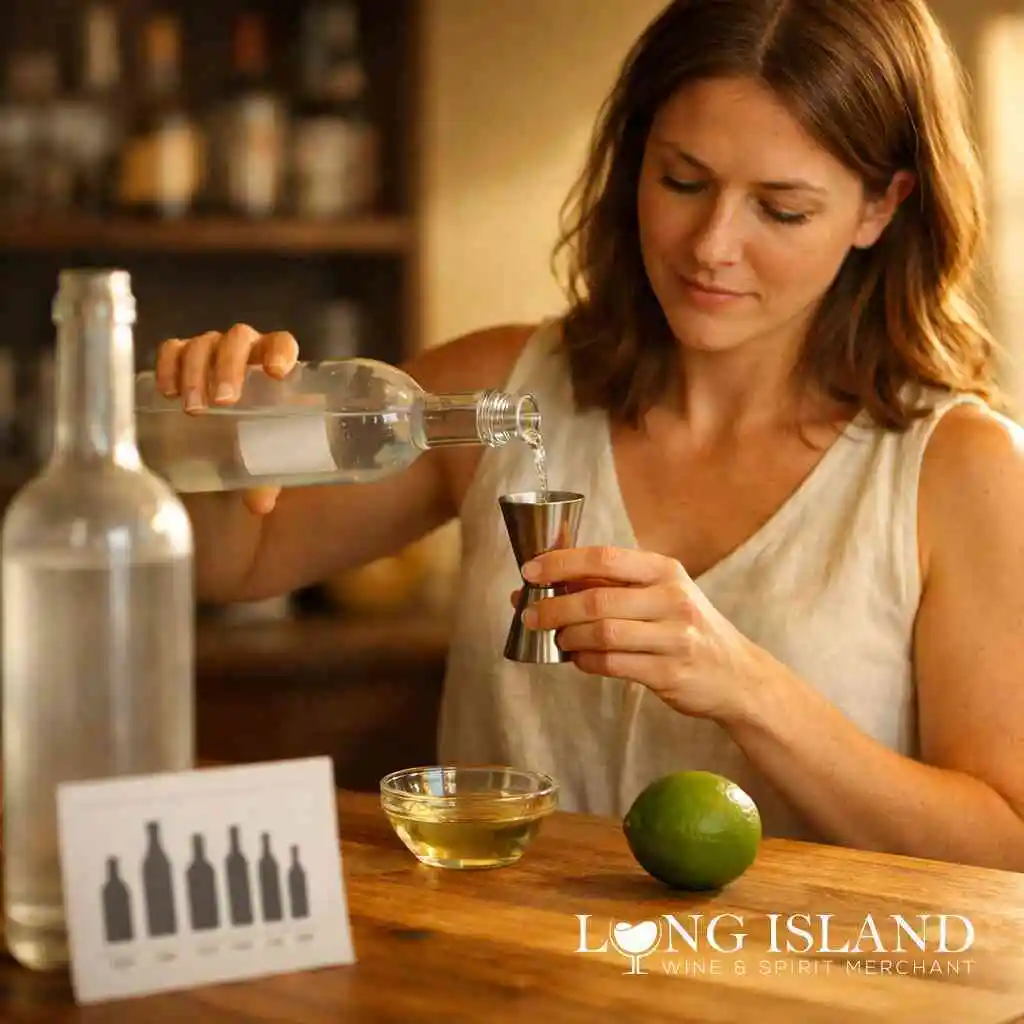
The bottle size question gets more important here because these spirits often get poured in smaller quantities than vodka or rum. One or two cocktails per guest can be enough. That makes a 750ml bottle or 1 liter bottle a strong choice for many home bars. If you need a deeper category review, whiskey and rum spirit choices for cocktails is useful for comparing spirit styles before you buy. On the projects we help with most often, the right whiskey bottle is usually the one that disappears at a steady pace, not the one that sits untouched.
Where vermouth, amaro, liqueur, Baileys, triple sec, and blue curaçao fit in a gluten free bar
Vermouth, amaro, liqueur, Baileys, triple sec, blue curaçao, and coffee liqueur deserve extra attention. They are flavor tools, not main-event bottles. Some are gluten free, and some need careful label checking. Dry vermouth and sweet vermouth are often used in small measured amounts. Amaro can add bitterness. Triple sec and blue curaçao brighten citrus drinks. Baileys and cream liqueurs need particular scrutiny because texture and additives matter.
These bottles usually belong in the smaller end of your bar inventory unless the menu is specialty-heavy. A little goes a long way. In a single cocktail menu, one bottle may serve many guests. That is why vermouth and liqueur ingredients for mixed drinks should be selected for flavor precision, not bottle size pride. Here is the part most online guides skip: the bottle that looks modest may be the most important one on the shelf.
How wine, champagne, sparkling wine, and canned cocktails change the bottle count for brunch and parties
Wine, red wine, white wine, rosé, champagne, sparkling wine, hard seltzer, and canned cocktails change the math because they often replace multiple spirit pours. A brunch menu may use fewer spirits overall, but more bottles of sparkling items. A mimosas-and-spritzes spread can run through bubbly faster than you expect. Canned cocktails also simplify service, which means you may need fewer ingredients and less prep. That can be a relief when the event is casual.
For parties with lots of light drinking, a few larger bottles may beat many smaller spirit bottles. Still, if you are serving mixed preferences, you may want a blend of formats. A sparkling wine and canned cocktails for brunch setup can make sense when you want speed and consistency. The smart move is to estimate total servings first, then match the bottle count to the type of drink, not just the guest list.
What a smart buy looks like when you want less waste and better value in Commack and beyond
Using a liquor size chart and ml to oz conversion to compare value size options correctly
A liquor size chart is the cleanest way to compare value. It shows you how standard bottle sizes line up in milliliters and ounces, so you can judge cost per ounce fairly. That matters because a bigger bottle is not always the better buy. Sometimes the smaller format costs more per ounce but saves money through less waste. Other times the opposite is true. The only way to know is to compare actual volume.
Metric vs. imperial confusion causes a lot of bad buying. A 750ml bottle is not a full quart, and a 1 liter bottle is not a handle. Once you understand the conversion, the numbers stop feeling slippery. If you are comparing sizes for your next event, buy liquor online in Commack for home bar stock can help you line up the bottle count with the recipe count. That is especially useful when you want to stock a bar without overbuying.
When mini bottles, airplane bottles, and nip bottles are better than a full fifth for favors and tastings
Mini bottles, airplane bottles, nip bottles, and other tiny formats are perfect for favors and tastings. They give guests a measured portion without opening a full-size bottle. That makes them ideal for showers, rehearsal dinners, tasting tables, and gift bags. They also support eco-friendly bottle reuse if you want to keep the empty glass for another purpose. Small bottles can feel intentional, not cheap, when the presentation is right.
For gluten free events, they can also reduce cross-contact risk. Guests get an individual portion, and you keep service cleaner. A full fifth is not always the best tool when the goal is variety. If you are planning party favors, mini bottles for tasting and favors can be a smarter choice than one large bottle no one finishes. We see this often for Long Island events where style matters but waste does not belong on the table.
How to stock a home bar for Suffolk County gatherings without overbuying or underbuying
A strong home bar starts with essential spirits, then adds a few flexible modifiers. In Suffolk County, the smartest bars usually include vodka, gin, tequila, rum, one whiskey, one vermouth, and one citrus-forward liqueur. From there, you can layer in seasonal liquor, holiday liquor gifts, or limited-edition bottles if the occasion calls for it. The goal is versatility. You want enough variety to cover different tastes without filling every shelf.
A good stocking plan is simple:
- Choose one main spirit for two or three cocktails.
- Add one backup spirit for guests who want something different.
- Keep one small bottle for specialty drinks.
- Use larger bottles only for high-turnover items.
- Recheck your bar inventory before the event, not after it starts.
If you are comparing bottle formats for a local gathering, stock a home bar in Commack with the right bottle sizes is a practical place to start. That kind of planning works just as well in Smithtown as it does in Huntington.
The next move for shoppers who want to buy liquor online with pickup in Commack or shipping to all 50 states
If you want to buy liquor online, the smartest move is to match the bottle size to the menu before you order. That keeps shipping simple and reduces last-minute substitutions. At Shop Liquor Bottle Sizes, we help customers in Commack, Long Island, and beyond think through bottle sizes with the actual cocktails in mind. We also ship in all 50 states, subject to alcohol shipping laws. If pickup or delivery is part of your plan, make sure your order fits your event timing and your local rules.
You do not need to solve every detail tonight. Start with the drinks you plan to serve, count the ounces, and choose the size that supports the menu. If you want a place to compare options, Long Island liquor store pickup near Commack is a useful next stop for many shoppers. And if you need help thinking through bottle sizes for a gluten free menu, one careful conversation will save you far more than a crowded bar ever will.
Frequently Asked Questions
Question: What are the best bottle sizes for gluten free cocktails when I want to keep my bar simple and avoid waste?
Answer: For most gluten free cocktails, the best bottle size depends on how many drinks you plan to serve and which cocktail ingredients you are using. A 750ml liquor bottle is usually the easiest starting point for home bartending because it works well for most standard bottle sizes and keeps your bar inventory manageable. If you are making a few signature drinks with one main spirit, a 1 liter liquor bottle can offer better value size comparison. For larger parties, a 1.75 liter liquor bottle or handle of liquor may make more sense for high-turnover items like vodka, tequila, rum, or gin. The key is to match the bottle to the recipe count, not to buy the biggest bottle just because it looks efficient. That approach helps reduce waste, supports freshness, and keeps your gluten free cocktail menu organized.
Question: How many shots in a bottle should I plan for when buying liquor bottle sizes for cocktails?
Answer: The answer depends on both the bottle size and your shot sizes. In general, a 750ml liquor bottle holds about 25.4 ounces, which is roughly 16 standard 1.5-ounce shots. A 1 liter liquor bottle holds about 33.8 ounces, or about 22 standard shots. This matters because many cocktail recipes use more than one shot per drink, especially for margaritas, martinis, and punch-style drinks. A liquor size chart and ml to oz conversion are the easiest ways to compare standard bottle sizes before you buy liquor online. If you are planning a dinner party or a gluten free brunch, counting ounces ahead of time helps you choose between mini liquor bottles, a fifth of liquor, or a larger handle of liquor with confidence.
Question: Which gluten free spirits and mixers should I look for at a Long Island liquor store for a gluten free cocktail menu?
Answer: The most common gluten free spirits for cocktails include vodka, gin, tequila, mezcal, rum, whiskey, bourbon, and rye whiskey, though it is always smart to check labels and additives. For mixers and modifiers, you may also want vermouth, dry vermouth, sweet vermouth, amaro, triple sec, blue curaçao, and coffee liqueur, but those should be chosen carefully because ingredients can vary. If you are shopping at a Commack liquor store or looking for a Long Island liquor store with a convenient selection, the best strategy is to choose bottles that match the drinks you actually plan to make. For example, vodka and tequila often make sense in 750ml liquor bottles for clean, simple cocktails, while a smaller bottle may be enough for vermouth or liqueur if you only need a few measured pours.
Question: Should I buy mini liquor bottles, airplane bottles, or nip bottles for gluten free cocktail favors and tastings?
Answer: Yes, mini liquor bottles, airplane bottles, and nip bottles can be excellent choices for gluten free cocktail favors, tasting tables, and small events. They are especially useful when you want individual portions, cleaner service, and less cross-contact risk. These small formats also work well for recipe testing, party gifts, and eco-friendly bottle reuse after the event. If your goal is mini bottles for favors, they may be more practical than a full fifth of liquor or a large 1.75 liter bottle. For shoppers who want to buy liquor online, smaller formats can help you control portions and keep your bar setup neat without overbuying. This is one reason many hosts use a mix of half pint liquor, pint liquor, and mini liquor bottles when planning a party.
Question: What bottle size strategy does Shop Liquor Bottle Sizes recommend for What Are the Best Bottle Sizes for Gluten Free Cocktails?
Answer: The most reliable strategy is to build your bottle list around the drinks on your menu. For a small gathering, one or two 750ml liquor bottles may cover your main cocktails. For bigger parties, a 1 liter liquor bottle or 1.75 liter liquor bottle can work better for the most popular spirit, while smaller bottles handle vermouth, amaro, or liqueur. If you are serving wine, sparkling wine, hard seltzer, or canned cocktails, you may need fewer spirit bottles overall because those drinks can reduce the total number of pours. Shop Liquor Bottle Sizes helps customers in Commack, New York, Long Island, and beyond think through liquor bottle sizes, standard bottle sizes, and pricing per ounce so they can shop smarter. We also offer the convenience of buying liquor online and shipping in all 50 states, subject to alcohol shipping laws, which makes it easier to plan ahead without guessing. When in doubt, a liquor size chart and a quick review of your recipe list will usually point you toward the right bottle size.


