
How to Compare Half Pint to Handle Liquor for Home Bars
October 3, 2026
You need to buy liquor for a home bar, but the bottle sizes are throwing you off. That confusion is normal. A half pint can look smart on a shelf, while a handle can seem excessive until you do the math. If you are reading this because you want the right bottle size without wasting money or space, take a breath. This guide will make the choice clearer.
When a half pint looks tempting and a handle looks smarter
The home bar moment where bottle size changes the whole plan
A home bar rarely fails because of the spirits themselves. It usually fails because the bottle size did not match the real use. A half pint liquor bottle feels practical when you only need a little vodka, whiskey, or gin for a weekend pour. A handle of liquor feels bold, but it often makes more sense once the guest list grows. That tension is exactly why people search for liquor bottle sizes in the first place.
We hear this from shoppers in Commack, on Long Island, and across Suffolk County all the time. They want a clean shelf, enough variety, and no awkward mid-party run to the store. The hard part is that the “right” size changes with the occasion. A quiet tasting night and a backyard cookout do not need the same bottle strategy. If you are weighing convenience against value, that pressure is real.
Why a small bottle can be perfect for tasting but costly for cocktails
A half pint is great when you want to test a spirit before committing. It also works well for a single recipe, a small gift, or a limited tasting flight. The problem shows up when you start mixing repeated cocktails. Small bottles disappear fast because every pour takes a bigger share of the total volume. In that case, the shelf looks tidy, but the cost per ounce usually climbs.
One customer from Smithtown once wanted a few small bottles for a dinner party with three signature cocktails. The setup looked elegant, but the numbers were not kind. By the time we compared usage, the mini approach would have forced multiple extra bottles and more packaging waste. The better answer was a mix of standard bottle sizes, including one larger spirit for the base cocktail. That saved space and reduced the headache.
When a handle makes more sense for parties, stocking up, and fewer store runs
A handle of liquor is the opposite of impulse buying. It makes sense when you know a spirit will move quickly. If you are hosting a graduation, holiday gathering, or summer cookout, a 1.75 liter bottle often delivers better value and fewer interruptions. That matters when you are juggling ice, mixers, and guests at the same time. Nobody wants to pause the night for another run.
Here is the part most homeowners miss: large bottles help most when the spirit is a core mixer, not a novelty. Vodka, rum, tequila, and some gins are classic candidates. Whiskey and bourbon can be too, especially if your bar leans toward old fashioneds or highballs. A handle also reduces packaging clutter, which matters if you care about reuse and eco-friendly bottle sizes. When the bottle will be opened often, bigger can be smarter.
How Commack and Long Island shoppers usually think about space, budget, and convenience
Local shoppers tend to think in three layers. First is storage space. Second is budget. Third is convenience. A Commack liquor store customer may want bottles that fit a cabinet, a bar cart, or a basement shelf without turning the area into a mess. On Long Island, that practical mindset is common because people often entertain at home and want a bar that feels ready, not overcrowded.
We also see a regional habit of buying around the event, not just the calendar. Someone in Nassau County may want one bottle for a dinner with friends. Someone near Huntington may want a handle because the house fills up on weekends. The smartest move is to match liquor bottle sizes to your actual use, not your imagined shelf display. If you want a quick local reference, our liquor store in Commack and Long Island pages help ground that decision in real service and local pickup options.
The size math that turns bottle labels into real world value
What half pint liquor, pint liquor, fifth of liquor, 750ml liquor, and 1.75 liter liquor actually mean in practice
Bottle names sound simple until you compare them. A half pint liquor bottle is smaller than a pint liquor bottle, and both sit far below a fifth of liquor. The fifth is the old name that stuck, even though the modern standard is usually 750ml liquor. A 1.75 liter liquor bottle, often called a handle, is much larger and built for heavy use. Once you understand that spread, the label stops being vague.
Common sizeTypical useBest forHalf pint liquorSmall tasting or giftSampling, niche spiritsPint liquorSmall home useLimited cocktail needsFifth / 750ml liquorEveryday home barGeneral mixing and sipping1 liter liquorMid-size valueFrequent entertaining1.75 liter liquorLarge-volume useParties and stocked barsIf you want a deeper size breakdown, our size guide to half pint and pint liquor goes further into side-by-side comparisons. The key point is simple: the name matters less than the total ounces you will actually pour. Once you compare them by use, the choice becomes much easier.
Ml to oz conversion without the confusion and how many shots in a bottle really matters
Ml to oz conversion is where many shoppers get stuck. In the U.S., a standard shot is usually 1.5 ounces, though some bars pour differently. That means how many shots in a bottle depends on bottle size and pour size. A 750ml bottle is roughly 25.4 ounces, which gives about 17 standard 1.5-ounce shots. A 1.75 liter bottle is roughly 59.2 ounces, which gives about 39 shots.
That math matters because party planning runs on pours, not guesses. If you expect a dozen guests to drink cocktails, a half pint might vanish before the first tray of snacks is gone. A handle can carry the night with room to spare. For a tighter conversion walkthrough, see our ml to oz conversion and how many shots in a bottle guide. It keeps the math visible and helps you compare with less stress.
Why price per ounce beats shelf appeal when you are comparing liquor bottle sizes
Shelf appeal can trick you. A sleek small bottle may look premium, while a larger one may seem expensive simply because it is bigger. But pricing per ounce gives you the real answer. If a spirit is being used in cocktails, the cost per ounce often matters more than the sticker shock of the bottle itself. That is the cleanest way to compare liquor bottle sizes without guessing.
We advise people to compare value size comparison first, then style. That approach works for vodka, rum, gin, tequila, and even liqueur. If you buy a tiny bottle and replace it three times, you may spend more than if you had bought one larger bottle at the start. The best comparison page for that mindset is our compare liquor bottle sizes and pricing per ounce resource. It keeps the conversation grounded in real use, not bottle marketing.
Standard bottle sizes, TTB standard sizes, and the old fifth still heard at the counter
The U.S. market follows familiar standards. You will commonly see standard bottle sizes like 50ml, 100ml, 200ml, 375ml, 750ml, 1 liter, and 1.75 liter. Those sizes line up with TTB standard sizes, which is why bartenders and retailers talk about them so often. The old “fifth” still comes up because people remember the former one-fifth-of-a-gallon language. That term still lives at the counter, even though the modern measure is standardized at 750ml. 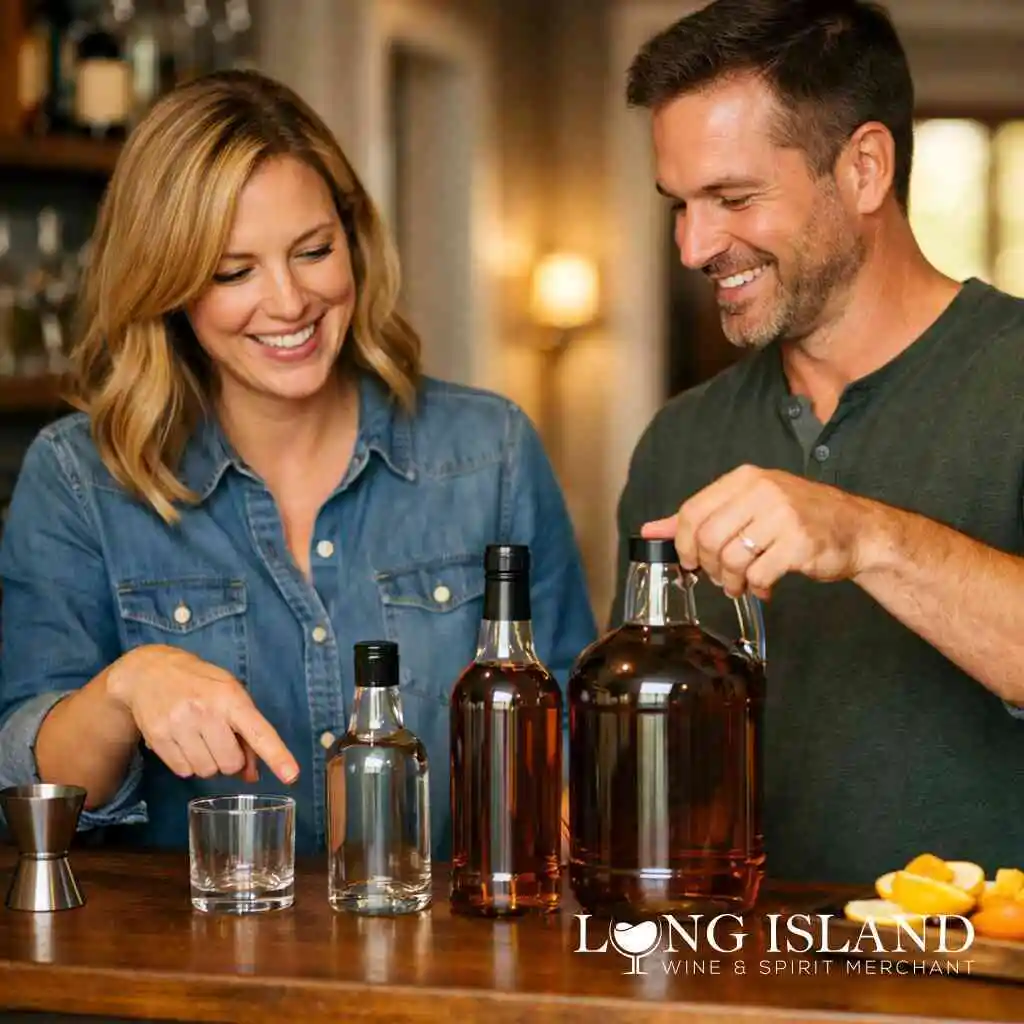
Here is what almost no online guide mentions clearly: people often ask for a fifth when they really mean a 750ml bottle, and that shorthand can change the conversation fast. In a busy shop, clarity saves time. It also reduces mistakes when you are building a home bar inventory. If you want a clean standard bottle sizes reference, our how to compare 750ml and 1 liter liquor guide is useful for practical shopping.
Metric vs imperial and the historical bottle names that still shape buying habits
Metric vs imperial sounds academic until you are standing in front of a shelf. Then it becomes very real. The U.S. still uses ounces in everyday conversation, while bottle labels often use milliliters. That gap is why historical bottle names still matter. A “fifth,” a “handle,” and even a “Texas mickey” all carry meaning because shoppers remember them more easily than milliliters. ABV, or alcohol by volume, also plays a role here. A higher-proof spirit may feel like it goes farther because you use less in a drink. That can change your size decision, especially for whiskey, bourbon, or amaro. We see this often in Long Island liquor store conversations, especially when shoppers want the strongest value without overbuying. If you want a sharper handle-versus-liter comparison, our difference between fifth and liter liquor bottles page is a smart follow-up. Which bottle size belongs in your home bar and what to buy next
The smartest bottle sizes for vodka, whiskey, bourbon, rum, gin, tequila, and other essential spirits
A well-built home bar does not need every bottle size. It needs the right ones. For vodka, whiskey, bourbon, rum, gin, and tequila, a 750ml or 1 liter bottle usually covers the widest range of drinks. Those sizes support cocktails, neat pours, and casual mixing without taking over the cabinet. If you host often, a 1.75 liter bottle can work for your most-used spirit.
Think in categories, not bottles. Vodka and rum are often your workhorses. Whiskey and bourbon cover sipping and classic cocktails. Gin and tequila handle more specific drink profiles. Mezcal, brandy, cognac, vermouth, and amaro are helpful support pieces, not always the main event. If you want a smarter starting point, our how to stock a home bar with standard bottle sizes guide makes that selection easier.
Mini liquor bottles, airplane bottles, and nip bottles for favors, tastings, and controlled pours
Mini liquor bottles, airplane bottles, and nip bottles have a clear place. They are excellent for party favors, guided tastings, and precise pours. They also help when you want to control consumption or offer guests several spirits without opening larger bottles. For weddings, showers, and holiday baskets, these small bottles can be practical and memorable.
A client planning a backyard engagement party in Nassau County used minis for a tasting table. Each guest could sample vodka, gin, and a spiced rum without committing to full pours. That approach kept the table neat and reduced waste. It also made setup easier because the host could match bottle count to guest count. If that idea fits your event, our mini bottles for favors content on the site is worth exploring with a broader view of gift liquor and entertaining.
Best liquor bottle size for parties when you are building cocktail ingredients for home entertaining
The best liquor bottle size for parties is usually the one that matches your most repeated cocktail base. If your menu leans toward vodka sodas, margaritas, or rum punches, larger bottles make sense. If you are serving three drinks with different spirits, a mix of 750ml and 1 liter bottles may be wiser. That balance keeps cocktail ingredients ready without overcommitting to one spirit.
Here is a simple planning list:
- Use 750ml bottles for moderate-use spirits.
- Use 1 liter bottles for repeated cocktail bases.
- Use 1.75 liter bottles for your top-volume mixer.
- Use minis for tasting or controlled sampling.
- Keep one or two backup bottles for surprise guests.
If you want a more detailed party-planning view, our best 750ml and 1 liter liquor bottles for party bars page helps you line up bottle sizes with actual guest flow. That is where home bartending becomes less stressful.
How to stock a bar with storage space, bar inventory, and value size comparison in mind
Storage space changes everything. A narrow cabinet, a basement shelf, or a bar cart can only hold so much. That is why bar inventory should start with the space you actually have. If you overbuy large bottles, you crowd out mixers, glassware, and tools. If you buy too many small bottles, you create clutter and waste.
The cleanest approach is to set a hierarchy. Choose a few essential spirits, then decide which deserve large bottles and which can stay small. Keep value size comparison in mind the entire time. A bottle that saves money but fails to fit your storage plan is not truly a better buy. If you want a practical system, our best liquor bottle sizes for home bar inventory resource is built for that exact problem.
When to choose a handle of liquor over a half gallon alternative and when smaller bottles win
A handle of liquor usually wins when you expect repeat use. A half gallon alternative can also work if your space and planning call for it, but the real decision is about turnover. If a bottle will be opened frequently, the larger size often delivers the strongest value. If you only need a spirit for one recipe or a rare guest request, smaller bottles are safer. That is the honest split.
The mistake we see most often in 2026 is buying large bottles for novelty instead of use. The bottle looks impressive, but it sits untouched. That is wasted money and wasted storage. When in doubt, match the bottle to the spirit’s role in your bar. For a precise side-by-side, our handle of liquor versus half gallon for hosting guide helps you choose with more confidence.
A practical next move for buying liquor online from a Long Island liquor store that ships to all 50 states
If you want to buy with less guesswork, start with the bottle size first and the brand second. That sounds simple, but it solves a lot. You can browse an online liquor store by size, compare standard bottle sizes, and choose what fits your home bar instead of guessing at the shelf. For shoppers in Commack, that also pairs local expertise with the convenience of shipping liquor to all states where allowed by law. It is a cleaner way to buy liquor online.
You do not have to figure this out alone, and you do not have to decide everything today. Start by listing the three spirits you use most often. Then compare their ounces, storage needs, and shot counts before you buy. If you want a simple next move, check your current bottles tonight, measure what is left, and pick the size that actually matches your next month of entertaining.
Frequently Asked Questions
Question: How do I compare half pint liquor to handle of liquor when planning a home bar?
Answer: The easiest way to compare half pint liquor to a handle of liquor is to think in terms of use, not just bottle appearance. A half pint works well for tasting, gift liquor, or a recipe that only needs a small amount, while a handle of liquor is usually the better value for frequent cocktails, party planning, and core cocktail ingredients like vodka, rum, tequila, or whiskey. If you are building home bar inventory, pricing per ounce and how many shots in a bottle matter more than shelf appeal. At Shop Liquor Bottle Sizes, we help shoppers compare liquor bottle sizes based on real-world use so you can choose the right size for your bar space, budget, and entertaining needs.
Question: What is the difference between standard bottle sizes like 750ml liquor, 1 liter liquor, and 1.75 liter liquor?
Answer: Standard bottle sizes are the clearest starting point when you are comparing liquor bottle sizes for a home bar. A 750ml liquor bottle, often called a fifth of liquor, is a common everyday choice for home bartending. A 1 liter liquor bottle gives you a little more volume for regular mixing, while a 1.75 liter liquor bottle, or handle of liquor, is best when you know a spirit will be used often. These sizes fit different storage space and bar planning needs, and they are easier to compare when you look at ml to oz conversion and shot sizes. If you want a simple liquor size chart approach, our online liquor store makes it easier to shop by size instead of guessing.
Question: How many shots in a bottle should I expect when choosing liquor bottle sizes for parties?
Answer: How many shots in a bottle depends on the bottle size and your shot sizes. In general, a 750ml liquor bottle gives you about 17 standard 1.5-ounce shots, while a 1.75 liter liquor bottle gives you about 39 standard shots. That is why the best liquor bottle size for parties usually depends on your guest count and cocktail menu. If you are hosting a smaller gathering, a pint liquor or fifth of liquor may be enough. For larger entertaining, a handle of liquor or even a half gallon liquor option can be more practical. We recommend checking the ml to oz conversion before you buy liquor online so you can avoid running short during the event.
Question: Which types of spirits are best to buy in mini liquor bottles, airplane bottles, or nip bottles?
Answer: Mini liquor bottles, airplane bottles, and nip bottles are ideal for sampling, party favors, tastings, and controlled pours. They work especially well for trying different types of spirits without opening a full-size bottle, including vodka, gin, tequila, whiskey, bourbon, rum, brandy, cognac, amaro, vermouth, and liqueur. They are also a smart option for mini bottles for favors at weddings, showers, and holiday events. If you are trying to keep your home bar organized, these smaller bottles can help with liquor bottle reuse and reduce waste, which can be a plus for anyone looking for eco-friendly bottle sizes.
Question: Why should I buy from Shop Liquor Bottle Sizes instead of searching for alcohol near me or another Long Island liquor store?
Answer: Shop Liquor Bottle Sizes is built for shoppers who want a knowledgeable, friendly online liquor store experience with local service from Commack, New York, plus shipping in all 50 states where allowed by law. We focus on liquor bottle sizes, liquor delivery, and helping customers choose the right bottles for home bar inventory, party planning, and gift liquor. Because we are a Commack liquor store serving Long Island, Suffolk County, Nassau County, and beyond, we understand how people shop for essential spirits, seasonal liquor, and bar planning for home entertaining. If you want to buy liquor online with more confidence, we make it easier to compare bottle sizes, understand pricing per ounce, and choose what fits your needs without unnecessary guesswork.


