
Best 750ml and 1 Liter Liquor Bottles for Suffolk County Bars
October 1, 2026
You need bar bottles that move fast, pour cleanly, and do not trap cash on the shelf. That is the real challenge. If you run a Suffolk County bar, you already know the wrong size can slow service and complicate inventory. If you are reading this late because the back bar feels messy, that frustration makes sense. The good news is that the right answer is usually simpler than people expect.
Why Suffolk County bars keep coming back to 750ml and 1 liter bottles
The bottle sizes that actually move the fastest on a Long Island bar back
In most busy bars, 750ml liquor bottles and 1 liter liquor bottles do the heavy lifting. They fit the rhythm of service and the rhythm of ordering. A back bar full of odd sizes looks impressive for a minute, then becomes hard to manage on a Friday night. The bottles that move fastest are usually the ones you can replace, count, and price without second-guessing.
That is why the best 750ml liquor bottles for bars in Suffolk County are rarely about novelty. They are about consistency. A Long Island bar back needs spirits that bartenders can grab quickly and managers can track quickly. One operator in the Smithtown area told us their biggest headache was not demand, but confusion caused by too many bottle formats. Once they narrowed the core list, service got smoother immediately.
If you want a practical reference point, start with liquor bottle sizes explained for bars and bartenders. The basics matter more than most people admit. Once you understand standard bottle sizes, ordering becomes less stressful. That is especially true if you are balancing house pours, well drinks, and cocktail specials.
Why the fifth still matters even though the shelf now says 750ml
A lot of bartenders still say “fifth,” and that nickname is not just nostalgia. Historically, a fifth meant one-fifth of a gallon, which lands close to the modern 750ml standard. Today, the label usually says 750ml liquor, but the old term still helps people picture the size quickly. That matters when you are training staff or comparing bottle counts before a weekend rush.
Here is the part most owners miss: language shapes ordering habits. If your team still thinks in fifths, they will often estimate in a way that matches real usage better than abstract metric numbers. That can help when you are talking through cocktail builds, bar inventory, and case quantities. It also keeps communication simple when the team is moving fast behind the rail.
If you are comparing bottle history and modern sizing, the difference between fifth and 1 liter liquor bottles is a useful place to compare the logic. The shelf may say 750ml, but the working idea is still the same. It is the practical standard for many spirits in the U.S. When a bottle format feels familiar, staff makes fewer mistakes.
When a 1 liter pour gives you better value without overstocking the rail
A 1 liter liquor bottle can be the sweet spot for high-turn items. It gives you more pours than a 750ml bottle without jumping all the way to a handle. That matters on Long Island, where some bars want better value but still need a neat, manageable back bar. You get more service capacity before the next reorder, and you avoid the clutter that comes with oversized inventory.
The best 1 liter liquor bottles for bars on Long Island tend to work well for well spirits and high-volume cocktails. Think vodka, gin, rum, and tequila when those bottles are used constantly. The trick is not choosing the biggest bottle available. The trick is choosing the bottle size that matches your actual sales pattern.
A customer near Huntington once asked for a “bigger bottle, but not too big,” because their patio crowd changed everything on warm nights. That is a very common problem in Suffolk County. A 1 liter bottle often solves it neatly. It stretches service, but it still feels manageable on the shelf.
What every bar owner gets wrong about bottle size and pour economics
How many shots in a bottle when your house pour is 1.5 oz
This question comes up constantly: how many shots are in a bottle? For a standard 1.5 oz house pour, a 750ml bottle gives you about 17 shots. A 1 liter bottle gives you about 22 shots. That simple math changes ordering, menu pricing, and prep planning.
Here is a quick reference:
Bottle sizeApprox. ounces1.5 oz pours750ml25.4 ozabout 171 liter33.8 ozabout 221.75 liter59.2 ozabout 39That table is why bar managers care so much about ml to oz conversion. If you do not convert correctly, your cost calculations wobble. Then margins wobble. Then your cocktail menu starts hiding problems instead of solving them.
If you want a deeper breakdown, use how many shots in a bottle and ml to oz conversion. It helps when you are planning parties, service levels, or a full bar reset. In our experience, one clear conversion chart saves more mistakes than a stack of guesswork ever will.
Pricing per ounce and why the cheapest bottle is not always the best buy
The cheapest bottle on the invoice is not always the cheapest pour. That is the mistake we see most often. You have to look at pricing per ounce before you decide what belongs on the shelf. Sometimes a larger bottle costs more upfront but less per ounce. Other times, it ties up too much cash and sits too long.
The best way to compare is simple. Divide the bottle price by the usable ounces. Then compare the result across bottle sizes. That gives you a real value size comparison instead of a gut feeling. The math matters even more when you carry several base spirits for one cocktail program.
For managers who want a tighter inventory lens, pricing per ounce for liquor bottles and value size comparison is worth bookmarking. It is especially useful when you are balancing bar margin against shelf space. A bottle that saves pennies per ounce can still cost you if it slows turnover. That is why smart buying is never only about sticker price.
The 750ml to 1 liter bottle comparison that changes bar inventory decisions
The 750ml to 1 liter bottle comparison is bigger than it looks. You are comparing roughly 25.4 ounces to 33.8 ounces. That is a meaningful jump in service capacity without moving into handle territory. For many Suffolk County bars, that middle ground is exactly where efficiency lives.
A 750ml bottle often works best for spirits that have decent demand but need tighter rotation. A 1 liter bottle works better for staples that move all night. If a bottle empties too fast, you create interruptions. If it moves too slowly, you create dead inventory. The right size solves both problems.
If your team is still deciding, keep it simple. Use 750ml for a tighter, more curated rail. Use 1 liter for proven volume sellers. That is a basic rule, but it saves money and shelf space. It also keeps your best 1 liter liquor bottles for bars on Long Island choices aligned with real demand.
Which spirits make the most sense in these two workhorse sizes
Vodka, whiskey, bourbon, gin, tequila, and rum as the backbone of a Suffolk County bar menu
Every serious bar menu starts with the same core types of spirits. Vodka, whiskey, bourbon, gin, tequila, and rum usually form the backbone because they cover the widest range of cocktails. They are versatile, familiar, and easy for guests to understand. They also support fast ordering when you need to restock without delay.
For mixed drinks, vodka for mixed drinks and bar menus is often the first volume category. For classics, whiskey and bourbon for classic cocktails and house pours usually earn a permanent place. For martinis and G&Ts, gin for martinis and G&Ts on bar menus remains essential. Tequila and rum keep the menu flexible, especially when the weather shifts and guests want something brighter.
If your bar serves a wide audience, you need bottles that support fast turns and familiar builds. That is why the phrase “essential spirits” is not marketing fluff. It is operational reality. You do not need everything. You need the right core bottles in the right sizes.
Why rye whiskey, mezcal, vermouth, and amaro matter for cocktail programs
Once the core is covered, the next layer gives your menu character. Rye whiskey matters because it sharpens Manhattan-style drinks. Mezcal brings smoke and depth. Vermouth and amaro keep the cocktail list from feeling flat. These are not filler bottles. They are the difference between a menu that works and a menu that guests remember.
For cocktail programs, vermouth and amaro for classic cocktail ingredients deserve more attention than they usually get. Sweet vermouth supports Manhattan builds and other stirred drinks. Dry vermouth helps martinis stay crisp. Amaro adds bitterness and complexity for modern aperitifs. That balance matters if you want a menu that feels current without becoming complicated.
One bar owner in Commack told us their guests kept ordering the same three drinks until they added a smoky mezcal option. The change was immediate. A single bottle can shift the whole conversation at the bar. That is why strategic bottle sizing matters as much as spirit choice.
When wine, sparkling wine, and liqueur should join the same inventory plan
Not every bar thinks of wine as part of bottle-size strategy, but it should. Wine and sparkling wine often need their own inventory plan because turnover and storage work differently. wine and sparkling wine for bar programs on Long Island can support brunch service, celebrations, and dinner traffic. If your guests ask for bubbles, you need the right bottle ready. Liqueurs deserve a place too. Baileys, Kahlúa, triple sec, blue curaçao, and coffee liqueur each support different cocktail families. A dessert menu without liqueur feels incomplete. A brunch menu without sparkling wine feels the same. These bottles may not dominate the rail, but they protect the margins on specialized drinks. If you are building a more balanced lineup, do not ignore seasonal demand. Holiday service, private events, and late-night dessert cocktails all change what moves. A thoughtful mix of 750ml and 1 liter bottles keeps the back bar flexible. It also keeps you from overbuying bottles that only make sense twice a year. 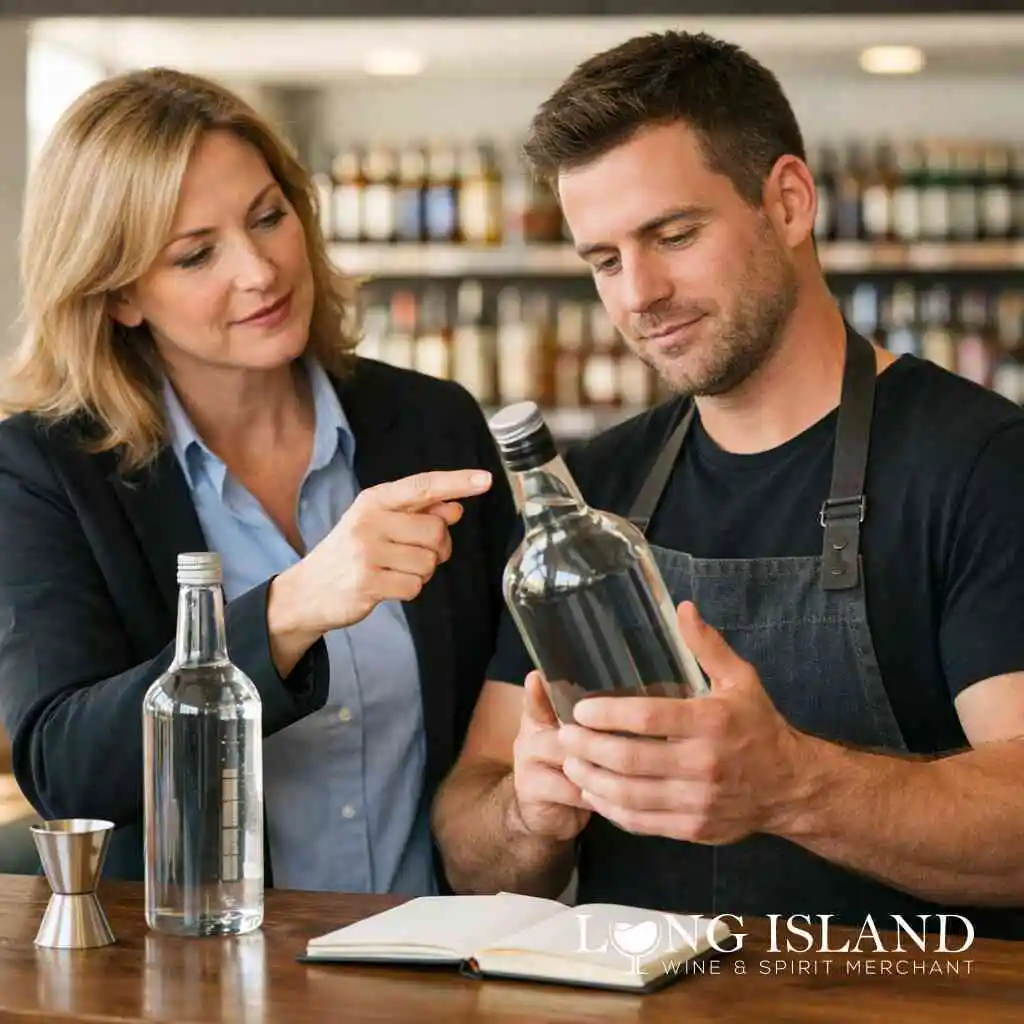
How local bars in Commack, Smithtown, and across Suffolk County stock smarter
Standard bottle sizes for bars and the liquor size chart every bartender should know
Every bartender should know the standard bottle sizes for bars. In the U.S., the common standards include 50ml, 100ml, 200ml, 375ml, 750ml, 1 liter, and 1.75 liter. Those are the sizes that help you plan pars, count pours, and compare inventory cleanly. A good liquor size chart saves time during closeout and ordering.
The old nicknames still matter, too. Mini liquor bottles, airplane bottles, nip bottles, half pint liquor, pint liquor, fifth of liquor, handle of liquor, half gallon liquor, and even larger historical names like double magnum or jeroboam all help staff speak the same language. Those old terms are part of bar culture. They also make the numbers easier to remember under pressure.
If your team needs a simple reference sheet, standard bottle sizes for bars and liquor size chart is a smart starting point. It helps with metric vs. imperial bottle sizes, and it keeps the conversation grounded. That is useful whether you run a neighborhood spot in Commack or a busier room farther east in Suffolk County.
Mini liquor bottles, airplane bottles, and half pint liquor for events and sampler service
Mini liquor bottles have a different purpose than 750ml and 1 liter bottles. They are for sampler service, event favors, and controlled pours. A minibar, a wedding welcome bag, or a tasting flight may call for airplane bottles or half pint liquor. These sizes are useful when guests want variety without committing to a full pour.
They can also support eco-friendly liquor bottle reuse if you manage them carefully. Some operators use empty minis for tasting setups or portioned event service. That is not a replacement for your main inventory. It is a support tool. In the right setting, it reduces waste and helps portion control.
For hospitality teams planning events, mini bottles for favors can be a neat add-on. They also fit well into gift liquor sets when the goal is variety. The key is to treat them as an event tool, not a core bar inventory item. That keeps your main program focused and efficient.
Bulk liquor, wholesale liquor, and liquor delivery for businesses that want fewer stockouts
If your bar keeps running short on the same bottles, the problem may be ordering structure, not sales volume. Bulk liquor and wholesale liquor help, but only if the order mix reflects your actual movement. A strong restock plan cuts stockouts and limits panic buys. It also helps with staffing, because bartenders spend less time hunting for replacements.
For businesses near Commack, liquor delivery for Suffolk County businesses near Commack can support a more predictable buying pattern. That matters when you are juggling events, weather swings, and a busy service calendar. A Long Island liquor store for bar inventory that understands bar inventory can be a real operational advantage. It keeps your orders tighter and your shelves more stable.
If you want help planning the bigger picture, Commack liquor store bar supplies for inventory planning is a practical place to start. We see this issue often with bars that have grown quickly. They do not need more bottles. They need better bottle logic.
What the next ordering decision should look like for your back bar
Building a simple 750ml and 1 liter mix for classic cocktails, house pours, and seasonal specials
The cleanest back bars usually follow a simple pattern. Use 750ml bottles for lower-volume or more specialized spirits. Use 1 liter bottles for proven sellers and house pours. That blend keeps your inventory flexible without overcrowding the shelf.
A practical setup might include:
- 750ml for premium gin, rye whiskey, mezcal, and select liqueurs
- 1 liter for vodka, rum, tequila, and high-turn house spirits
- 750ml wine and sparkling wine for food service or specials
- Minis only for events, samplers, and hospitality gifts
That mix works because it respects turnover. It also respects cash flow. You are not overbuying, and you are not understocking the rail. You are choosing sizes that match the drinks people actually order.
How to stock a bar with essential spirits without tying up too much cash
The best way to stock a bar is to keep your core tight and your expansion deliberate. Start with essential spirits, then add specialty bottles only when they clearly support sales. That means vodka, whiskey, bourbon, gin, tequila, and rum first. Then layer in vermouth, amaro, liqueur, and seasonal items that improve the menu.
A good rule is to review your top sellers before every reorder. If a bottle moves fast every week, it deserves the larger size. If it sits, it should probably stay smaller. That discipline keeps your cash from getting trapped in slow inventory. It also gives you room for limited-edition bottles, rare spirits, and allocated bourbon when those opportunities appear.
For bar owners who want a broader buying strategy, a Long Island liquor store for bar inventory and wholesale buying can be helpful for comparison shopping. If you prefer a simpler path, buying from a trusted online liquor store also keeps things flexible. The point is not to collect bottles. The point is to run the bar better.
When to buy liquor online from a Long Island liquor store and keep your bar list flexible
There are times when buying local makes the most sense, and times when buying online is smarter. If you need a broad selection, quick comparison, or consistent reordering, buy liquor online for restaurants and bars can simplify the process. If you need local guidance, a Commack liquor store is close enough to answer questions without making you guess. The best operators use both advantages thoughtfully.
A strong online liquor store helps with planning, especially when you are checking bottle sizes, case needs, and back-bar balance. It also helps if you need liquor delivery for Suffolk County businesses for non-urgent orders, though alcohol shipping laws still apply. That is why flexibility matters. You want options, not friction. You want bottles that fit service, not bottles that create work.
If you are refining your list, shop with the next shift in mind. Think about what your bartenders need within arm’s reach. Then think about what your guests ask for again and again. That is the real test of a good bottle plan, and it is exactly where best 750ml liquor bottles for bars in Suffolk County and smart 1 liter choices earn their keep.
Frequently Asked Questions
Question: Why are 750ml liquor bottles and 1 liter liquor bottles the best choice for Suffolk County bars?
Answer: For most Suffolk County bars, the best 750ml liquor bottles for bars and the best 1 liter liquor bottles for bars are the sizes that balance speed, shelf space, and cash flow. A 750ml bottle is a strong fit for spirits that move at a steady pace, while a 1 liter bottle works well for high-volume house pours and well cocktails. That makes them ideal for bar inventory planning because they are easier to track than oversized formats and more efficient than constantly replacing minis or odd sizes. If you are building a Suffolk County bars liquor selection, these two bottle sizes usually give the best mix of flexibility and value size comparison for bar inventory. Shop Liquor Bottle Sizes is built around helping buyers choose liquor bottle sizes that match real service needs, not just shelf appeal.
Question: How many shots in a bottle should I expect from 750ml liquor and 1 liter liquor?
Answer: The exact count depends on your house pour, but a standard 1.5 oz pour usually gives you about 17 shots from a 750ml bottle and about 22 shots from a 1 liter bottle. That is why ml to oz conversion for liquor is such an important part of pricing per ounce for liquor bottles and bar inventory planning. When bartenders and managers understand shot sizes and standard bottle sizes for bars, it becomes much easier to compare bottle value and avoid waste. Shop Liquor Bottle Sizes makes it easier to think through these numbers so you can stock a bar efficiently and choose the right bottle format for each type of spirits you serve.
Question: What types of spirits should I prioritize when building a Long Island liquor store order for a bar menu?
Answer: A smart bar menu usually starts with essential spirits and expands from there. The core lineup often includes vodka for mixed drinks, whiskey for classic cocktails, bourbon for house pours, rye whiskey for Manhattan cocktails, gin for martinis and G&Ts, tequila for margaritas, mezcal for smoky cocktails, and rum for tropical drinks. From there, you can layer in vermouth for cocktail ingredients, sweet vermouth for classic cocktails, dry vermouth for martini builds, amaro for modern aperitifs, and liqueur for dessert cocktails. If your menu includes after-dinner service, brandy and cognac can also fit well. Shop Liquor Bottle Sizes helps buyers choose bottle sizes that support real demand, whether they are shopping for an online liquor store, a Commack liquor store, or liquor delivery for Suffolk County businesses. That makes it easier to keep the right spirits on hand without overbuying slow-moving bottles.
Question: How does the Best 750ml and 1 Liter Liquor Bottles for Suffolk County Bars guide help with bar inventory and wholesale liquor buying?
Answer: The main value of the Best 750ml and 1 Liter Liquor Bottles for Suffolk County Bars approach is that it turns bottle sizing into a simple inventory decision. Instead of guessing, bar owners can compare 750ml to 1 liter bottle comparison, review pricing per ounce for liquor bottles, and decide which items belong in smaller formats and which should be stocked in larger ones. That is especially helpful for buy liquor online for restaurants and bars, wholesale liquor planning, and bulk liquor buying for events. Shop Liquor Bottle Sizes gives Suffolk County and Long Island operators a practical way to think about standard bottle sizes, liquor size chart choices, and how to stock a bar with fewer stockouts. It is a straightforward system for keeping the back bar organized and the ordering process easier to manage.
Question: Does Shop Liquor Bottle Sizes also carry mini liquor bottles, airplane bottles, and gift options for party planning?
Answer: Yes, Shop Liquor Bottle Sizes is designed for more than just full-size bar inventory. Mini liquor bottles, airplane bottles, nip bottles, and half pint liquor options can be useful for sampler service, mini bottles for favors, hospitality gifts, and party planning. They also pair well with liquor bottle gift sets and home bar essentials when the goal is variety rather than volume. For larger needs, 1.75 liter liquor bottles, handle of liquor, and other standard bottle sizes for bars can support high-turn service, while smaller bottles can work for events and seasonal liquor programs. If you are looking for a Long Island liquor store or an online liquor store that understands both back-bar needs and gift liquor planning, Shop Liquor Bottle Sizes gives you a flexible starting point without forcing you into one bottle size for every situation.


