
How Shop Liquor Bottle Sizes Helps You Plan Cocktail Menus
August 1, 2026
You need to buy liquor for a party, but the bottle sizes feel confusing. That is completely normal. If you are reading this because the menu looks elegant but the math feels slippery, take a breath. The hard part is not the cocktails themselves. It is matching liquor bottle sizes to real guests, real pours, and real service.
When the cocktail menu looks perfect on paper but the bottle sizes are wrong
A cocktail menu can look polished and still fail at the bar. The recipe may be right, yet the bottle plan may be wrong. That is where most hosts get surprised. A 750ml bottle, a liter, and a handle all behave differently once ice, mixers, and real pours enter the picture. On paper, the drinks look identical. In practice, the bottle choice changes everything.
Why the same recipe behaves differently in a 750ml bottle, a liter, and a handle
A classic recipe does not care what bottle you bought. The bottle size is what changes the outcome. A 750ml liquor bottle gives you about 25.4 fluid ounces, while a 1 liter liquor bottle gives you about 33.8 ounces. A 1.75 liter liquor bottle, often called a handle of liquor, gives you about 59.2 ounces. That means the same vodka martini plan can cover a small group or disappear fast.
Here is the part most homeowners miss. A drink recipe written for a bar assumes consistent pours. At home, people pour a little heavier. They taste a little more. They also refill more often. If you are building a menu around vodka, whiskey, rum, gin, or tequila, bottle size is part of the recipe, not an afterthought.
One client in Suffolk County planned a backyard menu with two signature drinks and a champagne toast. The menu looked simple. The issue was that the bar cart held only one 750ml bottle of each base spirit. Once the guests started mixing, the host realized the plan covered the first hour, not the full party. That is the kind of mistake a smart bottle-size plan avoids.
The hidden math behind shots, pours, and how many guests a bottle really covers
The hidden math starts with shot sizes. In most bars, a standard pour is 1.5 ounces. That means how many shots in a bottle depends on bottle size and pour size. A 750ml bottle usually yields about 17 standard 1.5-ounce shots. A liter gives you about 22. A 1.75 liter bottle gives you about 39. Those numbers change fast when cocktails use 2 ounces or more per drink.
A simple ml to oz conversion can save you from overbuying or underbuying. Think in ounces first, then bottles second. If a punch needs 12 ounces of rum, you can see the difference between a compact gathering and a larger event immediately. That is why pricing per ounce matters so much. The cheapest bottle on the shelf is not always the best value if it forces you to buy three more bottles later.
For event bars, the guest count matters, but so does drink style. A vodka soda uses less spirit than a bourbon old fashioned. A margarita may use more tequila than a highball uses whiskey. If you want accurate bar inventory planning, count the ounces before you count the bottles. It is boring math. It also saves the night.
Why Commack event hosts on Long Island get tripped up by standard bottle sizes
Commack hosts often plan for a mixed crowd. Some guests want wine. Some want beer. Some want cocktails only. That is why standard bottle sizes can trip people up so easily. A bottle that seems “big enough” for dinner may not be big enough for a full party. Local weather adds pressure too. Warm Long Island evenings push guests toward lighter, longer drinks. Those drinks can use more spirits than expected.
The other issue is regional shopping habits. Many people still think in “fifth,” “pint,” or “handle,” even though labels now show metric volumes. That mix of metric vs imperial bottle sizes creates confusion fast. In Commack, New York, we hear this from hosts almost every week. They do not need more options. They need clearer bottle math and a plan that fits the guest list.
The bottle size map that turns guesswork into a bar plan
A working bar does not buy bottles by instinct alone. It uses a map. That map helps you compare volumes, pour counts, and value without getting lost in labels. If you are building cocktail menu planning around real service, that map matters more than any trendy garnish. It is also the fastest way to turn shopping into home bar stocking that actually works.
Reading a liquor size chart like a working bartender instead of a shopper
A liquor size chart is most useful when you read it like staff, not like a browser. Start with total ounces, then think about drink volume. A bottle chart helps you compare liquor bottles across categories, especially when you are choosing between a fifth and a liter. It also clarifies the old names that still show up in conversation. A fifth of liquor is the old term for one-fifth of a gallon, now standardized to 750ml.
Here is a simple comparison you can use:
Bottle nameMetric sizeApprox. ouncesPractical useMini liquor bottles50ml1.7 ozFavors, tastingsNip bottles / airplane bottles50ml1.7 ozSamples, giveawaysHalf pint liquor200ml6.8 ozSmall tastingsPint liquor375ml12.7 ozLimited varietyFifth of liquor / 750ml liquor750ml25.4 ozStandard home use1 liter liquor1,000ml33.8 ozBetter volume1.75 liter liquor / handle1,750ml59.2 ozParties, high useThat table helps with value size comparison right away. It also makes liquor size chart shopping less intimidating. If you are buying for a mixed menu, a chart is faster than guessing. It keeps you grounded.
Mini liquor bottles, airplane bottles, and nip bottles for favors, tastings, and variety
Mini liquor bottles, airplane bottles, and nip bottles are ideal when you want variety without committing to full-size bottles. They work well for wedding favors, tasting stations, and small-batch cocktail sampling. They also help when guests have different preferences. A mini bottle of gin lets one guest try a martini without forcing everyone into the same drink. That kind of flexibility feels thoughtful.
A recent Long Island host used mini bottles for a rehearsal dinner tasting board. The bottles let guests compare gin, tequila, and spiced rum without opening full-size inventory. That kept the bar clean and reduced waste. It also made the menu feel more curated. Small bottles are not just cute. They are functional.
Mini formats also help with liquor bottle reuse and eco-friendly bottle sizes if you save empties for crafting or display. Some hosts reuse them for syrups, samples, or measured bitters. Others use them for gift bundles. If you are planning favors, mini bottles for favors are efficient, easy to portion, and simple to transport.
From fifth of liquor to 1.75 liter liquor and the old names that still matter
The old bottle names still matter because people still use them in conversation. A fifth of liquor means 750ml. A half pint liquor is 200ml. A pint liquor is 375ml. A handle of liquor is 1.75 liters. You may also hear half gallon liquor, though that term is less precise in modern retail. Then there are the larger celebration bottles: double magnum, jeroboam, rehoboam, methuselah, salmanazar, balthazar, and nebuchadnezzar.
Those historical names matter most when you are ordering for weddings, milestone parties, or high-visibility displays. They also help when you are discussing historical bottle names with caterers or event planners. You do not need to memorize every one. You do need to know that bottle names can signal scale, especially for wine and sparkling wine. That saves confusion during ordering.
How ml to oz conversion and TTB standard sizes make ordering easier across spirits, wine, and beer
In the United States, TTB standard sizes help normalize bottle expectations. Common sizes include 50ml, 100ml, 200ml, 375ml, 750ml, 1 liter, and 1.75 liters. That structure makes ordering across spirits, wine, and beer more predictable. It also helps when you compare U.S. packaging to EU bottle sizes, which can vary slightly in feel and presentation. If you buy for events across categories, that consistency matters.
Ml to oz conversion becomes easier once you memorize a few anchors. Fifty milliliters is about 1.7 ounces. 750ml is about 25.4 ounces. 1 liter is about 33.8 ounces. 1.75 liters is about 59.2 ounces. Those numbers are enough to plan a bar without overcomplicating the process. They also help when you compare ABV and proof, since bottle size and alcohol strength work together in real service.
When pricing per ounce changes the smartest buy for vodka, whiskey, rum, gin, and tequila
Pricing per ounce is where smart shopping starts to show its value. If a 1.75 liter bottle costs less per ounce than two 750ml bottles, it may be the better buy for high-use spirits. That matters most for vodka for cocktails, whiskey for cocktails, rum cocktails, gin cocktails, and tequila cocktails. The spirit you pour most should usually be the most efficient bottle size. Otherwise, your menu gets expensive in the wrong places.
That does not mean bigger is always better. If you only need a small amount of mezcal cocktails or brandy cocktails, a full handle may create waste. The smarter approach is matching bottle volume to actual usage. That is where a good online liquor store with a strong liquor bottle sizes selection earns its keep. You get more control, less guesswork, and a cleaner bar plan.
What Shop Liquor Bottle Sizes helps you lock in before the first guest arrives
This is where the planning becomes practical. Shop Liquor Bottle Sizes helps you line up the bottle mix before guests show up. That matters whether you are setting a home bar, organizing a wedding, or stocking a holiday spread. We work as a Long Island liquor store and Commack liquor store with shipping available in all 50 states. So you can plan locally or order ahead with more confidence.
Matching cocktail ingredients to the right bottle sizes for vodka cocktails, bourbon drinks, rum punches, and martini builds
The best menu starts with the ingredients, not the garnish. If your drinks rely on vodka, gin, or tequila, a larger bottle often makes sense. For bourbon drinks, you may want to balance one full-size bottle with one backup. For rum punches, bigger volumes can help if the drink is batched. Martini builds are different, because vermouth for martinis and the base spirit both need attention. A useful way to think about it: 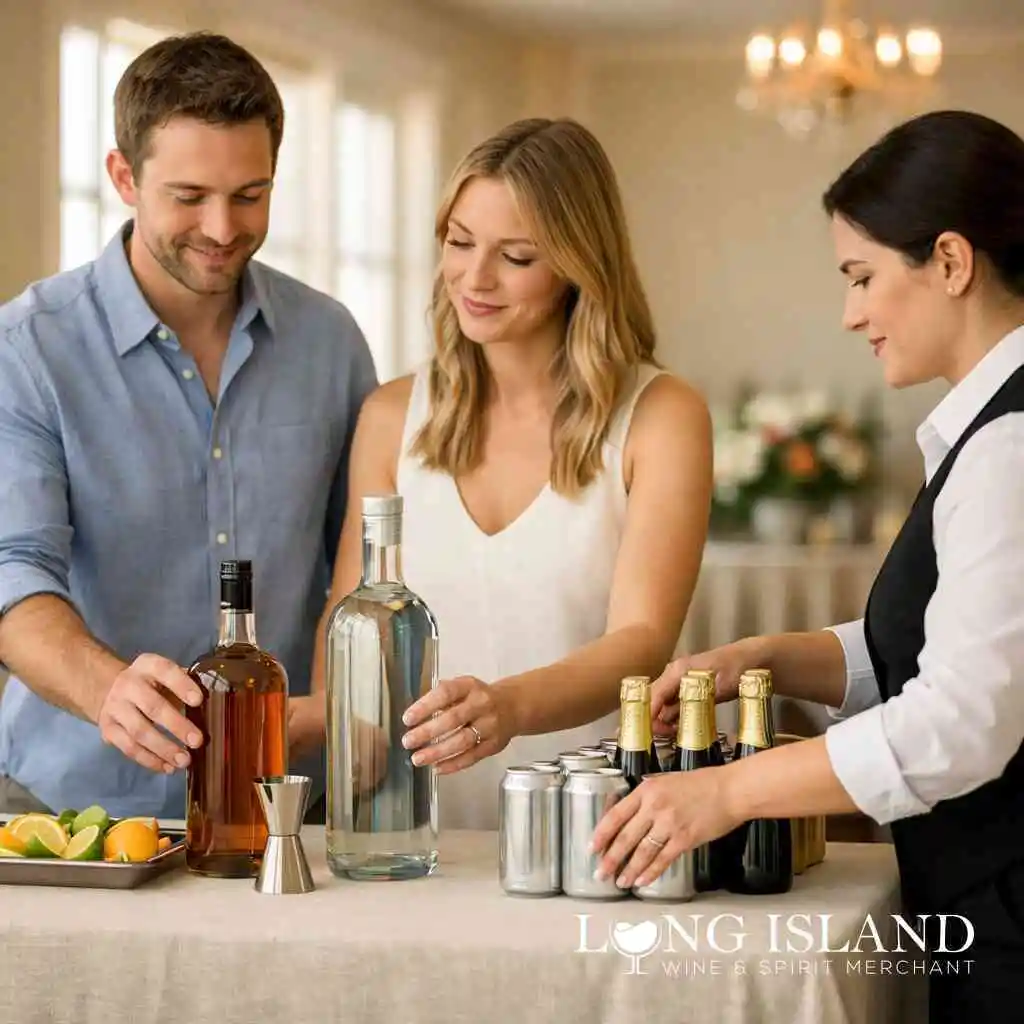
- Vodka cocktails: often high-volume, efficient in 1 liter or 1.75 liter formats
- Bourbon cocktails: usually better with a mix of 750ml and larger bottles
- Rum punches: strong candidate for handles if the guest count is high
- Martini builds: require both gin or vodka and a careful vermouth and liqueur selection
- Tequila cocktails: often need a second bottle if the menu includes margaritas and palomas
That is where planning gets easier. You are not just buying spirits. You are matching bottle size to the drink pattern. We also have a useful liquor bottle sizes for cocktail menu planning resource when you want to compare options before you commit.
How essential spirits and seasonal liquor choices shape a cleaner home bar stocking plan
A well-stocked bar does not need everything. It needs the right core bottles. The essential spirits for cocktails usually include vodka, whiskey, rum, gin, tequila, and sometimes brandy or cognac. Then you add support bottles like sweet vermouth, dry vermouth, amaro, Baileys, Kahlúa, triple sec, blue curaçao, and coffee liqueur. Seasonal choices can shift that list. Summer leans toward citrus and spritz-style drinks. Cooler seasons lean toward darker spirits and richer liqueurs.
The mistake we see most often is overbuying novelty bottles and underbuying the workhorses. A home bar should support the menu you actually plan to serve. If you host often, basic inventory matters more than rare labels. If you only host a few times a year, fewer bottles in better sizes may be smarter. The right mix keeps the bar tidy and keeps service moving.
Using liquor delivery, online liquor store ordering, and nationwide shipping to keep the menu consistent
Consistency is hard when you shop at the last minute. That is why buy liquor online and liquor delivery matter for event planning. They let you build the same menu every time, especially when you need specific sizes. If you are in Commack, NY, or elsewhere on Long Island, local ordering can simplify pickup and planning. If you are elsewhere, shipping liquor to all states can help keep your menu consistent, subject to alcohol shipping laws.
Here is the practical advantage. You can compare bottle sizes, restock missing items, and align your spirits with your mixers before the event. That keeps the menu from drifting. It also helps when you need a one-bottle backup for an unexpected crowd. For a smoother restock path, many hosts also look at alcohol delivery near me by Long Island Wine & Spirit Merchant and How Shop Liquor Bottle Sizes Supports NYC Delivery Orders.
Gift liquor, custom cases, and bottle service choices that work for weddings, parties, and holiday hosts in Commack and across Long Island
Sometimes the bottle plan is part of the gift plan. Gift liquor, liquor gift sets, and custom cases of liquor work well for hosts who want something more personal than a generic bottle. Weddings often benefit from mini formats or coordinated cases. Holiday hosts may prefer a balanced mix of wine, spirits, and beer. Wine for events, sparkling wine for celebrations, and beer and canned cocktails can round out the menu neatly.
If you are planning a wedding bar on Long Island or in Nassau County, bottle size matters even more because service style affects volume. A toast uses different inventory than a full reception bar. That is why planning around the best liquor bottle size for parties is so useful. It gives you a cleaner path from idea to execution. If you want a local planning reference, this standard bottle sizes for bar inventory planning guide can help you think in ounces, not guesses.
Why a better bottle mix means less waste, smoother service, and a menu that feels intentional from the first pour to the last
A thoughtful bottle mix makes the whole event feel better. Guests notice when the bar runs smoothly. They also notice when the host is not scrambling for more whiskey or gin. Good planning reduces waste, especially with bottles that would otherwise sit half-used after one event. It also supports bar inventory, bulk liquor ordering, and better value over time.
The best menus feel intentional because the bottle mix is intentional. A handle where it helps. A 750ml bottle where flexibility matters. A mini bottle where variety matters. That balance creates cleaner service and less stress. If you are building a menu for a wedding, party, or holiday gathering, start with your drink list and choose bottle sizes from there. You do not have to figure out everything tonight. Start with the spirits you know you will pour most, then build outward from there.
Frequently Asked Questions
Question: How does How Shop Liquor Bottle Sizes Helps You Plan Cocktail Menus help with cocktail menu planning for a home bar or event bar?
Answer: The blog is designed to make cocktail menu planning easier by showing how liquor bottle sizes affect real-world service. Instead of guessing, you can match your cocktail ingredients to the right bottle size, estimate shot sizes, and plan around how many shots in a bottle you actually get. That is especially helpful for home bar stocking, party planning, and bar inventory planning because a 750ml liquor bottle, 1 liter liquor bottle, and 1.75 liter liquor bottle each support a different level of use. If you are building a menu around vodka cocktails, whiskey cocktails, rum cocktails, gin cocktails, or tequila cocktails, choosing the best liquor bottle size for parties can save you from running short or overbuying. As a local Long Island liquor store and Commack liquor store, Shop Liquor Bottle Sizes focuses on practical bottle sizing, not guesswork, so you can buy liquor online with more confidence.
Question: What liquor bottle sizes are most useful when comparing standard bottle sizes and pricing per ounce?
Answer: The most useful standard bottle sizes to compare are mini liquor bottles, airplane bottles, nip bottles, half pint liquor, pint liquor, fifth of liquor, 750ml liquor, 1 liter liquor, and 1.75 liter liquor, also called a handle of liquor. A liquor size chart is helpful because it lets you compare total ounces, not just label names. That makes ml to oz conversion and pricing per ounce much easier to understand. For example, a 750ml bottle is often the classic home-use size, while a 1 liter or 1.75 liter bottle may offer better value size comparison for high-use spirits like vodka, whiskey, bourbon, rum, gin, or tequila. For event bars, this can make bulk liquor ordering and wholesale liquor decisions much smarter. Shop Liquor Bottle Sizes helps you think in practical volumes so your bar inventory stays balanced and efficient.
Question: Can Shop Liquor Bottle Sizes help me choose mini liquor bottles, airplane bottles, or nip bottles for favors and tastings?
Answer: Yes, mini liquor bottles, airplane bottles, and nip bottles are ideal for mini bottles for favors, tasting stations, and sampling different types of spirits without opening full-size liquor bottles. They work well for weddings, showers, holiday liquor gifts, and curated event tables where variety matters more than volume. These smaller formats are also useful if you want liquor bottle reuse or eco-friendly bottle sizes because they can be repurposed for gifts, displays, or measured samples. If you are trying to build a thoughtful liqueur selection with items like sweet vermouth, dry vermouth, amaro, Baileys, Kahlúa, triple sec, blue curaçao, or coffee liqueur, smaller bottles let you offer more options without overcommitting. Shop Liquor Bottle Sizes can help you buy liquor online in the sizes that fit the occasion, whether you are stocking a home bar or planning a larger event.
Question: Which types of spirits and cocktail ingredients should I stock for martinis, punches, and signature cocktails?
Answer: A strong cocktail menu usually starts with essential spirits for cocktails such as vodka, whiskey, bourbon, scotch, rye whiskey, rum, spiced rum, gin, tequila, mezcal, brandy, cognac, and armagnac. From there, you can build out with vermouth for martinis, including sweet vermouth and dry vermouth, plus amaro cocktails and other liqueur selection staples like Baileys, Kahlúa, triple sec, blue curaçao, and coffee liqueur. For wine for events, sparkling wine for celebrations, beer and canned cocktails, craft beer, imported beer, domestic beer, and hard seltzer options can round out the menu. The right bottle size depends on how often each ingredient will be used. High-volume base spirits may call for a 1 liter liquor bottle or 1.75 liter liquor bottle, while specialty bottles may be better in 750ml form. Shop Liquor Bottle Sizes is built to help you stock a bar with the right mix of bottle sizes so your menu feels intentional from the first pour to the last.
Question: What should Commack and Long Island hosts know about ordering liquor online and getting the right bottle sizes for parties?
Answer: Hosts in Commack, New York and across Long Island should think about bottle size before they finalize the menu. A well-planned order from an online liquor store can make party planning easier, especially when you are balancing home bartending needs, signature cocktails, and bar menu curation. Shop Liquor Bottle Sizes serves as a Long Island liquor store and Commack liquor store with shipping in all 50 states, so you can plan ahead whether you need bottle size for wedding cocktails, bottle size for event bars, or simple restocking for a home bar. It is also smart to consider metric vs imperial bottle sizes, TTB standard sizes, and EU bottle sizes when comparing products. If you are shopping for seasonal liquor, holiday liquor gifts, liquor gift sets, or rare spirits, the same principle applies: choose the bottle size that matches actual use. For a smoother experience, Shop Liquor Bottle Sizes helps customers buy liquor online with a clearer view of bottle volume, value, and service needs.


