
How to Read a Liquor Size Chart for Home Bars Easily
November 7, 2026
A liquor size chart helps you match bottle ounces or milliliters to the way you actually pour, host, and store spirits. The right size tells you how many drinks you can make, how much shelf space you need, and whether a mini bottle, 750ml liquor, or handle of liquor is the smarter buy.
Key Takeaways
- A liquor size chart helps you compare standard bottle sizes by volume, not by label hype, so you can plan a home bar with less guesswork.
- The modern 750ml liquor bottle is the U.S. standard equivalent of the old fifth, and that matters because it is the most common reference point for price and yield.
- For a typical 1.5 oz shot size, a 750ml bottle gives about 17 shots, a 1 liter bottle gives about 22 shots, and a 1.75 liter handle gives about 39 shots.
- Mini liquor bottles, airplane bottles, and nip bottles are useful for favors, tastings, travel, and portion control, but they usually cost more per ounce than larger bottles.
- The smartest bottle size depends on the spirit, the event, and your bar inventory planning, not just on what seems cheapest at checkout.
Why the bottle on the shelf can cost more or less than the pour in your glass
A liquor size chart is a practical buying tool. It shows you how much liquid you get, how many drinks that makes, and how efficiently you are spending money per ounce. That is why two bottles that look close in price can be very different in value.
What a liquor size chart is actually telling you when you compare mini bottles to a handle
A liquor size chart tells you more than volume. It helps you compare pricing per ounce, storage needs, and use cases. A mini bottle works for a single pour, but a handle of liquor usually gives you the lowest cost per ounce because you are buying in bulk.
Here is the part most homeowners miss: the “cheaper” bottle is not always the better buy. If you only need a few cocktails, a large bottle can sit open too long. If you are stocking for a party, though, mini liquor bottles, pint liquor, or a fifth of liquor can create the wrong mix of convenience and waste.
A simple comparison helps:
Bottle sizeCommon useTypical valueBest forMini bottles / airplane bottles / nip bottlesSingle servings, favorsLowest value per ounceTastings, gifts, travelHalf pint liquor / pint liquorSmall home useModerate valueOccasional poursFifth of liquor / 750ml liquorStandard home bar sizeStrong valueMost home bars1 liter liquorLarger household useBetter than 750mlRegular entertaining1.75 liter liquor / handle of liquorHigh-volume useBest value per ounceParties, frequent cocktailsWe hear this from people all the time in Commack, especially when they are setting up a first home bar or stocking for a backyard gathering on Long Island. The confusion is normal. The bottle names are old, the measurements mix metric and imperial, and the labels do not always make the value obvious.
For anyone comparing spirits at an online liquor store, the trick is to look at the ounces, not the branding drama. If you want a quick category reference, our liquor bottle sizes guide is built around that exact idea.
How the old fifth became the modern 750ml standard and why that matters for home bars
The old fifth was one-fifth of a gallon, which came out to roughly 757ml. Today, the standard 750ml liquor bottle is close enough to replace it, and that is why you still hear people say “a fifth” even when the label reads 750ml.
That history matters because most bottle comparisons still use the fifth as the baseline. If you know a fifth is roughly 25.4 ounces, you can compare vodka, whiskey, bourbon, scotch, gin, tequila, and rum without guessing. It also makes recipe scaling easier when you are building cocktail ingredients around a standard pour.
If you want a broader planning guide, our how to stock a home bar with liquor bottle sizes explains how bottle size affects bar inventory planning. And for anyone in Suffolk County or the New York metro area, it helps to keep bottle size simple when you are ordering from a Commack liquor store or arranging liquor delivery.
The measurements that turn a guess into a smart buy
The smartest way to read a liquor size chart is to convert milliliters to ounces and then divide by your shot size. In the U.S., a standard pour is usually 1.5 oz, so you can estimate how many drinks a bottle makes before you buy. That is the fastest way to compare standard bottle sizes.
How many shots in a bottle and the ml to oz conversion rules bartenders use
Bartenders usually work from a 1.5 oz shot unless a recipe says otherwise. That is why how many shots in a bottle is one of the most useful questions you can ask. Once you know the bottle size, the math is simple.
Use these quick conversions:
- 50ml ≈ 1.7 oz
- 100ml ≈ 3.4 oz
- 200ml ≈ 6.8 oz
- 375ml ≈ 12.7 oz
- 750ml ≈ 25.4 oz
- 1 liter ≈ 33.8 oz
- 1.75 liter ≈ 59.2 oz
Now divide by 1.5 oz per shot:
- 50ml: about 1 shot
- 375ml: about 8 shots
- 750ml: about 17 shots
- 1 liter: about 22 shots
- 1.75 liter: about 39 shots
That is the working logic behind any good bottle size conversion guide. If you are planning cocktails for a crowd, the count matters more than the brand story. A bottle of tequila for margaritas or whiskey for old fashioneds should be chosen by yield, not just label appeal.
For drinking pace and moderation guidance, the National Institute on Alcohol Abuse and Alcoholism is a strong reference point. It helps anchor your planning around actual serving sizes, not guesswork.
Standard bottle sizes from 50ml to 1.75 liter and where imperial and metric still collide
The U.S. still uses both systems, and that is why liquor bottle sizes can feel inconsistent. Metric bottles are common in the trade, while imperial bottle names like pint and fifth remain part of everyday language. The Alcohol and Tobacco Tax and Trade Bureau recognizes standard bottle sizes that commonly include 50ml, 100ml, 200ml, 375ml, 750ml, 1 liter, and 1.75 liter.
SizeMetricImperial-style nicknameCommon useMini50mlNip bottle / airplane bottleSamples, favorsSmall200mlHalf pint liquorTravel, single usersMid-size375mlPint liquorLight home useStandard750mlFifth of liquorMost home barsLarge1 liter—EntertainingExtra-large1.75 literHandle of liquorParties, stockingThat mix of metric vs imperial bottle sizes is why people get tripped up. You may see a label that feels familiar but does not match the old nickname exactly. For deeper technical reference, the Alcohol and Tobacco Tax and Trade Bureau is the federal authority that governs bottle standards and labeling details.
A customer from Smithtown once came in after buying three “small” bottles for a dinner party, then realized they had enough for only a few cocktails per bottle. They switched to one 1.75 liter bottle of vodka and two standard 750ml bottles of whiskey instead. Same shelf space. Better yield. Less stress.
Which bottle size fits the moment instead of just the occasion
The right size depends on what you are making, how many people are drinking, and how long the bottle will sit open. For party planning, home bartending, and bar inventory planning, the best liquor bottle size is the one that matches your actual use, not the one that looks impressive on the shelf.
Picking the best liquor bottle size for parties, home bartending, and bar inventory planning
If you are stocking a home bar, start with the spirits you will use most. Most people need vodka, whiskey, rum, gin, and tequila first, then add brandy, cognac, vermouth, amaro, and liqueur as their cocktails expand. A thoughtful setup saves space and keeps waste down. A simple rule set helps: 1. Choose mini liquor bottles for favors, tastings, travel kits, or sampling new spirits.
- Choose a fifth of liquor / 750ml liquor for everyday home bartending.
- Choose 1 liter liquor when you host regularly but do not want oversized bottles.
- Choose 1.75 liter liquor / handle of liquor for parties, house bars, or high-use spirits.
- Choose mixed sizes when you want a balanced bar inventory across vodka, whiskey, rum, and tequila.

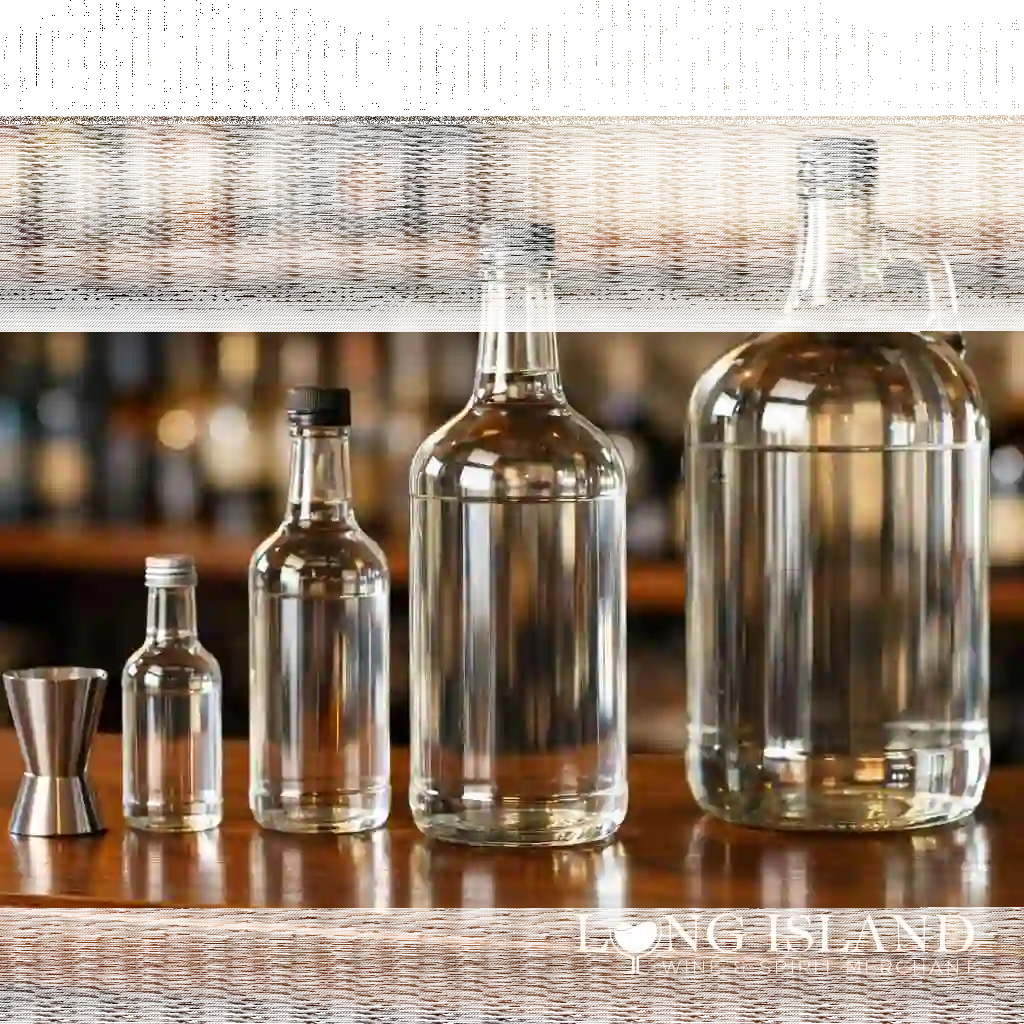
This is also where specialty spirits matter. Bourbon, rye whiskey, scotch, spiced rum, mezcal, dry vermouth, sweet vermouth, Baileys, Kahlúa, triple sec, blue curaçao, and coffee liqueur all play different roles. A bottle size that works for bourbon may not make sense for a bottle of vermouth that sits open longer and is used in smaller amounts.
For a broader shopping comparison, our comparison guide walks through size choices by use case. If you are building out a few core bottles, our essential sizes guide is a helpful next stop.
Here is the practical truth: if you are in Commack, on Long Island, or elsewhere in New York and you want to buy liquor online with less trial and error, start with the bottle size. Then choose the spirit. That order keeps your bar balanced, your budget grounded, and your shelf space sane.
If you want help choosing between a mini, a fifth, or a handle, Shop Liquor Bottle Sizes makes that easier because the store is organized around bottle size first. That is useful whether you are planning a small dinner, a larger gathering, or shipping liquor to all 50 states where alcohol shipping laws allow it. The cleanest next step is to browse the size chart, then order the bottle that matches your pour.
People Also Ask
What are the standard liquor bottle sizes in the US?
The most common standard bottle sizes are 50ml, 100ml, 200ml, 375ml, 750ml, 1 liter, and 1.75 liter. People still use nicknames like nip bottle, half pint liquor, pint liquor, fifth of liquor, and handle of liquor, but the label may show metric measurements. If you are comparing bottles for home use, 750ml is usually the reference point.
Is a half gallon the same as a handle?
Yes, in liquor terms, a handle of liquor usually means 1.75 liters, which is close to a half gallon. It is the large bottle with the built-in handle shape that many shoppers recognize right away. For parties or frequent home bartending, it often gives the best value per ounce.
How many 1.5 oz shots are in a 750ml bottle?
A 750ml liquor bottle holds about 25.4 ounces, which gives you about 17 shots at 1.5 oz each. If your pours are heavier, the count drops fast. That is why bartenders and home hosts use the shot-size math before deciding how many bottles to buy.
Does Shop Liquor Bottle Sizes ship mini bottles?
The site offers shipping in all 50 states, but availability can depend on product and alcohol shipping laws. If you want mini liquor bottles, airplane bottles, or other small formats, it is best to check the current selection on the site before ordering. That keeps the process accurate and avoids guessing.
Which size is best for a wedding toast?
For a toast, 750ml bottles usually make the most sense because they are easy to manage and hold enough for a group without creating too much leftover inventory. If the toast is small and informal, mini bottles can work for favors or table settings. If you are serving a larger crowd, a 1 liter or 1.75 liter bottle may be more practical.
What is the difference between proof and ABV?
ABV means alcohol by volume, and proof is the number used to show strength on many bottles. In the U.S., proof is usually twice the ABV. So a 40% ABV spirit is 80 proof. That helps when you are comparing vodka, whiskey, tequila, rum, or gin across different labels and styles.
Frequently Asked Questions
Question: How do I use a liquor size chart to choose between mini liquor bottles, a fifth of liquor, and a handle of liquor for my home bar setup?
Answer: A liquor size chart helps you compare standard bottle sizes by volume, yield, and value size comparison so you can choose the right bottle for your home bar setup. If you only need single pours, mini liquor bottles, airplane bottles, or nip bottles are convenient for tastings, travel, and mini bottles for favors. For everyday home bartending, a fifth of liquor or 750ml liquor is usually the most practical choice. If you host often or want fewer reorders, 1 liter liquor or 1.75 liter liquor, also called a handle of liquor or half gallon liquor, can be a better fit. At Shop Liquor Bottle Sizes, we organize options around bottle size first, which makes it easier to buy liquor online without overbuying or underbuying.
Question: How many shots in a bottle should I expect from 750ml liquor, 1 liter liquor, and 1.75 liter liquor?
Answer: The answer depends on your shot sizes, but using a standard 1.5 oz pour is the easiest way to estimate. A 750ml liquor bottle holds about 25.4 oz, which comes out to about 17 shots. A 1 liter liquor bottle gives you about 22 shots, and a 1.75 liter liquor bottle or handle of liquor gives you about 39 shots. That is why ml to oz conversion is so useful when comparing liquor bottles for party planning or bar inventory planning. If you are stocking for cocktails like margaritas, old fashioneds, or martinis, knowing how many shots in a bottle helps you choose the right spirit before you checkout from an online liquor store.
Question: What are the standard bottle sizes explained in How to Read a Liquor Size Chart for Home Bars Easily, and how do metric vs imperial bottle sizes compare?
Answer: The most common standard bottle sizes include 50ml, 100ml, 200ml, 375ml, 750ml, 1 liter, and 1.75 liter. In imperial-style terms, people often refer to these as nip bottles, half pint liquor, pint liquor, fifth of liquor, and handle of liquor. Metric vs imperial bottle sizes can be confusing because the trade often uses milliliters while shoppers still use old names. A quick bottle size conversion guide makes it easier to compare vodka, whiskey, bourbon, scotch, rum, gin, tequila, mezcal, brandy, cognac, vermouth, and liqueur across labels. If you are shopping for a Long Island liquor store or Commack liquor store that serves local customers and ships where permitted, understanding these sizes helps you make a smarter purchase.
Question: Which types of spirits are best to buy in larger bottles when I am planning a home bar or buying liquor online?
Answer: The best liquor bottle size for parties or home bar use depends on how fast a spirit gets used and how often you entertain. Larger bottles like 1 liter liquor or 1.75 liter liquor usually make the most sense for high-use essentials such as vodka, whiskey, rum, gin, and tequila. Smaller or more specialized bottles can work better for vermouth, amaro, Baileys, Kahlúa, triple sec, blue curaçao, or coffee liqueur because those ingredients are often used in smaller amounts and may sit open longer. For people who want to stock a bar efficiently, focusing on essential spirits first is a smart strategy. Shop Liquor Bottle Sizes is built to help customers compare bottle sizes, pricing per ounce, and use case so they can choose what actually fits their bar inventory instead of guessing.
Question: Does Shop Liquor Bottle Sizes offer a useful way to buy liquor online for parties, gifts, and bar inventory planning?
Answer: Yes. Shop Liquor Bottle Sizes is an online liquor store based in Commack, New York on Long Island, and it is designed to help people compare liquor bottle sizes before they buy liquor online. That is useful whether you are planning party planning for a wedding or backyard event, selecting gift liquor or liquor gift sets, or building a home bar with the right mix of bottles. Because the site focuses on size first, it is easier to compare mini liquor bottles, 750ml liquor, 1 liter liquor, and 1.75 liter liquor without getting overwhelmed. It also helps customers think through pricing per ounce, cocktail ingredients, and the types of spirits they actually need. When alcohol shipping laws allow, the store also supports shipping liquor to all states, making it a convenient option for shoppers who want a thoughtful, size-based approach to spirits shopping.


