
How Shop Liquor Bottle Sizes Plans Bulk Liquor for Catering
October 2, 2026
You need to buy liquor for a party or catered event, but bottle sizes can get confusing fast. That stress is real. If you are staring at headcount, bar menus, and a growing cart, the hard part is not choosing the spirits themselves. It is choosing the right mix of liquor bottle sizes before service starts. At Shop Liquor Bottle Sizes, we see that problem every week from Commack, Long Island, and beyond. The fix starts with planning around pace, pour size, and bottle format, not guesswork.
What bulk liquor planning really looks like when the catering headcount starts climbing
The wrong bottle mix creates chaos. A slightly higher per-ounce price rarely hurts as much as running out of the one spirit everyone wants. Most catering teams discover that after the bar opens, not before. That is why bulk liquor planning for catering should start with service flow, not just brand preference. If you want a practical bulk liquor planning for catering approach, begin with the bar’s job: keep drinks moving without constant scrambling.
Why the wrong bottle mix creates more chaos than a slightly higher per-ounce price
A bar can survive a pricier bottle. It cannot survive a dead bottle line. If vodka vanishes and rum sits untouched, your whole order feels broken. The mistake we see most often is buying a “good deal” mix that ignores actual drink demand. That is why liquor bottle sizes for event planning matter more than bargain hunting alone.
One client in Suffolk County planned a backyard reception with a tiki-heavy menu. The order looked balanced on paper. In service, the crowd asked for vodka soda, gin and tonic, and tequila margaritas almost nonstop. The rum sat nearly full. The lesson was simple: the mix should match the menu, not the romance of the bottle. That matters even more for party bar inventory planning.
How Commack and Long Island caterers think about pours, pace, and crowd type
In Commack and across Long Island, catering teams think about who is drinking, how long they stay, and what they usually order. A corporate reception near New York City often moves faster than a seated dinner. A wedding in a tent near the water may lean toward champagne, white wine, and light cocktails. A holiday open house in Commack may need whiskey, bourbon, and spiced rum to carry the evening.
Here is the part most planners miss: crowd type changes bottle choice more than crowd size does. A younger crowd may burn through tequila and canned cocktails. An older crowd may prefer scotch, brandy, or vermouth-based drinks. That is why the best liquor bottle size for parties depends on the room, not just the guest count.
The bottle size question nobody wants to answer after the bar opens
Nobody wants to ask for backup bottles during the first rush. Yet that is exactly what happens when size planning is vague. You may think the answer is simply “buy more.” It is not that simple. If you bought the wrong format, more bottles only create more clutter behind the bar.
The question becomes easier when you compare service speed, storage, and bar space. A tight buffet-style event may need fewer large bottles and more backup stock. A high-volume open bar may need handles of liquor near the front and smaller bottles for specialty pours. On the projects we have finished this year, the cleanest setups always came from planning the bottle shape as carefully as the menu.
Why mini liquor bottles, airplane bottles, and nip bottles are not the same tool
People use these terms loosely, but they do different jobs. Mini liquor bottles usually work best for favors, welcome bags, or controlled tastings. Airplane bottles are often used for travel-style portions or individual giveaways. Nip bottles are the smallest service-friendly option for sample pours or private tasting flights. They are related, but they are not interchangeable.
That difference matters for catering. A favor table needs attractive mini liquor bottles for favors, not a bar-ready reserve. A tasting station may benefit from nip bottles because they reduce waste. A welcome bag may use airplane bottles because guests can take them home. If you want a simple rule, choose the bottle for the job, not the novelty.
The bottle size math that turns a loose idea into a usable liquor size chart
The math is not glamorous. It is useful. Once you understand standard bottle sizes, you can turn a rough guest count into a working liquor size chart. That is where planning gets calmer. It also helps with standard bottle sizes for catering when you need a quick comparison between format, volume, and bar speed.
How many shots in a bottle when you are buying for service, not for sipping
When bartenders talk about shots, they usually mean 1.5 ounces per pour. That is the common service benchmark, though some events use smaller or larger pours. A 750ml bottle, often called a fifth, gives you about 25.4 ounces total. That works out to roughly 16 full 1.5-ounce shots, with a little left for spillage or a light overpour.
A liter bottle gives you more breathing room. A 1.75-liter bottle gives you even more. If you are asking how many shots in a bottle, the real answer depends on your pour control and your event style. For tighter planning, use the shot count as a service estimate, not a promise.
The practical difference between a fifth of liquor, 750ml liquor, 1 liter liquor, and 1.75 liter liquor
A fifth of liquor and 750ml liquor are essentially the modern standard for everyday use. The old term “fifth” came from one-fifth of a gallon, and it survived long after the measurement changed. A 1-liter liquor bottle gives you a meaningful step up in volume without becoming awkward. A 1.75-liter liquor bottle, often called a handle, is the heavy hitter for busy bars.
Here is a fast comparison.
SizeApprox. ouncesTypical use750ml liquor25.4 ozmixed drinks, standard service1 liter liquor33.8 ozbusy bars, moderate volume1.75 liter liquor59.2 ozhigh-volume service, backup stockThat table is the heart of most event planning decisions. It also shows why metric vs. imperial bottle sizing matters. If you know the ounces, you know the service life.
When handles of liquor beat standard bottle sizes for busy bars and when they do not
A handle of liquor helps when volume is high and the pour list is simple. It reduces bottle changes and keeps the bar moving. It also helps with bar inventory because one large bottle is easier to track than two smaller ones. For busy service, that is a real advantage.
Still, handles are not always the smartest move. If your menu includes several spirits, giant bottles can tie up cash and shelf space. They also do not help much for premium displays or limited-ingredient cocktail stations. In those cases, standard bottle sizes may be better for control and presentation.
Why historical bottle names like jeroboam, methuselah, and nebuchadnezzar matter for premium displays
These historical bottle names sound dramatic because they are. Jeroboam, rehoboam, methuselah, salmanazar, balthazar, and nebuchadnezzar are oversized formats often used for presentation, celebration, or luxury appeal. A double magnum can also make a strong visual statement, especially for wine and sparkling wine service. These bottles are not usually about efficiency. They are about presence.
That said, they matter in catering because some events want the room to feel elevated the moment the bar opens. A premium display with a large-format bottle can anchor a champagne wall, a VIP table, or a special toast moment. Just remember that oversized bottles may slow service if the pour setup is not ready. The bottle should support the event, not become the event.
How ml to oz conversion and ABV shape pricing per ounce for catering budgets
ml to oz conversion gives you the backbone of pricing per ounce. But you also need ABV, or alcohol by volume, to understand spirit strength. A 40 percent ABV bottle and a 50 percent ABV bottle may not behave the same way in cocktails or in perceived value. Proof is simply another way to express strength, and it matters when comparing the price per ounce of different options.
For budgeting, compare on usable ounces, not just shelf price. That is where the difference between fifth and liter bottles for parties becomes practical. A larger bottle can lower your cost per ounce even if the upfront spend feels bigger. The math is boring. The savings are not.
What Shop Liquor Bottle Sizes stocks first when a catering order needs to work on the floor
When a catering order has to work on the floor, we start with the spirits that move fastest. That means the core lineup first, then the specialty pieces. It is a more disciplined way to buy, and it usually reduces waste. If you are trying to stock a bar for catering without overcomplicating it, start with the essentials and build outward.
Which types of spirits usually anchor a catering order and why vodka, whiskey, rum, gin, and tequila lead
The core of most catered bars is simple: vodka, whiskey, rum, gin, and tequila. Those five cover the widest range of cocktails with the fewest bottles. They also support easy substitutions when guests shift from one drink style to another. That is why they anchor essential spirits for catering.
- Vodka covers clean, flexible cocktails.
- Whiskey supports whiskey-based drinks and neat pours.
- Rum works for punch bowls and tropical menus.
- Gin fits martinis and herb-forward drinks.
- Tequila drives margaritas and agave-based cocktails.
If your event leans more upscale, you may add rye whiskey, mezcal, cognac, or amaro. A good bar feels intentional, not crowded.
How wine case service changes the plan for red wine, white wine, rosé, and sparkling wine
Wine changes the math because it is usually served by the glass, not as a mixed drink. A dinner with red wine for the entrée and white wine for the reception needs different inventory logic than a cocktail-forward party. Rosé is often a strong seasonal bridge, especially for spring and outdoor events. Sparkling wine and champagne belong in a different lane entirely, because toast timing matters.
A local planner from Smithtown once asked for a simple wine spread for a tented celebration near the water. We suggested thinking in service moments: reception pours, dinner pours, and toast pours. That kept the bar from overbuying one style while underbuying another. For larger wine programs, a wine cases service structure makes inventory easier to manage.
Where gift liquor, liquor gift sets, and mini bottles for favors fit without slowing the bar down
Gift liquor belongs at the edges of the event, not in the main service lane. That means welcome stations, host gifts, end-of-night takeaway tables, and client appreciation. Liquor gift sets work well when presentation matters more than speed. Mini bottles for favors also make sense when the goal is a neat takeaway, not a faster bar. The mistake is putting favor bottles into active service. That just creates confusion. Keep the bar focused on pour speed, and keep the gift items separate. For host gifts or seasonal liquor gifts, browse gift ideas, then keep the bar inventory clean. ### How branded favorites like Tito’s, Grey Goose, Jack Daniel’s, Don Julio, and Martini & Rossi fit different event styles 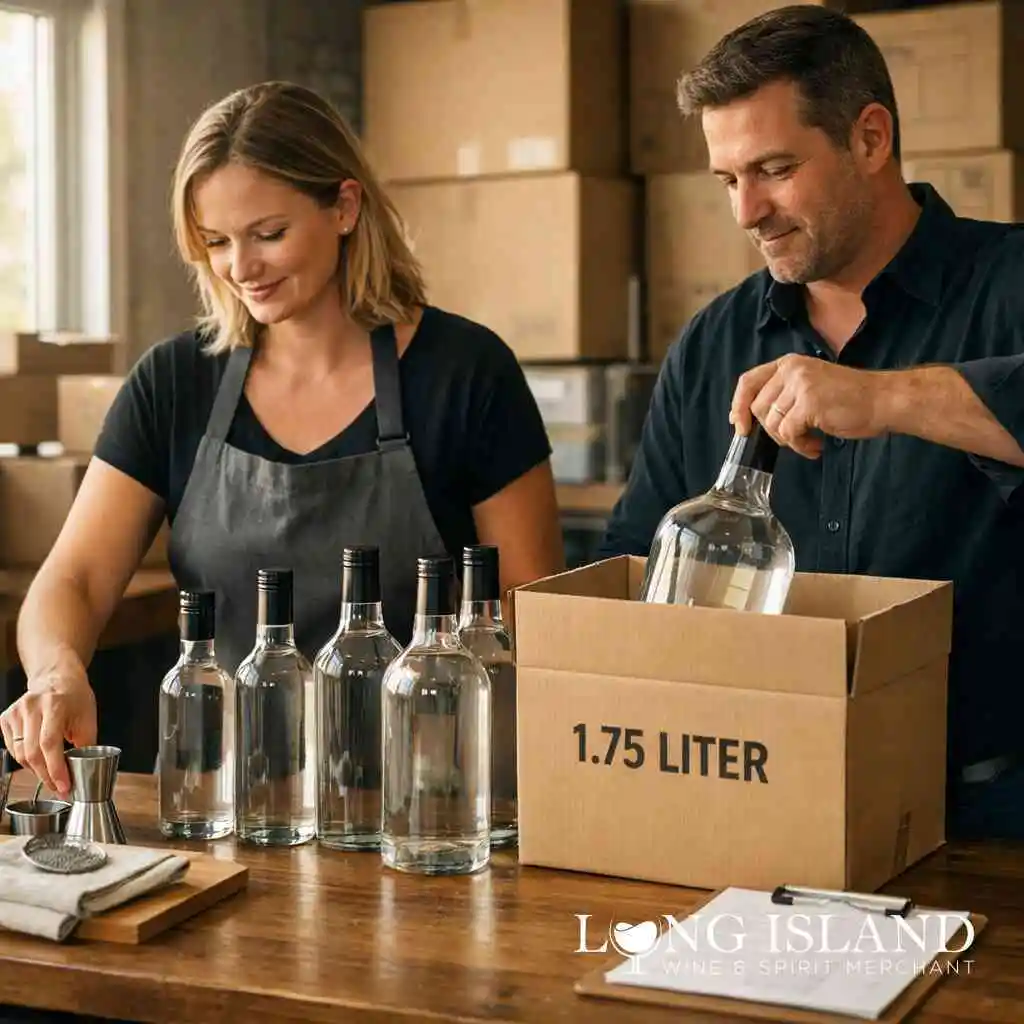
Brand selection shapes event tone. Tito’s often fits crowd-pleasing vodka menus. Grey Goose can suit a polished reception. Jack Daniel’s works for classic whiskey service. Don Julio and Patrón are strong tequila names for margarita stations or upscale tequila bars. Martini & Rossi remains a practical vermouth anchor for aperitif service and cocktails.
You do not need every name on the shelf. You need the names that match the event. The right lineup makes the bar feel deliberate. It also keeps the bottle sizes tied to actual drink patterns, which is where smart planning pays off.
Why liquor delivery and buy liquor online matter when the event span reaches beyond Long Island
Some orders are local. Others are not. If your event setup stretches beyond Long Island, or you are coordinating multiple delivery points, online ordering becomes a real planning tool. It helps keep the menu consistent across locations and reduces last-minute scrambling. That is especially useful for teams managing events across the New York metro and shipping liquor to all states where permitted.
We also hear from customers who want one clean order rather than multiple store runs. In those cases, liquor delivery for events near Commack can simplify the workflow. If you are comparing options, buy liquor online when you want flexibility, and use local pickup when timing and oversight matter more. Both can solve different problems.
The final order map that keeps a bar moving from setup to last call
The final order should feel calm, not clever. You want the right sizes, the right categories, and the right backup plan. That is what keeps service smooth from setup to last call. It also helps if you know the difference between bulk liquor, wholesale liquor, and a custom case mix before you click order. For a cleaner starting point, use what are the best value sizes for bar inventory as your comparison lens.
How to stock a bar for catering without overbuying the wrong sizes
Start with pour volume, then add flexibility. Count the cocktail types, the wine service, and the number of bars. Then choose a main bottle size for each fast-moving spirit. If the event has one main bar, a mix of 750ml liquor and 1 liter liquor may work well. If the event is high volume, 1.75 liter liquor becomes more useful.
A simple checklist helps:
- Match spirits to the menu.
- Use bigger bottles for high-volume pours.
- Use smaller bottles for specialty or premium items.
- Keep backup stock separate from display stock.
- Label everything before service starts.
That approach is boring in the best possible way. It prevents mistakes.
When to use bulk liquor, wholesale liquor, or a custom case of wine for better inventory control
Use bulk liquor when the bar needs consistency across a lot of pours. Use wholesale liquor when you want stronger value control and less packaging clutter. Use a custom case of wine when the wine program needs a tailored split between red, white, and sparkling. Each option solves a different inventory problem.
The key is control. A custom case can stop you from overbuying a category that will not move. Bulk buying can also reduce bottle changes during service. Just make sure the case mix matches the room, not only the budget.
Why shipping liquor to all states and local pickup in Commack, NY solve different planning problems
Shipping liquor to all states helps with broad planning, especially for clients coordinating from out of town. Local pickup in Commack, NY helps when you want direct control and faster handoff. Those are different tools for different jobs. One is about reach, the other is about immediacy.
At our Commack liquor store service point, customers often ask which path makes sense for a wedding, corporate function, or holiday buyout. The answer depends on timing, size, and how many moving parts you have. A local pickup can work beautifully for a tight schedule. Shipping works better when the event team is spread out. Both are valid.
How to choose the best liquor bottle size for parties, seasonal events, and holiday gifting
The best liquor bottle size for parties depends on pace and presentation. For seasonal events, you may want a balance of reliable staples and a few limited edition bottles. For holiday gifting, larger formats feel generous, while mini bottles make easy favors. A handle is great for volume, but not always elegant. A smaller bottle can look more refined on a host table.
What we see in October is a shift toward whiskey, bourbon, cordial-style liqueurs, and giftable bottles. That is normal. The weather cools, menus deepen, and people start thinking about holiday liquor gifts. If you need help thinking through liquor bottle sizes for event planning with that seasonal lens, start with the event mood, then choose the bottle size.
What a clean last check looks like before a caterer clicks order and locks in the menu
Before you finalize, verify five things. First, the spirit list matches the drink menu. Second, the bottle sizes match the expected pace. Third, the wine split fits the dinner plan. Fourth, the backup inventory is clearly separated. Fifth, the order path fits your pickup or delivery plan.
That final check saves embarrassment. It also saves time. If you are ready to buy liquor online or compare bottle sizes with a local expert, Shop Liquor Bottle Sizes can help you sort the order without the usual guesswork. You do not have to figure it all out today. Start with one menu review, and build from there.
Frequently Asked Questions
What are the standard liquor bottle sizes in the US?
The most common U.S. bottle sizes include 50ml, 100ml, 200ml, 375ml, 750ml, 1 liter, and 1.75 liter. The 750ml bottle is the familiar “fifth.” For catering, those sizes matter because they let you compare service volume, not just shelf appearance. If you know the bottle size, you can estimate pours, backups, and cost per ounce more accurately.
Is a half gallon the same as a handle?
Yes, in everyday bar language, a handle usually means 1.75 liters, which is very close to a half gallon. It is the large bottle with a built-in grip or enough shape to handle easily. Caterers like it for high-volume service because it reduces bottle changes. Still, it is not always the best choice for premium displays or tight bars.
How many 1.5 oz shots are in a liter?
A 1-liter bottle holds about 33.8 ounces. If you pour 1.5 ounces per shot, that gives you about 22 shots. Real-world service can vary a little because of spillage, jiggers, and pour style. For event planning, it is smart to treat that number as an estimate, not a guarantee.
What is the difference between a fifth and a 750ml bottle?
There is no practical difference in modern use. A fifth originally meant one-fifth of a gallon, which was about 757ml. Today, the standard bottle is 750ml, so people still say “fifth” out of habit. For catering, the label matters less than the actual ounces inside.
Which bottle size is best for a wedding or catered party?
That depends on the drink menu and how many guests will be served. For mixed drinks, 750ml and 1 liter bottles are usually the easiest to manage. For very busy bars, 1.75 liter bottles can help with speed. For favors or welcome bags, mini bottles make more sense. The best choice is the one that matches your service pace.
Does Shop Liquor Bottle Sizes help with event planning?
Yes, the goal is to make bottle-size planning easier for catering, parties, and gift orders. Shop Liquor Bottle Sizes serves Commack, Long Island, and ships in all 50 states where allowed. If you need help comparing sizes, spirits, or wine options, start with the menu and the guest count. That simple move usually makes the rest of the order much clearer.


