
Shop Liquor Bottle Sizes Guide to Shot Sizes for Cocktail Bars
August 7, 2026
You need to buy liquor for a cocktail bar, but the bottle math can feel messy. A wrong size can slow service, distort pour counts, and leave you guessing at the worst moment. If the inventory sheet looked simple until you started pouring, take a breath. The fix is usually a better size plan, not more effort.
Why the wrong bottle size turns a cocktail bar into a counting mistake
The shot math bartenders use before the first pour
Bartenders do not think in bottle shapes. They think in shot sizes, ounces, and expected turns. A standard shot is usually 1.5 ounces, which is about 44 ml. That means a bottle’s real value depends on how many pours it can support, not how impressive it looks on the shelf. When you know the math, you stop overbuying.
Here is the part most people miss. ABV means alcohol by volume, and proof is twice the ABV number. That matters because stronger spirits can feel more expensive per pour, even when the bottle size is identical. A 750ml liquor bottle, for example, does not just hold liquor. It holds a specific number of 1.5-ounce pours, and that number drives labor, speed, and profit.
How liquor bottle sizes change your speed behind the bar
Liquor bottle sizes affect more than inventory. They change how fast you can move during a rush. Mini liquor bottles, airplane bottles, and nip bottles work well for controlled service, but they are awkward for a busy cocktail bar. A pint liquor or half pint liquor can vanish quickly if your menu leans on one spirit.
A larger bottle reduces swap time. That sounds small until five tickets hit at once. A handle of liquor, or 1.75 liter liquor, lets your team keep moving when the rail is hot. On the other hand, smaller standard bottle sizes can help a quieter bar avoid waste. The right choice depends on volume, not habit.
Why a 750ml bottle feels different from a handle when the room gets busy
A 750ml bottle is the familiar fifth of liquor, and many people still ask for it by that name. It is manageable, easy to store, and useful for lower-volume spirits. A handle of liquor, though, tells a different story. It works better for fast-moving vodka, rum, or tequila service when you are building several cocktails per hour.
One client in Suffolk County had a small back bar and a large Saturday crowd. They kept running out of gin because they bought only fifths. After we walked through pour counts, they shifted their core spirits to larger bottles and left the niche bottles smaller. Service got smoother almost overnight. That is the kind of fix that saves both stress and waste.
The local Commack and Long Island bar orders that make size planning matter
Long Island orders often reflect a mix of home bars, neighborhood parties, and full-service cocktail programs. In Commack, NY, people ask for bottle-size advice before they ask for brand names. That makes sense. If you host a backyard party, stock a restaurant rail, or build a wedding bar, the size matters before the label does. A smart order usually mixes 750ml liquor, 1 liter liquor, and 1.75 liter liquor for balance.
This is where local expertise helps. A Long Island wine and spirit merchant on Commack and Long Island can help you think through volume, not just selection. We see the same problem every season: a bar owner buys too many small bottles, then spends the night swapping them out. A better plan starts with expected pours, not guesswork. That is especially true when you are serving cocktail bars, private events, or a steady stream of guests across Long Island.
What every bar owner gets wrong about standard bottle sizes and shot sizes
The liquor size chart that makes ml to oz conversion finally make sense
A good liquor size chart removes confusion fast. The most useful conversions are simple: 30 ml is about 1 ounce, 750ml is about 25.4 ounces, and 1 liter is about 33.8 ounces. Those numbers help you compare standard bottle sizes without mental gymnastics. They also help when you are pricing per ounce, which is where real value shows up.
Bottle sizeApprox. ouncesCommon use50 ml1.7 ozmini liquor bottles, tastings100 ml3.4 ozairplane bottles, favors200 ml6.8 ozsmall carry-size options375 ml12.7 ozhalf bottle, half pint liquor750 ml25.4 ozfifth of liquor1 liter33.8 ozhigh-value bar size1.75 liter59.2 ozhandle of liquorThat table is useful because it strips away hype. Once you compare ounce totals, the sticker shock makes more sense. A bottle that looks cheaper may not actually deliver better value. For bar inventory, that difference matters more than people expect.
How many shots in a bottle from mini liquor bottles to 1.75 liter liquor
If you pour 1.5-ounce shots, the math stays consistent. A 50 ml mini liquor bottle gives you about one shot. A 750ml bottle gives you roughly 17 shots. A 1 liter bottle gives you about 22 shots. A 1.75 liter handle can yield around 39 shots, depending on the pour.
That range helps you match bottle size to use case. Mini bottles work for favors, sampling, or controlled portions. Handles work best for volume cocktails and busy events. The question is not which bottle is best in a vacuum. The question is how many shots in a bottle you actually need before service starts.
Why a fifth of liquor is still the bottle people ask for by habit
People still say fifth of liquor because the term stuck. Historically, it meant one-fifth of a gallon, which lands close to 757 ml. Today, the standardized U.S. size is 750ml liquor, so the old nickname still points to the familiar bottle. That is why older customers, bartenders, and buyers still use the word fifth.
The habit is practical, too. It is quicker to say than “seven-fifty.” It also signals a standard size everyone recognizes. When someone asks for a fifth, they usually mean the classic 750ml format, not a special edition or oversized bottle. That little language shortcut saves time in busy stores and bars.
The hidden place where pricing per ounce beats sticker shock every time
Sticker shock usually comes from comparing shelf labels instead of yield. A smaller bottle can seem affordable, but pricing per ounce may tell another story. That is why bar inventory planning should always include value size comparison. A 1 liter liquor bottle often gives better ounce value than a 750ml bottle, even if the upfront number looks higher.
The same logic works for cocktail bars and home bartending. If you know your pour cost, you can compare vodka, whiskey, bourbon, and tequila with the same standard. That helps with bulk liquor decisions, wholesale liquor planning, and party planning. In our experience, the biggest mistake is buying by impulse instead of by yield.
How TTB standard sizes and metric vs imperial rules shape what you can sell and pour
The U.S. follows TTB standard sizes, which set the common bottle formats most buyers see. Those sizes help keep labeling and sales consistent. They also explain why metric vs imperial confusion still shows up in conversations. A bottle can feel “oddly sized” only because the old imperial nickname and the metric label overlap.
This matters for anyone buying liquor online or running a bar inventory system. If you understand the approved standard bottle sizes, you can compare products more cleanly. It also helps when you read EU bottle sizes, where labels may look familiar but land differently by region. Here is the short version: know the ml, then convert to ounces. That keeps your pours honest and your stock easier to manage.
Which spirits belong in each size when you are stocking a real cocktail program
The essential spirits every home bar and cocktail bar should keep in rotation
A solid back bar starts with essential spirits. That usually means vodka, whiskey, bourbon, scotch, rum, gin, tequila, and mezcal. For home bartending, you do not need every style in every size. You need the right size for the spirits you pour most. That is the difference between a cluttered shelf and a usable program. 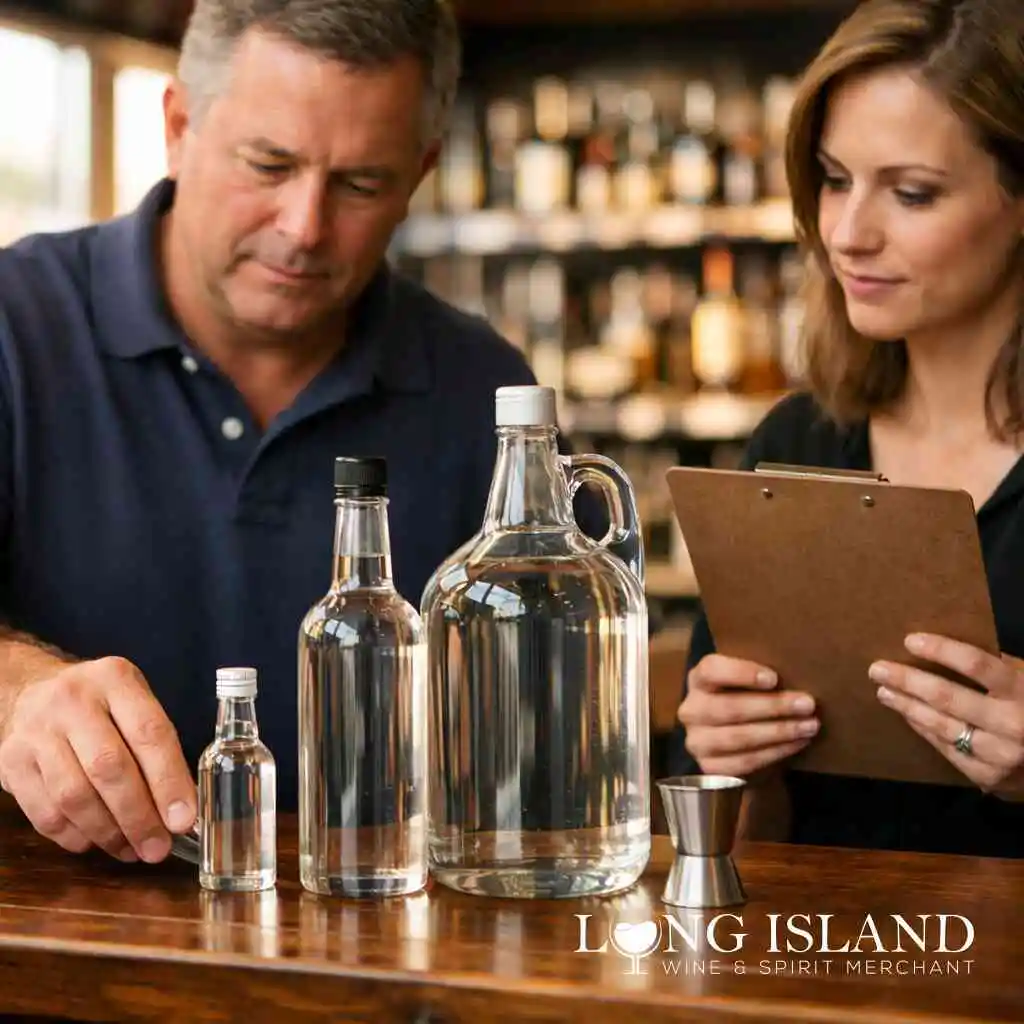
Start with the bottles that move fastest. Vodka and tequila often lead in mixed drinks. Whiskey, bourbon, and rum usually need moderate volume. Gin and mezcal can stay smaller if your menu uses them in specialty cocktails. That simple split keeps your liquor bottle sizes aligned with real demand.
When vodka, whiskey, bourbon, scotch, rum, gin, tequila, and mezcal need different bottle strategies
Not every spirit deserves the same bottle strategy. Vodka and rum often benefit from larger formats because they appear in high-volume cocktails. Whiskey and bourbon can also move quickly if your menu leans on old fashioneds, highballs, or Manhattans. Scotch and mezcal, by contrast, often sell in more measured quantities, so a 750ml bottle may be enough. The same idea applies to spiced rum, rye whiskey, and gin. If your bar uses them heavily, scale up. If they sit for weeks, scale down. One Smithtown host told us they were buying every spirit in 1.75 liter bottles because it “felt efficient.” It wasn’t. Their quieter spirits tied up cash and shelf space. After we broke down usage, the bar looked cleaner and cost less to maintain. ### How vermouth, amaro, liqueur, and cocktail ingredients disappear faster than the base spirit
Mixer bottles disappear in strange ways. Vermouth, sweet vermouth, dry vermouth, amaro, and liqueur often move faster than people expect because they support multiple recipes. The same goes for Baileys, Kahlúa, triple sec, blue curaçao, coffee liqueur, Campari, Aperol, St-Germain, and Chambord. These are cocktail ingredients, not side notes.
A vermouth and mixers for cocktail ingredients link helps if you are planning a menu around martinis, spritzes, or stirred drinks. The mistake we see most often is underbuying modifiers. Then the base spirit sits untouched while the support bottles run dry. That creates downtime and frustration. Keep those bottles in smaller, fresher formats unless the menu proves otherwise.
Why wine, beer, craft beer, and canned cocktails deserve their own size logic
Wine and beer need a different lens. Red wine, white wine, rosé, champagne, sparkling wine, beer, craft beer, imported beer, domestic beer, hard seltzer, and canned cocktails all follow their own consumption patterns. They are usually counted by serving, not by shot. So their bottle logic should track events, not liquor rail math.
If you are building a full beverage program, do not force every category into the same framework. A cocktail bar may need one rhythm for spirits and another for wine or beer. That matters during holiday liquor gifts, private parties, and seasonal events. It also matters for storage. Tall wine cases and mixed beer packs occupy space differently than liquor bottles, so plan accordingly.
The smart way to choose gift liquor, mini bottles, airplane bottles, and bulk liquor for parties
Mini liquor bottles, airplane bottles, nip bottles, and bulk liquor all solve different problems. Mini bottles make strong favors. Airplane bottles are convenient for sampling or gift bags. Bulk liquor works for larger parties where speed matters more than presentation. Gift liquor and liquor gift sets sit somewhere in the middle because they need both function and style.
For parties, ask yourself three questions. First, how many guests are drinking cocktails? Second, how much variety do you want? Third, do you need visual polish or simple efficiency? If you answer those honestly, the right bottle format becomes obvious. For special occasions, a liquor bottle gift box for mini bottles and gift sets can make the choice feel more deliberate.
What to do before you place the order so your bar stays profitable and calm
How to build bar inventory around party planning and seasonal liquor demand
Good inventory starts with the event, not the shelf. Party planning changes with season, guest count, and menu style. A summer backyard party in Commack looks different from a winter holiday bar in Nassau County. Seasonal liquor demand also shifts toward vodka, rum, tequila, and sparkling wine when mixed drinks and toast service take over.
Build your list around expected pours per guest. Then add a buffer for the unexpected. That buffer is what saves you when one spirit takes off faster than planned. The goal is calm, not excess. If you stock by habit, you risk waste. If you stock by use, you get control.
When liquor delivery or buying liquor online makes more sense than running the whole order yourself
Sometimes it makes more sense to use alcohol delivery near me by Long Island Wine & Spirit Merchant than to chase the order yourself. That is especially true when you are juggling a job, guests, and a menu with ten moving parts. Buying from an online liquor store can simplify things if you already know your size needs. It also helps when you want to buy liquor online and stay organized.
We ship liquor to states where laws allow it, but alcohol shipping laws still matter. That means your order should match what the law and the logistics can support. For Long Island liquor store customers, local pickup or delivery can reduce friction. For broader planning, online ordering makes size comparison easier. Either way, the point is the same: reduce last-minute scrambling.
Why liquor bottle reuse, eco-friendly bottle sizes, and custom cases can support a cleaner back bar
A cleaner back bar starts with fewer unnecessary bottles. Liquor bottle reuse can help with organization if your containers are properly cleaned and repurposed in a sensible way. Eco-friendly bottle sizes also matter because less waste usually means less clutter. When you choose sizes that match actual usage, you naturally reduce excess packaging.
Custom cases can also help. They make storage tidier and support bar inventory by grouping similar spirits together. That matters in Commack, Suffolk County, and the broader New York metro, where space is often limited. Smaller, smarter storage beats a crowded shelf every time. The goal is not to look busy. The goal is to work cleanly.
The final checklist for Long Island liquor store buyers in Commack, Suffolk County, and beyond
Before you buy, check these items:
- Expected guest count
- Main cocktails on the menu
- Fastest-moving spirits
- Modifier bottles like vermouth and liqueur
- Storage space for larger formats
- Need for gifts, favors, or bulk service
- Whether delivery or pickup is simpler
If you are in Commack, NY, or anywhere on Long Island, use that checklist before the cart fills up. The same logic helps customers from Huntington, Smithtown, Nassau County, and NYC delivery areas. A Commack, New York reference is useful for orientation, but your real advantage is knowing what to order. You do not need to figure out everything at once. Start with the bottle sizes that match your pours, and let the rest follow.
How to use the size guide to decide whether you need /liquor-bottle-sizes/ /delivery/ /gifts/ or /contact/ next
If you want a deeper breakdown of standard bottle sizes, use the size guide first. If you already know what you need, delivery may be the faster path. If the order is for a celebration, gifts might be the better route. And if you still feel unsure, contact is the right move because a short conversation can prevent a long mistake.
A Shop Liquor Bottle Sizes guide to shot counts and ml to oz page can help you compare formats before you commit. That is useful whether you are planning a home bar, stocking a restaurant, or buying for a party. The smartest buyers do not rush the decision. They match the bottle to the pour, the pour to the menu, and the menu to the room. That is how you keep service profitable, clean, and calm.
Frequently Asked Questions
Question: In Shop Liquor Bottle Sizes Guide to Shot Sizes for Cocktail Bars, how do I choose between mini liquor bottles, 750ml liquor, and 1.75 liter liquor for bar inventory?
Answer: The best choice depends on how often a spirit moves and how you plan to serve it. Mini liquor bottles, airplane bottles, and nip bottles are useful for favors, sampling, and controlled portions, but they are not ideal for fast cocktail service. A 750ml liquor bottle, often called a fifth of liquor, works well for moderate-volume spirits or specialty bottles. A 1.75 liter liquor bottle, or handle of liquor, is usually better for high-volume items like vodka, rum, tequila, or other core spirits that move quickly behind the bar. For cocktail bars and home bartending, the smartest approach is to match liquor bottle sizes to real demand, not habit. That keeps bar inventory cleaner, reduces swap time, and helps you focus on pricing per ounce and value size comparison instead of sticker shock.
Question: How many shots in a bottle should I expect when comparing standard bottle sizes on your liquor size chart?
Answer: If you are pouring standard 1.5-ounce shot sizes, the math becomes straightforward. A 50 ml mini liquor bottle is roughly one shot, a 750ml liquor bottle gives you about 17 shots, a 1 liter liquor bottle gives you about 22 shots, and a 1.75 liter handle of liquor can yield around 39 shots depending on pour size. That is why a liquor size chart is so useful for party planning, home bar setup, and cocktail bars. It helps you compare standard bottle sizes without guessing. It also makes ml to oz conversion easier, which is especially helpful when you are deciding how much vodka, whiskey, bourbon, gin, tequila, or rum to keep on hand.
Question: Why does the fifth of liquor still matter when people are buying liquor online or from a Long Island liquor store?
Answer: The fifth of liquor is still one of the most useful reference points because it is the familiar nickname for a 750ml liquor bottle. Even though we now use metric measurements, many shoppers still think in historical bottle names and standard bottle sizes. That makes the fifth a practical way to compare product yield, shot sizes, and pricing per ounce. When you buy liquor online or visit a Long Island liquor store, knowing that a fifth usually means 750ml helps you avoid confusion and choose the right bottle for your menu, your home bar, or your event. It is a simple shortcut that keeps liquor bottle sizes easier to understand.
Question: What types of spirits should I buy in larger bottles, and which should stay smaller for better value size comparison?
Answer: Core spirits that move quickly usually belong in larger formats. That often includes vodka, rum, tequila, whiskey, bourbon, and sometimes gin if your menu uses it heavily. These are the bottles that can justify a 1 liter liquor bottle or 1.75 liter liquor bottle because they support frequent cocktails and reduce restocking. Smaller or fresher formats often make more sense for vermouth, sweet vermouth, dry vermouth, amaro, liqueur, Baileys, Kahlúa, triple sec, blue curaçao, coffee liqueur, Campari, Aperol, St-Germain, and Chambord because they are cocktail ingredients that can slow down if overbought. That is why value size comparison matters. The right size is not just about cost, but about how quickly the bottle turns in a real bar inventory system.
Question: Can Shop Liquor Bottle Sizes help with best liquor bottle size for parties, mini bottles for favors, and liquor gift sets in Commack, New York?
Answer: Yes. Shop Liquor Bottle Sizes is built to help customers choose the right liquor bottle sizes for party planning, home bartending, gift liquor, and liquor gift sets. If you need mini bottles for favors, a larger handle of liquor for a busy gathering, or a mix of standard bottle sizes for a balanced bar, the goal is to make the order easier and more useful. Based in Commack, New York and serving Long Island with shipping in all 50 states where allowed, the store is positioned to help customers think through what they actually need before they buy liquor online. That can be especially helpful for customers comparing bulk liquor, wholesale liquor, or smaller gift options while keeping alcohol shipping laws and local needs in mind.


